History of Flight
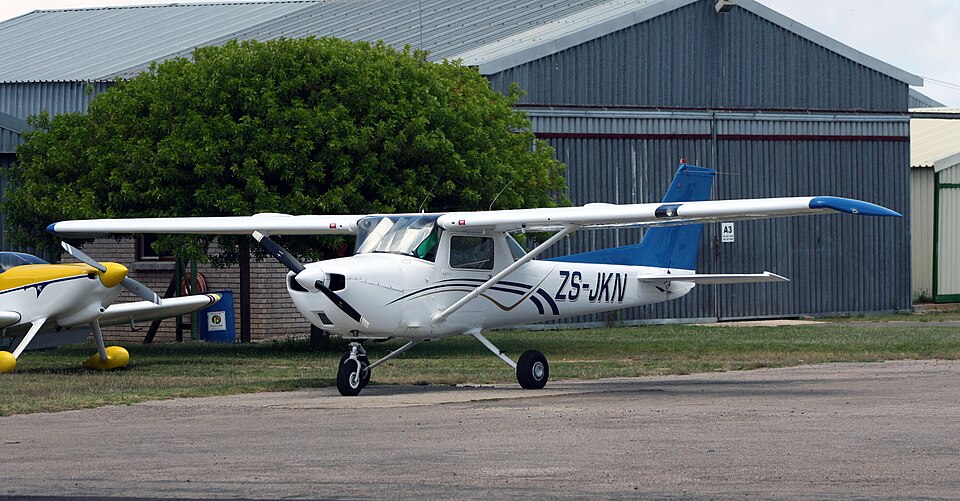
The pilot, sole occupant of the Cessna 150M (registration ZS-JKN), departed Nelspruit Aerodrome (FANS) on a Visual Flight Rules flight to Lanseria International Airport (FALA) at approximately 1130Z. While cruising at a true airspeed of 95 knots and an altitude of 500 feet above ground level, the aircraft suddenly encountered a downdraft. This resulted in a loss of lift, negative acceleration, and a rate of sink relative to the ground.
To arrest the descent, the pilot pulled back on the controls. The sink rate was stopped at approximately 100 feet AGL. At that point, with rising terrain ahead, the pilot selected 10 degrees of flaps in an attempt to climb. The aircraft did not gain sufficient height, and the pilot decided to execute an emergency landing in an open grassy field covered with tall grass.
During the landing, the undercarriage entered soft mud, causing the aircraft to overturn onto its back. The impact sequence bent the nose landing gear and separated the right main landing gear from the airframe. The right wing and tail section also sustained damage.
Injuries
The pilot sustained minor injuries to his face and head and was taken to a nearby hospital for treatment.
Aircraft Information
The accident aircraft was a Cessna 150M (serial number 150-77501), manufactured by Cessna Aircraft Company in 1976. It had accumulated 8830.3 total airframe hours at the time of the accident. The last mandatory periodic inspection was performed at 8800.4 hours, 29.9 hours prior to the accident. The engine was a TMC Continental O-200 with 6081.0 hours since new and 212.0 hours since overhaul. The propeller was a McCauley fixed-pitch unit. The aircraft held a valid Certificate of Airworthiness and was being operated under Standard Part 135.
Meteorological Information
At the time of the accident, surface wind was from 340 degrees at 3 knots, temperature was 21°C, visibility was CAVOK, and there was no cloud cover.
Probable Cause
The investigation determined the probable cause to be an unsuccessful emergency landing. A contributory factor was flying at an unsafe height for the terrain.