What happened
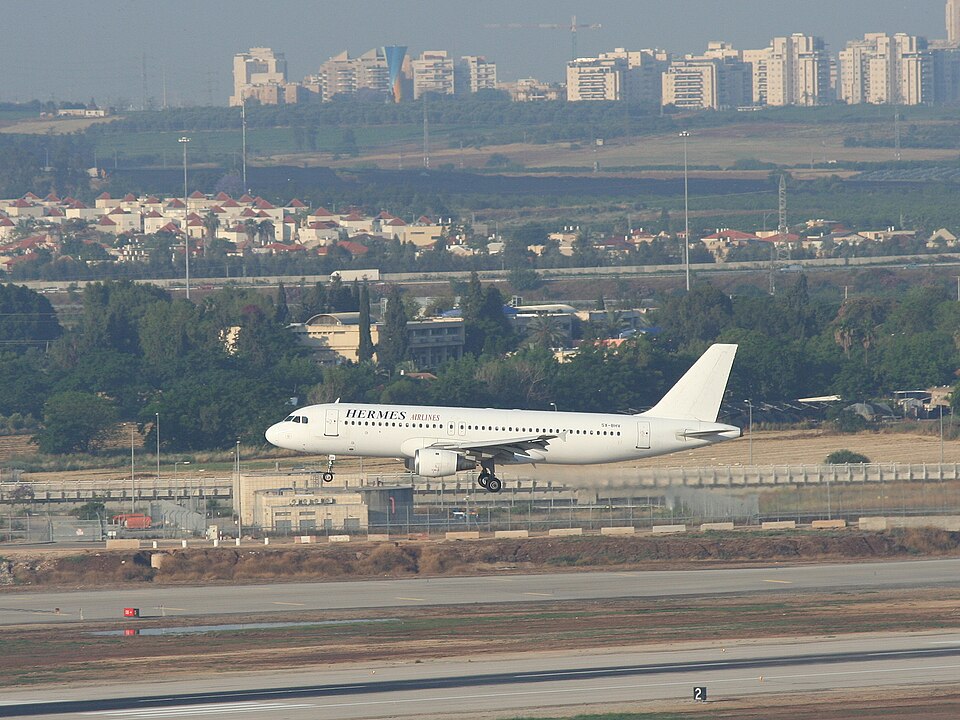
On April 11, 2012, an Airbus A320, registration SX-BHV, operated by Hermes Airlines, was performing a night flight from Ajaccio to Lyon Saint-Exupéry. The crew, consisting of an instructor in the right seat and a student pilot acting as the pilot flying in the left seat, was conducting a training flight. During the approach to runway 36L, the crew was managing a transition from a previously planned approach to runway 18L. Due to a failure to deselect a manually entered ILS frequency from their departure airport, the aircraft's navigation system remained tuned to the Ajaccio frequency, causing significant confusion regarding distance and localizer interception.
As the aircraft attempted to intercept the localizer, the crew became preoccupied with resolving the frequency mismatch. During this period, the pilot selected a target altitude of 400 ft on the Flight Control Unit, which was below the airport's elevation of 880 ft. This led to a rapid descent that triggered a Ground Proximity Warning System (GPWS) "TERRAIN TERRAIN PULL UP" alert. The instructor intervened by applying full power and pitching up, but the maneuver was inadequate. The aircraft subsequently descended further, triggering a second Minimum Safe Altitude Warning (MSAW) from Air Traffic Control. A period of dual input occurred as the two pilots applied conflicting control inputs, before the crew eventually stabilized the aircraft and performed a second, successful approach.
The investigation
The BEA examined flight data from the FDR and CVR, as well as crew testimonies. The investigation focused on the navigation setup, the execution of emergency procedures, and the crew's experience levels. Investigators analyzed why the ILS frequency mismatch persisted and why the crew's altitude selection led to a dangerous descent. The investigation also scrutinized the instructor's takeover of controls without a formal announcement and the controller's use of specific phraseology during the MSAW alert.