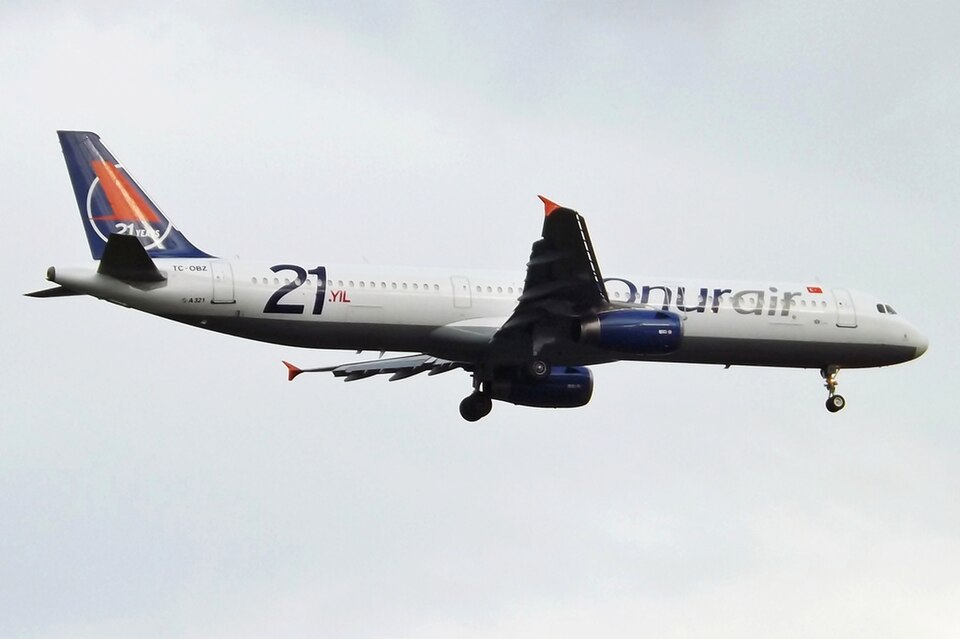
Synopsis
On 26 September 2013, an Airbus A321 registered TC-OBZ, operated by Onur Air, was conducting charter flight OHY 1985 from Izmir, Turkey, to Deauville-Normandie aerodrome, France. The aircraft carried 220 passengers, a flight crew of two, and five cabin crew. The captain, flying from the left seat, was the pilot flying (PF), while the copilot managed radio communications as pilot monitoring (PM). The approach and tower control positions were combined, with one controller handling approach, tower, and manager duties, and another managing telephone coordination.
History of the Flight
Initially, runway 30 was in use. At 09:02, after a departing aircraft requested runway 12, the controller changed the active runway to 12. The crew of OHY1985, cruising at FL200, was informed of the change and offered options: a GNSS approach, an ILS approach to runway 30 followed by visual manoeuvring (circling), or a visual approach. The crew announced a visual approach on the radio but prepared for a visual manoeuvring procedure. When the controller requested a call at the beginning of the downwind leg, the PF interpreted this as an order to turn right. Subsequently, the crew did not follow a standard procedure, mixing elements of the visual manoeuvring and visual approach procedures. They descended to the minimum descent altitude (MDA) of 1,100 ft above aerodrome level (AAL) on the downwind leg and continued descending during the final turn, going below the final approach slope. The minimum recorded altitude was 528 ft (49 ft above the aerodrome) at a distance of 3 NM from the runway threshold. The controllers did not monitor the aircraft's flight path on final approach. The crew's response to Terrain Awareness and Warning System (TAWS) alerts likely prevented a collision with the coast.
Findings and Causes
The investigation identified that the serious incident resulted from a combination of causal factors: (1) The crew did not realize they were below the final approach slope. (2) The controller did not monitor the aircraft's flight path on final approach. (3) There was an absence of a low altitude alert. (4) There were deficiencies in visual approach procedures. The BEA issued a safety recommendation to the European Aviation Safety Agency (EASA) to promote recurrent training on visual approach procedures.