History of the Flight
On 21 October 2020, an Embraer ERJ170 registered F-HBXK operated by HOP! was conducting a passenger flight from Brest Bretagne to Paris-Charles de Gaulle (CDG). The crew prepared for the approach considering strong crosswind and moderate to severe turbulence below 1,500 ft. They reviewed the windshear procedure and decided to land with flaps at position 5 and an approach speed of 142 kt.
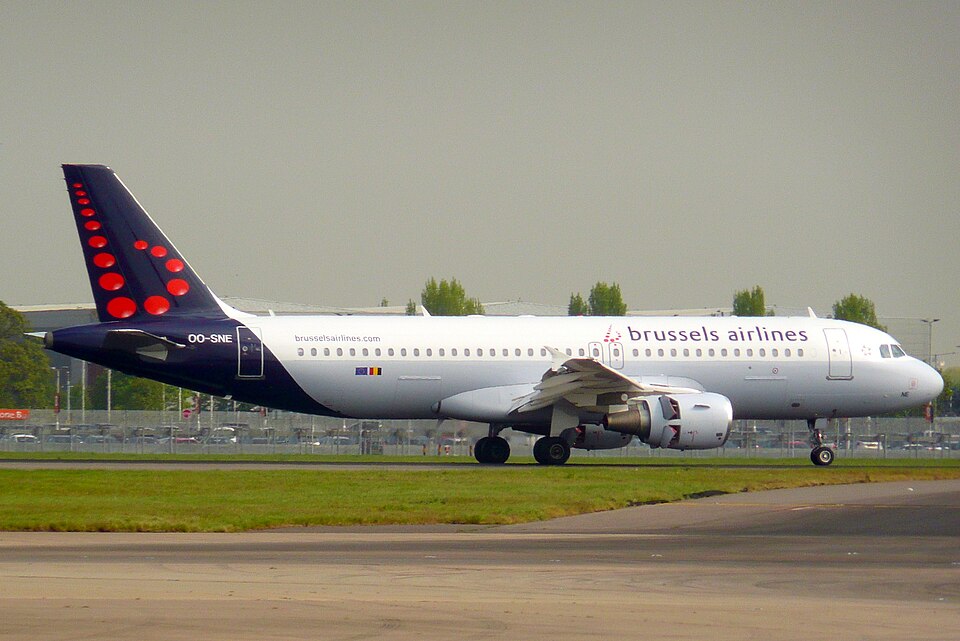
Meanwhile, an Airbus A320 registered OO-SNE operated by Brussels Airlines was preparing for departure from CDG to Brussels. The crew contacted the controller and were cleared to line up and wait on runway 26R.
As the ERJ170 descended, it received landing clearance for runway 26L. At the decision height of 200 ft, indicated airspeed dropped from 139 kt to 125 kt in two seconds, and the windshear warning activated. The pilot flying (PF) advanced thrust levers to MAX and applied nose-up control. The flight director windshear mode engaged. After eight seconds, the warning ceased as the aircraft climbed through 580 ft.
During the initial windshear escape, the ERJ170's heading increased slightly to the right. The pilot monitoring (PM) announced the end of windshear. Subsequently, bleed 1 and bleed 2 overpressure alerts were triggered; the crew silenced the master caution and deferred these alerts.
While the ERJ170 climbed, the A320 began take-off rotation. At approximately 1,500 ft, the ERJ170's PM reported a go-around straight ahead to 4,000 ft due to windshear. The heading mode was selected to 259°, corresponding to the current heading.
Due to increasing wind and speed changes, the ERJ170's flight path deviated right, approaching runway 26R. After reconfiguring flaps and landing gear, a traffic advisory (TA) was issued by TCAS on both aircraft. The controller instructed the ERJ170 to turn left to heading 240°. The crew complied.
A short term conflict alert (STCA) appeared on the controller's radar. One second later, at 2,150 ft, the ERJ170 received a resolution advisory (RA) to climb. The PF adjusted attitude, moved thrust lever to TOGA detent, levelled wings, and held heading 250°. Simultaneously, the A320 received a "Level off" RA; the crew disconnected autopilot and held around 2,000 ft. The controller asked the A320 to stop climbing, but the crew reported they were following the TCAS RA.
After the conflict cleared, the controller vectored both aircraft away. The ERJ170 subsequently performed a second approach without incident. Minimum separation between the two aircraft was 0.09 NM laterally and 460 ft vertically.
Meteorological Information
A low-pressure area over the Bay of Biscay brought strong winds to the Île-de-France region. A jet stream from 1,500 ft had winds of 45–50 kt, increasing to 70 kt at 10,000 ft. No sudden wind direction changes were observed. The ATIS reported wind 220°/26 kt gusting 31 kt, visibility 10 km, few clouds at 3,300 ft and broken at 4,000 ft, temperature 20°C, dew point 12°C, QNH 1001 hPa, and moderate to severe turbulence below 1,500 ft.
Crew Statements
ERJ170 Crew
The crew stated they had mentally prepared for windshear based on weather analysis. They waited until 1,500 ft to initiate post-windshear actions per their operations manual. During the TCAS advisory, the PF was unaware of the threat; the PM could not identify the traffic on his navigation display and thought it was from Le Bourget. The misunderstanding was resolved after the flight. The crew noted the short timeframe demanded significant mental resources, and the simultaneous bleed alerts were disconcerting but were deprioritized.
A320 Crew
In their report, the A320 crew highlighted the rapid succession of events, combining normal take-off tasks with abnormal tasks including the TCAS RA and controller instructions.
Windshear System and Procedure
The ERJ170's windshear detection system is active between 10 ft and 1,500 ft RA during take-off, go-around, and final approach. On detection, a warning displays "WSHEAR" on PFD and a voice alert. The windshear escape guidance mode commands nose-up and wings level to limit altitude and speed loss. The warning remains active for eight seconds after windshear conditions end. The procedure calls for maintaining current configuration (landing gear and flaps) up to 1,500 ft AGL when clear of obstacles.