History of the Flight
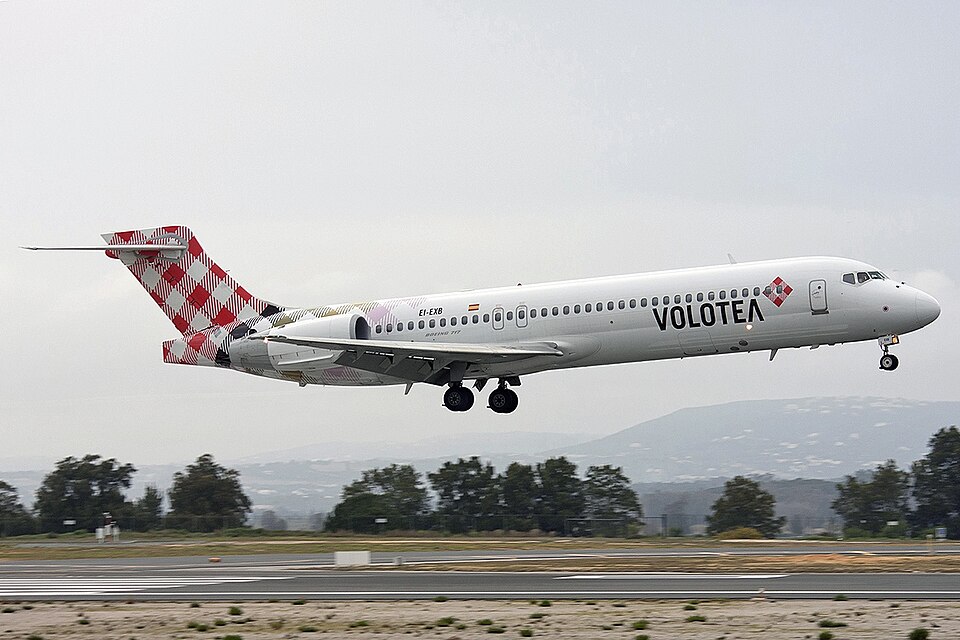
On 12 April 2019, a Bombardier CRJ700 registered F-GRZG, operated by HOP!, and a Boeing 717-200 registered EI-EXB, operated by Volotea, were involved in a serious incident at Strasbourg Entzheim airport. The Boeing 717 was conducting an ILS approach to runway 05, while the CRJ700 was preparing for departure from the same runway.
At 13:01, the LOC controller instructed the Boeing 717 crew to continue the approach, informing them that they were number two behind a light aircraft. Four minutes later, the captain of the CRJ700, acting as pilot monitoring, contacted the LOC controller, stating they were approaching holding point H and ready for departure. The LOC controller asked if they could take off within the minute and provided traffic information about an aircraft at 3 NM on final approach, without specifying it was a Boeing 717. The CRJ700 crew accepted, and at 13:05:23, they were cleared for immediate take-off.
At the time, the Boeing 717 was approximately 3 NM from the runway threshold at 1,650 ft and 136 kt. The CRJ700 was about 30 m before holding point H. At 13:05:46, the Boeing 717 crew announced they were at 2 NM on final. The CRJ700 lined up on runway 05. The LOC controller informed the Boeing 717 crew of the departure and asked them to continue the approach. The Boeing 717 pilot monitoring responded “unbelievable” on frequency. Five seconds later, the CRJ700 began its take-off roll.
At 0.90 NM from the threshold, at 890 ft and 138 kt, the Boeing 717 pilot monitoring informed the controller they might interrupt the approach. The controller instructed them to continue. Nine seconds later, at 13:06:28, at 0.58 NM from the threshold and 40 ft below decision height, the Boeing 717 crew initiated a missed approach. At that moment, the CRJ700 was still on the runway, 0.42 NM from the threshold at about 115 kt.
The LOC controller instructed the Boeing 717 to keep straight ahead during the missed approach. The pilot flying selected heading 042°, causing a left deviation from the runway centreline. When the CRJ700 overflew threshold 23 at 900 ft and 160 kt, the separation with the Boeing 717 (163 kt and accelerating) was about 1 NM horizontally and 920 ft vertically.
At 13:07, the LOC controller instructed the CRJ700 (climbing to 6,000 ft) to turn left towards MIRGU, and the Boeing 717 (climbing to 2,500 ft) to turn right to heading 050°. The CRJ700 began turning at 2,100 ft. Horizontal and vertical separations were 0.6 NM and 300 ft, with the Boeing 717 60 kt faster. The controller then asked the CRJ700 to stop climbing at 2,000 ft. The CRJ700 pilot monitoring requested a repeat; the aircraft passed through 2,400 ft climbing at 1,300 ft/min, while the Boeing 717 stabilized at 2,500 ft. TCAS traffic advisories sounded. The controller repeated the instruction to stop climbing at 2,000 ft. One second later, resolution advisories were generated: MAINTAIN CLIMB for the CRJ700 and DESCENT for the Boeing 717. Horizontal separation was 0.40 NM and vertical 50 ft. The CRJ700's RA was reinforced to INCREASE CLIMB. Five seconds later, separations were 0.28 NM and 95 ft. Minimum horizontal distance of 0.17 NM occurred five seconds later with 500 ft vertical separation. The conflict ended at 13:07:55.
Crew Statements
Boeing 717 Crew: The crew stated it was their fourth rotation of the day, running about one hour late due to a technical issue. They heard the CRJ700 take-off clearance when the aircraft had not yet reached the holding point. They found the CRJ700 slow to line up and knew a missed approach might be necessary. The captain was irritated by the situation management. Approaching decision height, with the controller saying “Continue” and the CRJ700 still on the first third of the runway, they initiated a missed approach manually. The reason for selecting heading 042° could not be explained. They expected a right turn but were told to keep straight ahead. The captain did not understand the controller's instructions in French to the CRJ700 crew. Neither crew member had visual contact with the CRJ700. The first officer disconnected the autopilot to follow TCAS RAs. The pilots found the situation dangerous and were afraid. They saw the CRJ700 pass in front in a left climbing turn.
CRJ700 Crew: The crew stated they were focused on lining up and executing a rolling take-off. They were not aware the Boeing 717 was on final approach; they thought the traffic mentioned was a VFR local flight. While climbing through 2,450 ft, the controller asked them to maintain 2,000 ft, and they made a slight nose-down input. Simultaneously, TCAS activated with MAINTAIN CLIMB then INCREASE CLIMB RAs. The vertical speed indicator showed a high climb rate required. They were very surprised by the pitch attitude required, were afraid, and expected to strike an aircraft. They did not know the Boeing 717 had executed a missed approach and never had visual contact.
Incapacitation of a Cabin Crew Member
A cabin crew member on the CRJ700 was incapacitated following the incident. The purser noted that the other cabin crew member joined him at the front; after the cockpit door opened, they saw the pilots' faces frozen. The captain explained what had happened. The cabin crew member recalled a previous serious incident.
Weather and Aerodrome Information
At the time of the incident, wind was 030° variable between 350° and 060° at 10 kt, CAVOK. Strasbourg Entzheim airport has a paved runway 05-23. The magnetic heading of runway 05 is 047°. Four taxiways (E, F, G, H) lead to the runway. Runway distances: LDA 2,400 m, TORA 2,405 m, TODA 2,695 m, ASDA 2,670 m.