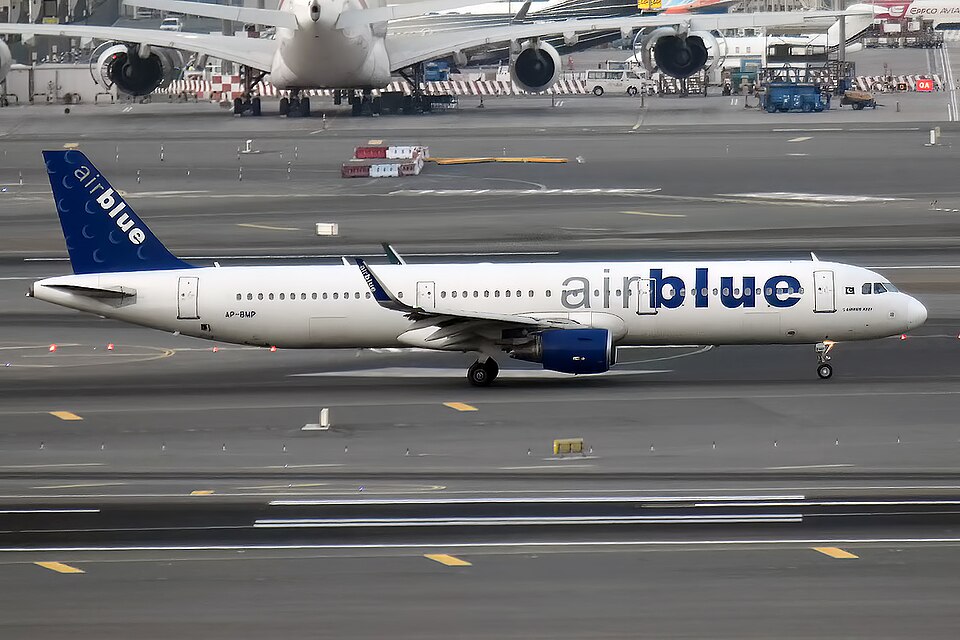
History of the Flight
On 2 August 2022, Airblue flight ABQ-410, an Airbus 321-211 aircraft registered as AP-BMP, departed from Allama Iqbal International Airport (AIIAP), Lahore, for a scheduled passenger flight to Dubai International Airport, Dubai. The aircraft carried 8 crew members and 231 passengers. At 09:30:15 h, the flight took off from Runway 36R. At 09:30:18 h, an air traffic controller observed two flames from the rear of the right engine (Engine No. 2). The controller informed the flight crew, who reported all operations normal but requested to land back as a precautionary measure. The aircraft subsequently landed safely at AIIAP, Lahore.
Investigation Findings
The investigation, conducted by the Bureau of Aircraft Safety Investigation Pakistan (BASIP), determined that a bird strike had occurred at the end of the previous flight, which likely contributed to the observation of flames and a right engine stall warning during the event flight. Bird ingestion was confirmed, with remains found at the roots of fan blades No. 1, No. 35, and No. 36, and a large quantity of debris detected throughout the primary flow path. The ingestion impacted the Variable Bleed Valve (VBV) doors, causing misalignment. Additionally, one blade in the High-Pressure Compressor (HPC-1) was found torn and cracked, while two others showed damage consistent with radial contact and/or bird impact. Further inspection revealed contamination in the Combustion Chamber and High-Pressure Turbine (HPT), indicating that the bird ingestion adversely affected engine components and airflow, ultimately leading to an engine stall.
Engine Parameters
Digital Flight Data Recorder (DFDR) analysis indicated that the engine experienced a stall lasting approximately 6 seconds, during which the Persistent State (PS3) pressure dropped from 400 PSI to 120 PSI. This was accompanied by corresponding decreases in N1, N2, and fuel flow, along with a noticeable shift in Exhaust Gas Temperature (EGT), consistent with engine stall characteristics. All engine parameters returned to normal range, in line with the sister engine.
Cause
The investigation concluded that the serious incident was caused by bird ingestion, which resulted in VBV door misalignment, HPC blade damage, and combustion chamber contamination, leading to an engine stall.