Background
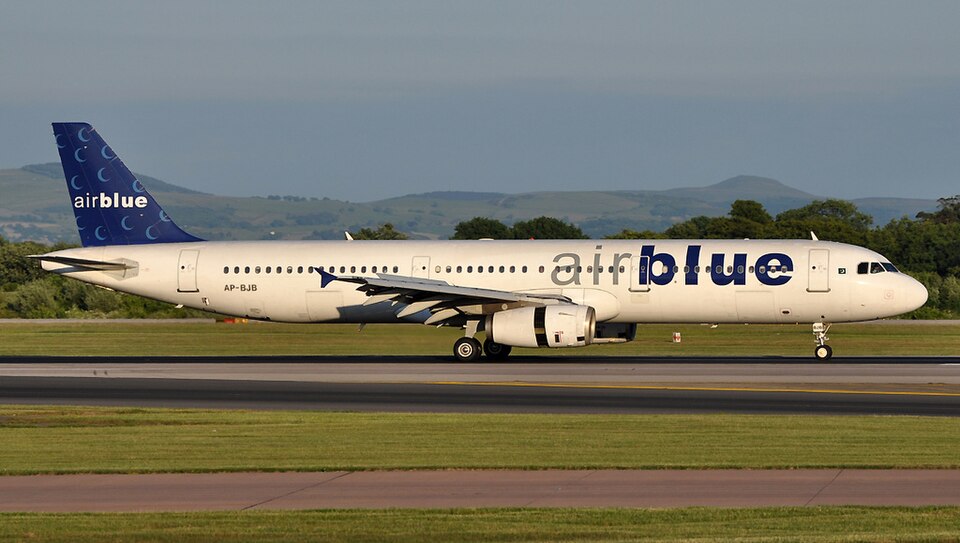
Airblue Flight ABQ202 was a scheduled domestic flight from Karachi to Islamabad. The aircraft carried 152 persons, including six crew members. The captain was Pervez Iqbal Chaudhary.
Accident Sequence
The aircraft departed Karachi at 0241 UTC (0741 PST). While executing a circling approach for Runway 12 at Islamabad, it flew into the Margalla Hills at a distance of 9.6 nautical miles on a radial of 334 from Islamabad VOR. The aircraft was completely destroyed, and all 152 occupants sustained fatal injuries.
Weather Conditions
Weather at the airport included rain, poor visibility, and low clouds. The aircrew had knowledge of these conditions.
Flight Crew Actions and Violations
During the flight, the captain showed confusion, including mixing up Islamabad and Karachi airports during flight management system programming and confusing landmarks. He violated the prescribed circling approach procedure by descending below the minimum descent altitude (2,300 feet instead of 2,510 feet), lost visual contact with the airfield, and flew a non-standard bearing and distance based approach, deviating outside protected airspace.
The Enhanced Ground Proximity Warning System (EGPWS) issued 21 terrain and pull-up warnings over 70 seconds. The captain did not respond appropriately to these alerts. The first officer remained passive and did not act as an effective team member, failing to correct the captain's errors.
Air Traffic Control Involvement
Air traffic control and radar controllers were occupied with bad weather and other traffic. After losing visual contact, the ATC controller contacted radar for assistance. The radar controller, seeing the aircraft near a no-fly zone, instructed the ATC to ask for an immediate left turn. As the aircraft continued toward the hills, the radar controller advised asking if the pilot had visual contact with the ground and to execute a missed approach. The ATC transmitted these calls, but the aircraft crashed at the same time as the final transmission.
Probable Cause
The official probable cause states that the accident was primarily caused by the aircrew who violated all established procedures for a visual approach for Runway 12 and ignored multiple calls by air traffic controllers and EGPWS warnings related to approaching rising terrain and "PULL UP." Additional factors included the captain's deteriorated behavior in inclement weather, the first officer's passivity, and air traffic control preoccupation with bad weather and traffic.