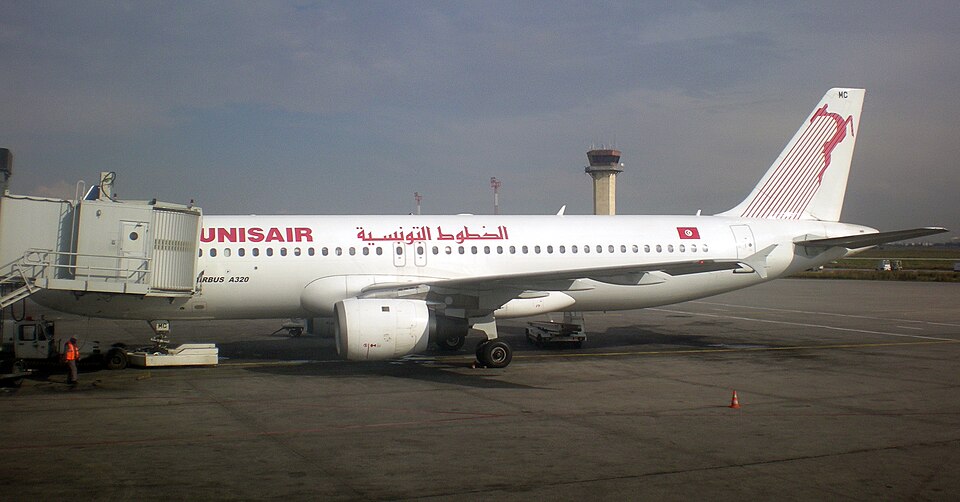
What happened
On March 12, 2013, an Airbus A320, registration TS-IMC, operated by Tunisair, arrived at Paris Orly from Djerba, Tunisia. During the approach, the crew received several updates regarding runway conditions, noting that runway 08 was covered in dry snow and that braking action was rated as "medium." As the flight progressed, the crew was informed that braking action had degraded to "medium to poor" and that wet snow was present on the runway.
The aircraft landed at 10:13 UTC. Following the landing, the commander took control of the aircraft with the intention of vacating the runway via taxiway 02/20. However, air traffic control instructed the crew to continue to the end of runway 08 via taxiway W31. As the aircraft approached the end of the runway, the crew noted that the surface was not clean and contained snow, unlike the touchdown zone.
At approximately 10:14 UTC, the crew began braking about 480 meters from the runway end. Despite applying significant braking pressure, the aircraft failed to decelerate effectively. The commander applied the parking brake and attempted to maintain the trajectory using the rudder, but the aircraft exited the runway at a ground speed of 17 kt. The nose gear sustained slight damage during the excursion.
The investigation
The BEA examined data from the flight data recorder (FDR), cockpit voice recorder (CVR), and crew testimonies. The investigation focused on the runway maintenance at Orly, the accuracy of the braking action reports, and the crew's response to the loss of braking.
Investigators found that while the touchdown area was relatively clear, the far end of the runway (near W31) had not been adequately cleared of contaminants. The investigation also reviewed the effectiveness of the aircraft's braking system, with Airbus performance analysis confirming that the braking action at that specific section of the runway was indeed "medium to poor."
Findings
- The primary cause of the excursion was the inability to measure runway friction in real-time, which prevented the detection of inhomogeneous contamination across the runway surface. This led to a discrepancy between the reported braking action and the actual conditions at the runway end.
- Frequent use of the main runway helps clear contaminants, but less-used areas like the runway ends can accumulate snow more rapidly.
- The crew's perception of the braking conditions was degraded because the reported values did not reflect the specific state of the runway extremity.
- The failure to fully implement the "Loss of Braking" emergency procedure may have contributed to the incident.