Introduction
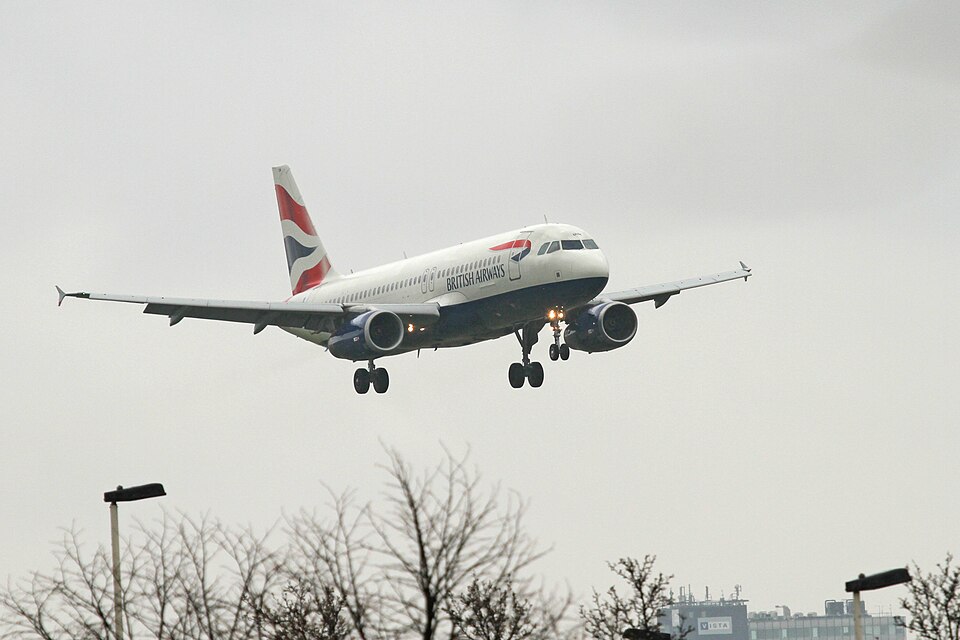
On 30 December 2017, a British Airways Airbus A320-232, registered G-EUUW, operating as flight BA728 from London Heathrow to Geneva, experienced a serious incident during descent. The aircraft had 2 pilots, 5 cabin crew, and 141 passengers on board. No injuries or damage were reported.
History of the Flight
The flight departed London Heathrow under instrument flight rules. The descent from cruising flight level (FL) 290 began at 11:14:50 UTC. The aircraft leveled off at FL 230 at 11:17:58 UTC. Two minutes later, the crew selected 240 kt. At 11:22:25 UTC, descent resumed. The aircraft encountered icing conditions, and moderate ice buildup was noted by the crew while descending through FL 200. Engine and wing anti-ice were switched on when leaving FL 230.
At 11:26:37 UTC, the crew contacted Geneva approach, requesting descent to FL 160 in a right turn toward waypoint SOVAD. The controller cleared them to FL 130 and advised radar vectors for runway 23. Immediately after, the crew reported severe vibrations and noise when passing FL 180, followed by multiple system failures.
At 11:27:45 UTC, crossing FL 174 at 229 kt, the active autopilot (AP2), autothrust, and both flight directors disengaged. The fly-by-wire system reverted to alternate law. The master warning triggered, and the ECAM displayed an AUTO FLT YAW DAMPER SYS amber caution. The crew requested a rapid descent, but the initial call was masked by an aural warning. The controller cleared them to FL 100. The aircraft descended at up to 3300 ft/min.
The controller provided radar vectors. At 11:33:59 UTC, the crew requested to maintain FL 110 under radar vectoring. At 11:35:35 UTC, the crew successfully reset Flight Augmentation Computer 1 (FAC1), restoring normal law, autothrust, and flight director 1, but autopilots remained unavailable. The ECAM caution changed to AUTO FLT YAW DAMP 2.
At 11:36:03 UTC, the crew sent a Pan-Pan call, stating they were maintaining FL 110. They later entered a holding pattern at SOVAD. Attempts to re-engage AP1 at 11:36:28 and 11:37:09 UTC were unsuccessful. The crew informed the controller of flight control system failures. They remained in holding for about 10 minutes before commencing an approach.
At 11:51:16 UTC, the crew reported ready for approach. The controller provided radar vectors to the ILS runway 23. After receiving approach clearance at 11:54:54 UTC, the crew flew a manual ILS approach and landed at 12:05:43 UTC. The aircraft taxied to the parking stand, and passengers disembarked normally.
Technical Information
The aircraft has two Flight Augmentation Computers (FAC) that perform yaw damping, among other functions. Yaw damping stabilizes the aircraft in yaw and ensures turn coordination. Each FAC interacts with other computers. Normally, FAC1 controls yaw damper, turn coordination, rudder trim, and rudder travel limit, with FAC2 in standby. If FAC1 fails, FAC2 takes over. The Inertial Reference System (IR) provides yaw rate and lateral acceleration inputs to FACs. When an IR parameter differs from a voted value among the three IRs, the corresponding IR is rejected by the monitoring system.
During the incident, the failure of the yaw damper system led to autopilot disengagement and reversion to alternate law. The crew's reset of FAC1 restored normal law and some functions.
Aftermath
The Digital Flight Data Recorder was removed and data was available. The Cockpit Voice Recorder was not removed. The investigation used additional sources including the operator's report, ATC data, manufacturer report, and quick access recorder data. The Swiss Transportation Safety Investigation Board conducted a summary investigation.