History of the Flight
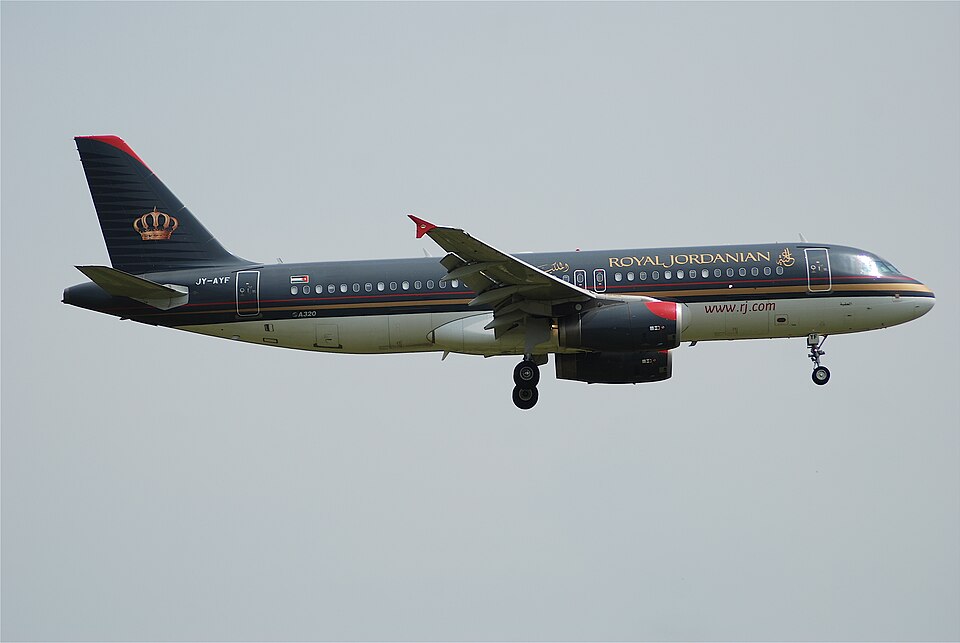
On 24 October 2007, a Boeing 737-300 aircraft, registration D-ABXY, operated by Deutsche Lufthansa under the ATC callsign DLH1LA, and an Airbus A320-200 aircraft, registration JY-AYF, operated by Royal Jordanian Airlines under the ATC callsign RJA149, were involved in a serious incident classified as an airprox. The event occurred 2.4 NM north-north-east of the Kloten beacon.
Personnel Information
The flight crew of DLH1LA consisted of a commander under supervision and a copilot. The flight crew of RJA149 similarly comprised a commander under supervision and a copilot. Four air traffic controllers were involved: controller 1, controller 2, controller 3, and controller 4.
Aircraft Information
The DLH1LA aircraft was a Boeing 737-300. The RJA149 aircraft was an Airbus A320-200. Both aircraft were equipped with an airborne collision avoidance system (ACAS) and the air traffic control system included a short-term conflict alert (STCA) function.
Meteorological Information
General meteorological conditions were present in the Zurich area at the time. Specific weather conditions were recorded in aerodrome meteorological reports and reported by the crew of DLH1LA.
Organisational and Management Information
National procedures for approaches, missed approaches, and go-around procedures were in place. The runway utilisation concept for Zurich airport included specific procedures for runway 10 departures and runway 14 approaches. A safety clarification was conducted to assess hazards related to the runway utilisation concept.
Analysis and Conclusions
The investigation analysed technical, human, operational, and organisational aspects. The causes of the serious incident were determined based on the findings presented in the report.
Safety Recommendations
The report issued safety recommendations, including safety recommendation No. 369 and No. 426, to address identified safety deficits.