63 fatalities

1971-10-02: Vickers Vanguard (G-APEC) — British European Airways - BEA — Aarsele, Belgium

Aarsele, BelgiumFlight

On October 2, 1971, a Vickers Vanguard (registration G-APEC) operated by British European Airways - BEA was involved in an aviation accident near Aarsele, Belgium in flight. 63 people were killed. Investigators recorded the probable cause as: The accident was caused by the rupture of the rear pressure bulkhead, which led to the separation both tailplanes in flight and caused the aircraft to dive into the ground. This summary draws on records from the Bureau of Aircraft Accidents Archives (B3A); 8 related events involving the same aircraft type or operator are linked below.

Sourcesthe Bureau of Aircraft Accidents Archives (B3A)Primary reportUpdated 1781234826Data APIEditorial standards
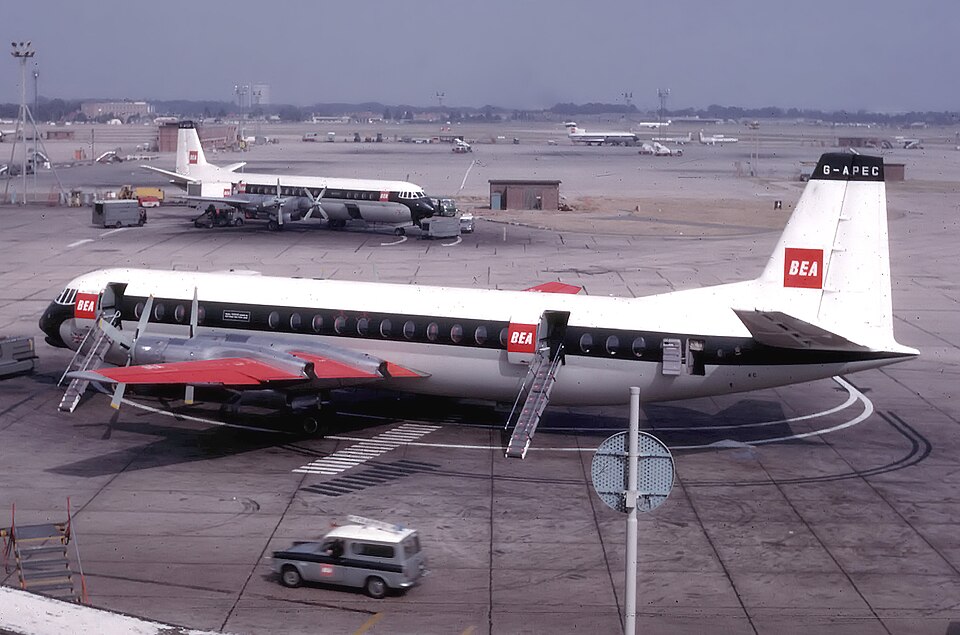
Aircraft registered G-APEC
Aircraft registered G-APEC. Photo: Arpingstone / Public domain, via Wikimedia Commons

A Vanguard aircraft experienced an explosive decompression at 19,000 feet after the rear pressure bulkhead ruptured, causing severe structural damage. The tail surfaces detached, leading to an uncontrolled dive and crash in a field next to a highway.

Incident Overview

While en route from London-Heathrow to Salzburg at an altitude of 19,000 feet, the rear pressure bulkhead of a Vanguard aircraft ruptured. This resulted in an explosive decompression of the fuselage, causing serious interior damage and severe distortion of the upper tailplane skin attachments. Subsequently, the tail surfaces detached, causing the airplane to enter a steep dive. The Vanguard spiraled down out of control and crashed in a field next to a highway.

Investigation Findings

During the investigation, corrosion was found in the lower part of the rear pressure bulkhead underneath plating that was bonded to the structure. The bond was completely delaminated in this area, and the bulkhead material was literally eaten away. Fluid contamination, perhaps from the lavatory, was thought to have been the root cause for the corrosion.

Probable Cause

The accident was caused by the rupture of the rear pressure bulkhead, which led to the separation both tailplanes in flight and caused the aircraft to dive into the ground.