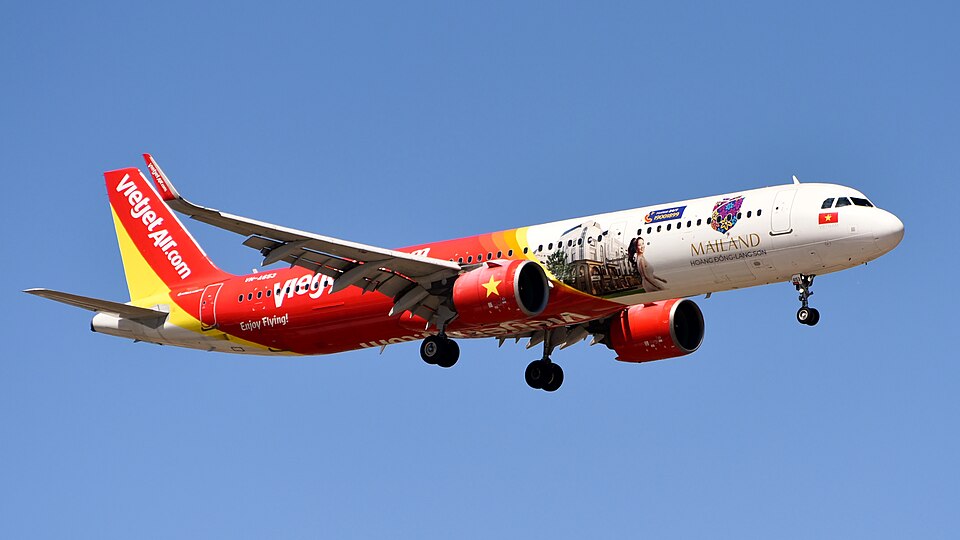
Incident Overview
On November 29, 2018, Vietjet Aviation Joint Stock Company Flight VJ356, operating an Airbus A321-271N with registration VN-A653 and manufacturer serial number 8199, departed from Tan Son Nhat International Airport in Ho Chi Minh City. The flight was scheduled to arrive at Buon Ma Thuot Airport (BMV) in southern Vietnam.
Flight History and Landing Sequence
The aircraft arrived at BMV and established contact with air traffic control for a precision approach on Runway 09. At 16:02 UTC, the aircraft touched down. During the touchdown and deceleration phase, both nose landing gear wheels fractured and separated from the assembly. The aircraft came to a complete stop on the runway but was unable to move under its own power.
Emergency Response and Injuries
Flight crews initiated emergency procedures, resulting in the safe evacuation of all 207 passengers. Six passengers sustained minor injuries during the evacuation; four were discharged from the hospital on the day of the incident, while two were discharged the following day with normal health conditions.
Aircraft Damage and Investigation Findings
Inspection revealed severe damage to the nose landing gear, including a ground axle and broken tie bolts. The shock absorber extension was significantly reduced compared to normal specifications. Additionally, minor dents were found on the fuselage, and damage was noted on the fan blades and air inlets of both engines.
The Civil Aviation Authority of Vietnam (CAAV) classified the event as a serious incident. Component analysis conducted by Collins Aerospace indicated that the fracture surfaces were consistent with failure due to overload, while material properties met production requirements. Flight data recorder analysis showed that continuous pitch-up inputs from the captain during the final approach led to a high descent rate and speed reduction, culminating in a hard touchdown where the nose gear struck the runway first.