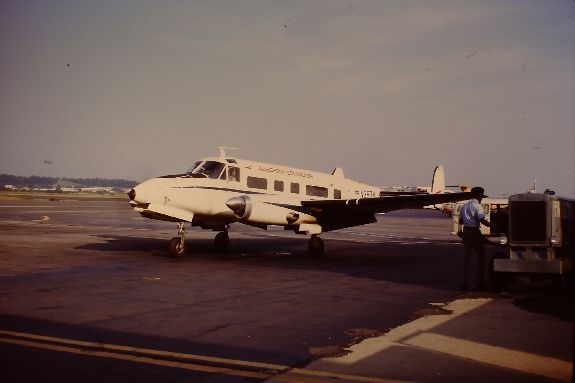
On October 1, 1974, a Volpar Turboliner 18 (registration N357V) operated by Winship Air Services was involved in an aviation accident near Lupine, United States of America during landing or approach. 6 people were killed. Investigators recorded the probable cause as: The crew continued VFR flight into adverse weather conditions and failed to maintain flying speed. Contributing factors: failed to follow approved procedures, improper operation of powerplant, airframe ice, low ceiling, fog and snow falls, icing conditions,… This summary draws on records from the Bureau of Aircraft Accidents Archives (B3A); 3 related events involving the same aircraft type or operator are linked below.
On approach to Lupine Airstrip in poor weather with low ceiling, fog, and snow, the crew made a low pass, stalled, and crashed. All six occupants died. Probable cause: continued VFR flight into adverse weather and failure to maintain speed, with contributing factors including icing, improper procedures, and over-weight.
Incident
On approach to Lupine Airstrip, the crew encountered poor weather conditions including low ceiling, fog, and snow. The crew decided to perform a low pass and reduced altitude, during which the airplane stalled and crashed. All six occupants were killed.
Probable Cause
According to the official investigation, the probable cause was the crew's decision to continue visual flight rules (VFR) flight into adverse weather conditions and their failure to maintain flying speed. Contributing factors reported include: failure to follow approved procedures, improper operation of the powerplant, airframe ice, low ceiling, fog and snow, icing conditions, weather information provided via radio by an oil company radio operator, and operation above maximum takeoff and landing weight.