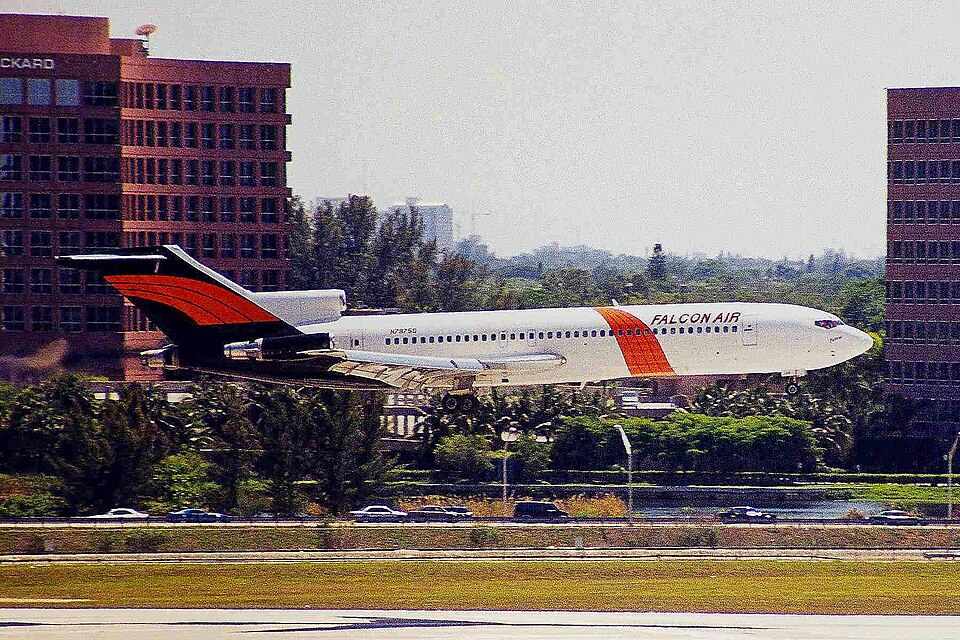
Approach and Landing
During the approach, the crew was advised of windshear on final approach with a gain of +10 knots and loss of -15 knots at 700 feet and 400 feet above ground level. Reported winds were 170 degrees at 26 knots, gusting to 40 knots. The pilot added 20 knots to the Vref speed of 132 knots and selected auto-spoiler deployment. Prior to touchdown, the crew was again advised of a windshear alert in several quadrants. After touchdown, the aircraft bounced and the auto-spoilers deployed. The aircraft touched down again in what the crew described as a firm landing. The flight engineer found no apparent damage, so the crew did not report it as a hard landing.
Damage Discovery
On December 31, damage was found on the upper crown of the fuselage between stations 660 and 680, from stringer S-10 left to S-10 right. Later inspections also revealed nose gear damage.
Recorded Flight Data
Flight recorder readout indicated that the approach speed varied from 143 to 170 knots, with a touchdown speed of 163 knots. Significant windshear existed below 1,000 feet mean sea level, and moderate to severe turbulence existed below 5,000 feet mean sea level. Updrafts and downdrafts existed below 100 feet above ground level due to convergence and divergence of the wind.