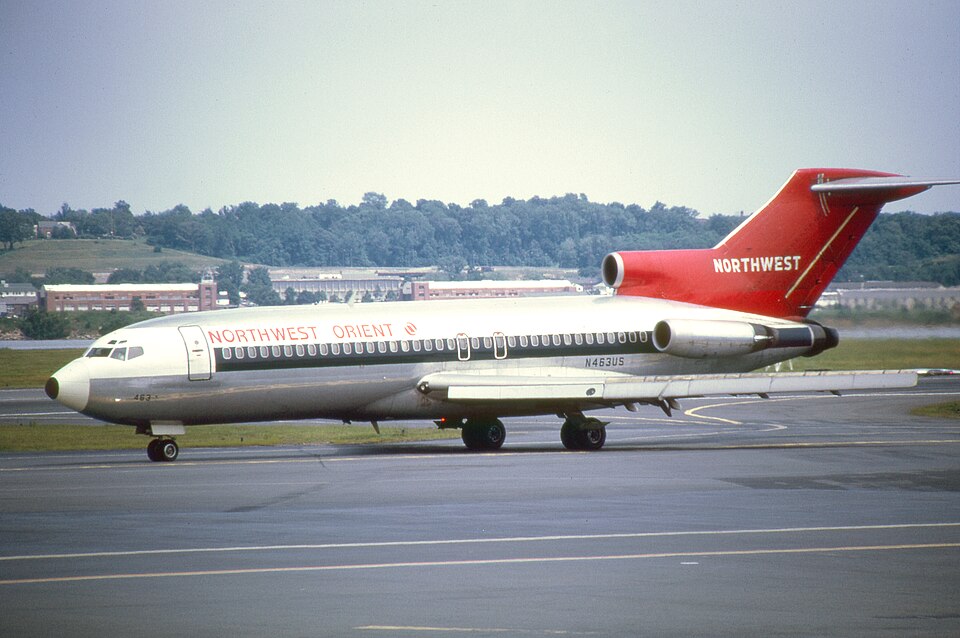
What happened
Shortly after departing from the airport, the aircraft encountered a critical mechanical issue within its propulsion system. The failure originated in the number 3 engine, where an uncontrollable breakdown occurred involving the removable sleeve compressor spacer located between the seventh and eighth stages. This structural failure was not contained within the engine casing.
Debris from the failed spacer pieces traveled through the ductwork connecting to the number 2 engine. Upon entering this adjacent engine's intake path, the foreign objects caused significant disruption, resulting in compressor stalls within that powerplant. Despite the loss of two engines and the associated immediate danger, the crew managed to maintain control of the aircraft.
The pilot successfully executed an emergency landing procedure utilizing only the single remaining operational engine. The aircraft touched down safely nine minutes after the initial takeoff, with no further complications reported during the descent or ground operations.
The investigation
Following the incident, investigators recovered fragments of the failed spacer component for detailed examination. Metallurgical analysis was conducted on these pieces to determine the root cause of the structural failure. The testing revealed that cadmium embrittlement had occurred around at least one tierod sleeve hole on the spacer.
Further investigation into the manufacturing and maintenance history of the component uncovered the origin of this material defect. The spacer had undergone a modification process in 1975 which involved plating. During this procedure, the application of nickel plating was incomplete. This lack of full coverage allowed a subsequent cadmium layer to come into direct contact with the underlying steel of the spacer.
This direct contact between the cadmium and the steel is what initiated the embrittlement process. The weakened material could not withstand operational stresses, leading to the catastrophic failure observed during flight. The investigation confirmed that the defect was rooted in this specific plating error rather than operational wear or external damage.
Findings
The primary factor contributing to the incident was the cadmium embrittlement of the compressor spacer. This material degradation was a direct result of the incomplete nickel plating applied during the 1975 modification. The failure mode was an uncontrollable structural breakdown that propagated debris into adjacent systems.
Despite the severity of the mechanical failure, the outcome was mitigated by the crew's ability to operate the aircraft on a single engine. The successful landing demonstrates effective emergency response procedures in the face of multiple engine failures.