Incident Overview
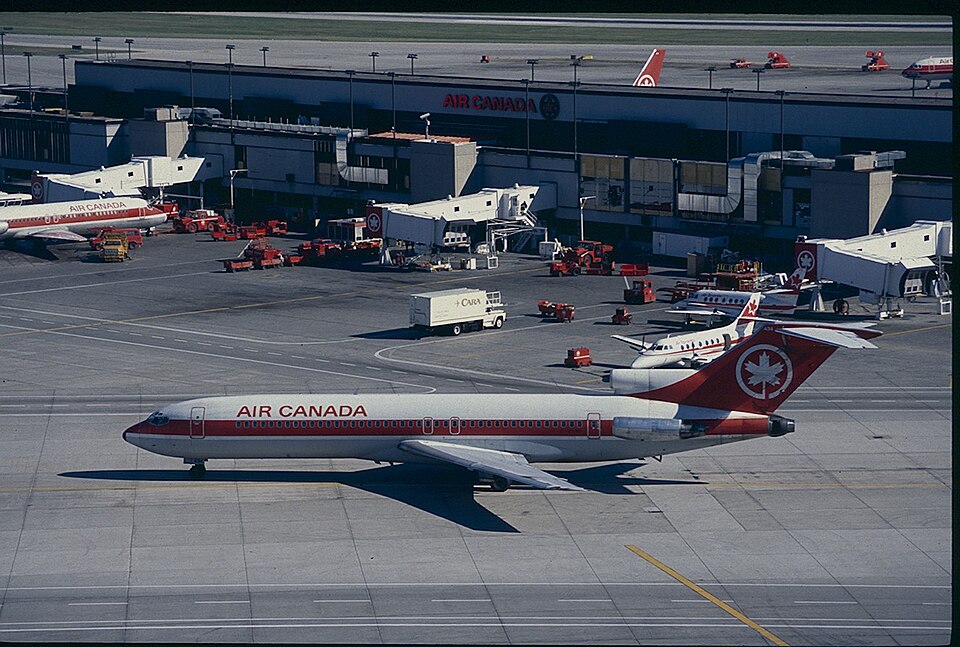
On an unspecified date, Air Canada Flight 839, a Boeing 727 registered as C-GYNE, departed from Chicago O'Hare International Airport. Simultaneously, a Cessna 650 Citation, registration N20AT, departed from Palwaukee Municipal Airport (PWK), located about 8 miles north of O'Hare. Both flights operated under Instrument Flight Rules (IFR) flight plans.
Flight Details
Air Canada Flight 839 took off from Runway 32R at O'Hare and initiated a right turn to a heading of 020 degrees, climbing to 5,000 feet. At approximately the same time, the Citation departed from Runway 16 at Palwaukee and also began a right turn while climbing to 3,000 feet. The two aircraft converged nearly head-on and passed in close proximity to each other.
Air Traffic Control Coordination
Before the Citation's takeoff, the Palwaukee tower controller contacted the TRACON North Satellite controller (NC) and obtained clearance for the Citation to depart on Runway 16 with a PWK #1 departure. Air Canada Flight 839 was in contact with the East Departure controller (EC), while the Citation crew communicated with the NC. Both controllers were working side-by-side, sharing the same radar scope.
Separation Estimates
The crew of Air Canada Flight 839 estimated the passing separation as approximately 500 feet, while the Citation crew estimated it as 100 feet. Both flights were in communication with TRACON during the event.
Procedural Issues
An available light designed to warn controllers of aircraft departing from Palwaukee was not in use at the time of the incident. Written procedures for the use of this light were not specific. Traffic conditions were described as moderate to busy.