Casualties unknown

1988-07-24: Boeing 737-222 (N69AF) — Pan American World Airways — Miami, FL

Miami, FL, US

On July 24, 1988, a Boeing 737-222 (registration N69AF) operated by Pan American World Airways was involved in an aviation accident near Miami, FL. Investigators recorded the probable cause as: Improper nickel and cadmium plating thickness during overhaul, which caused cadmium embrittlement of the combustion outer case base material, compounded by a pre-existing half-inch crack. This summary draws on records from the U.S. National Transportation Safety Board (NTSB) historical archive; 3 related events involving the same aircraft type or operator are linked below.

Sourcesthe U.S. National Transportation Safety Board (NTSB) historical archivePrimary reportUpdated 1781061362Data APIEditorial standards
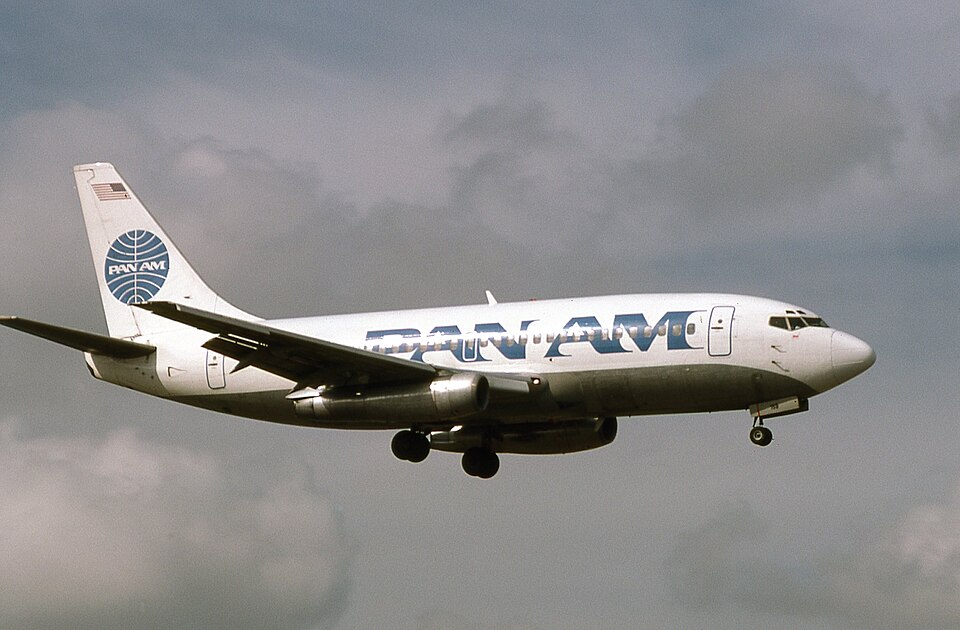
Aircraft registered N69AF
Aircraft registered N69AF. Photo: Pete Macklin / CC BY 2.0, via Wikimedia Commons

A number two engine failed shortly after takeoff when its combustion outer case ruptured. Investigation revealed a pre-existing crack and improper plating thickness caused cadmium embrittlement.

What happened

The flight crew experienced an in-flight failure of the number two engine shortly after initiating takeoff. The immediate mechanical cause was identified as the rupture of the engine's combustion outer case.

The investigation

A detailed metallurgical examination was conducted on the failed component to determine the root cause of the structural failure. The analysis revealed that a half-inch crack was already present in the combustion outer case prior to its last overhaul, which occurred 16 flight cycles before the incident.

Further testing determined that the nickel and cadmium plating applied during the overhaul process did not meet the required thickness specifications. This improper plating resulted in cadmium embrittlement of the base material within the case. The embrittled material lacked the necessary structural integrity to withstand operational stresses, leading directly to the catastrophic rupture.

Findings

The investigation concluded that the engine failure was caused by cadmium embrittlement of the combustion outer case. This metallurgical degradation was a direct result of improper plating thickness during maintenance and the presence of a pre-existing crack in the component.

Probable cause

Improper nickel and cadmium plating thickness during overhaul, which caused cadmium embrittlement of the combustion outer case base material, compounded by a pre-existing half-inch crack.

Investigation report by the U.S. National Transportation Safety Board (NTSB) historical archive. Original record: https://carol.ntsb.gov/event/20001213X26302. This page is a structured re-presentation; facts and quotes are in the National Transportation Safety Board (NTSB), United States.