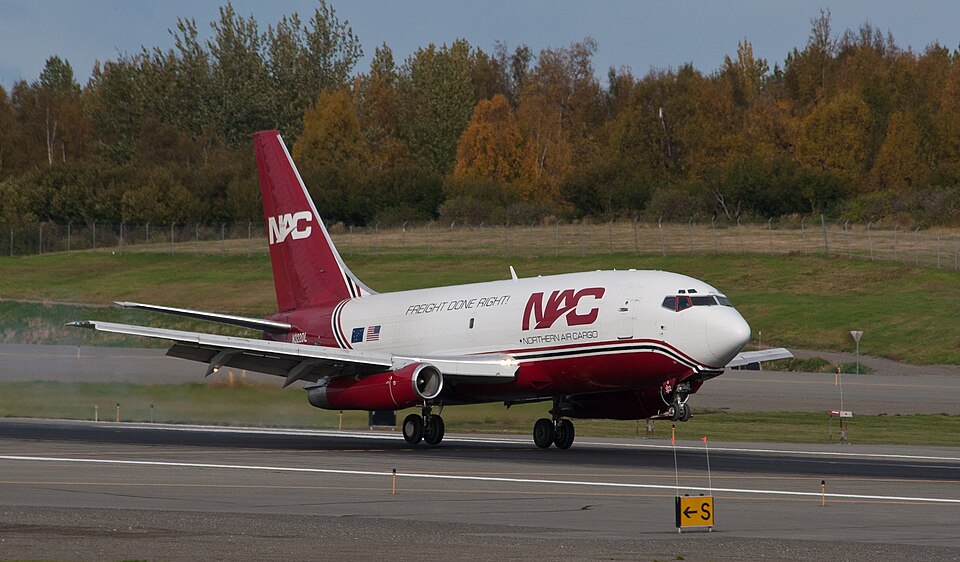
Incident Overview
During the climb after takeoff, as the airplane passed through 200 feet, the right engine detached from the wing. The flight crew continued the climb and was vectored for an uneventful landing without further incident.
Investigation Findings
Metallurgical examination determined that the engine separation resulted from the failure of the aft cone bolt and the engine secondary support assembly. The aft cone bolt failed due to a preexisting fatigue crack. The fatigue was attributed to lubricant inadvertently introduced into the conical surface of the bolt.
The engine secondary support assembly failed because the dynamic loads it experienced exceeded the designed capacity of its mounting bolts. During the separation sequence, as the engine swung forward, the two forward cone bolts failed in overload.