Casualties unknown

Uncommanded Roll During Descent Linked to Autopilot Actuator Resistance (N373US)

Fort Lauderdale, FL, US

On August 25, 1995, a Boeing 737-3B7 (registration N373US) operated by Usair, Inc. was involved in an aviation accident near Fort Lauderdale, FL. Investigators recorded the probable cause as: Low electrical resistance in the 'B' autopilot aileron actuator, which caused an uncommanded roll during descent for landing while the system was engaged. This summary draws on records from the U.S. National Transportation Safety Board (NTSB) historical archive; 5 related events involving the same aircraft type or operator are linked below.

Sourcesthe U.S. National Transportation Safety Board (NTSB) historical archivePrimary reportUpdated 2026-06-10Data APIEditorial standards
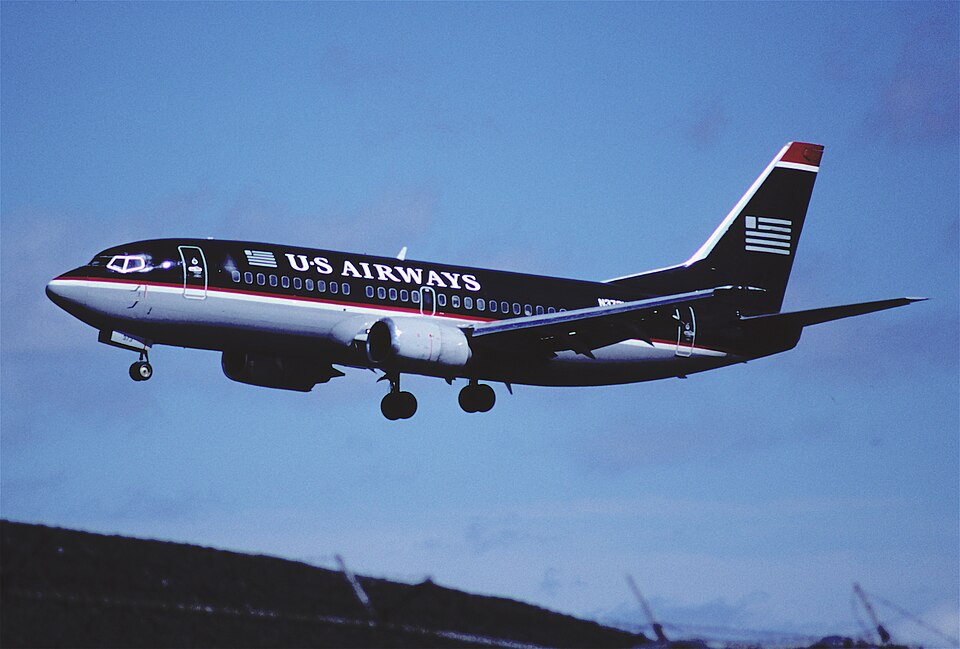
Aircraft registered N373US
Aircraft registered N373US. Photo: Aero Icarus from Zürich, Switzerland / CC BY-SA 2.0, via Wikimedia Commons

An aircraft experienced an uncommanded roll to the right during descent for landing while the 'B' autopilot system was engaged, leading to a post-incident examination of the aileron actuator.

What happened

During the descent phase for landing, the flight encountered an uncommanded roll to the right. At the time this event occurred, the 'B' autopilot system was engaged. The sudden movement required immediate attention from the crew as they managed the aircraft's attitude and trajectory.

The investigation

Following the incident, a thorough examination of the aircraft systems was conducted. Post-incident analysis revealed that the 'B' autopilot aileron actuator exhibited low electrical resistance. This finding prompted further testing by Boeing Commercial Airplane Company to understand the implications of this anomaly.

Findings

Tests conducted by Boeing Commercial Airplane Company demonstrated that low electrical resistance within the autopilot aileron actuator is directly linked to uncommanded roll occurrences. This mechanical issue likely contributed to the unexpected aircraft movement during the critical descent phase.

Probable cause

Low electrical resistance in the 'B' autopilot aileron actuator, which caused an uncommanded roll during descent for landing while the system was engaged.

Investigation report by the U.S. National Transportation Safety Board (NTSB) historical archive. Original record: https://carol.ntsb.gov/event/20001207X04318. This page is a structured re-presentation; facts and quotes are in the National Transportation Safety Board (NTSB), United States.