Casualties unknown

Rain and Reduced Visibility During Approach Lead to Runway Excursion (N315SW)

Dallas, TX, US

On May 11, 1996, a Boeing 737-300 (registration N315SW) was involved in an aviation accident near Dallas, TX. Investigators recorded the probable cause as: failure of the pilot to maintain directional control and runway alignment, during the landing roll out. Factors relating to the incident were: darkness, the adverse weather condition, the wet runway, and reduced visibility due to the inadvertent encounter… This summary draws on records from the U.S. National Transportation Safety Board (NTSB) historical archive; 8 related events involving the same aircraft type or operator are linked below.

Sourcesthe U.S. National Transportation Safety Board (NTSB) historical archivePrimary reportUpdated 2026-06-10Data APIEditorial standards
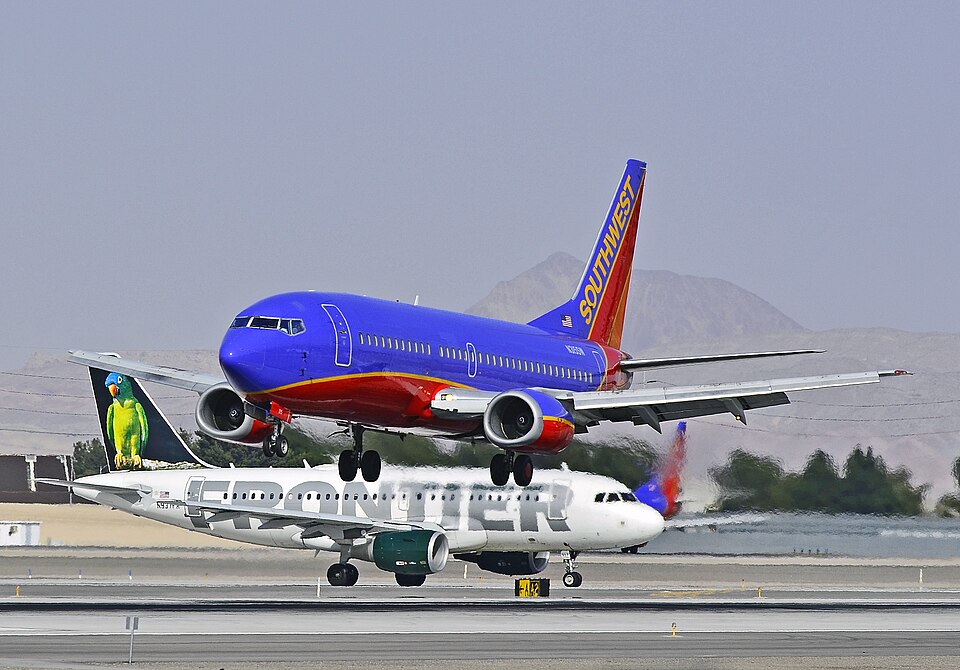
Aircraft registered N315SW
Aircraft registered N315SW. Photo: Tomás Del Coro from Las Vegas, Nevada, USA / CC BY-SA 2.0, via Wikimedia Commons

During a visual approach to runway 31L, heavy rain at 50 feet AGL reduced visibility. After touchdown, the first officer applied full rudder input. The left main landing gear departed the paved surface for about 700 feet, damaging 6 runway edge lights.

Approach

During a visual approach to runway 31L, the flightcrew visually observed thunderstorms north of the airport that were moving south. They also noted a display of the thunderstorms on their weather radar system. Light rain was encountered at 200 feet AGL, and the rain intensified passing through 100 feet AGL, prompting the captain to switch to 'high wiper'. The captain stated that at 50 feet AGL, 'the visibility was [further] reduced by heavy rain.'

Touchdown and Correction

After touchdown, the captain advised the first officer (who was at the controls) to make a correction. The first officer acknowledged, 'I have full rudder input.' Subsequent to the rudder inputs, the crew 'was able to re-center the aircraft on the runway.' The flight crew of another aircraft holding at the threshold of runway 31L reported that they observed the airplane 'disappear into a wall of water' after touchdown.

Post-Event Examination

Examination of the airplane revealed the presence of mud on the left main landing gear, wheel well, engine, and engine pylon area. Inspection of the runway indicated that the left main landing gear departed the paved surface for about 700 feet. Additionally, 6 runway edge lights were damaged on the left side of runway 31L.

Investigation report by the U.S. National Transportation Safety Board (NTSB) historical archive. Original record: https://carol.ntsb.gov/event/20001208X05750. This page is a structured re-presentation; facts and quotes are in the National Transportation Safety Board (NTSB), United States.