Casualties unknown

TCAS Evasive Maneuver Injures Two Flight Attendants on United 1517 (N321UA)

Valparaiso, IN, US

On June 8, 1997, a Boeing 737-300 (registration N321UA) was involved in an aviation accident near Valparaiso, IN. Investigators recorded the probable cause as: a delay by the pilot of the other aircraft in turning on his mode C transponder. This summary draws on records from the U.S. National Transportation Safety Board (NTSB) historical archive; 8 related events involving the same aircraft type or operator are linked below.

Sourcesthe U.S. National Transportation Safety Board (NTSB) historical archivePrimary reportUpdated 2026-06-10Data APIEditorial standards
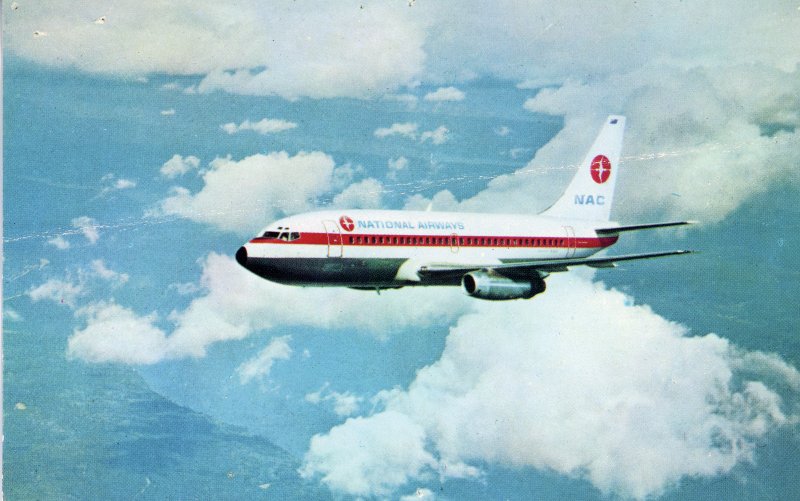
Boeing 737-300
Photo: San Diego Air & Space Museum Archives / Public domain, via Wikimedia Commons

During descent into O'Hare, United 1517 crew received TCAS alerts and executed an abrupt pull-up, injuring two flight attendants. Closest separation was 0.1 nm horizontally and 50 ft vertically.

Incident Overview

On a routine descent into Chicago O'Hare International Airport, the flight crew of United Airlines Flight 1517 received a Traffic Advisory (T/A) from the Traffic Alert and Collision Avoidance System (TCAS). Shortly thereafter, a Resolution Advisory (R/A) followed. The crew reported their altitude at approximately 11,500 feet when the T/A was received, and the first radar return of the conflicting aircraft was at 11,200 feet.

Evasive Maneuver and Injuries

In response to the R/A, the captain executed an abrupt pull-up to avoid a collision with the other aircraft. During this maneuver, two flight attendants sustained injuries. The nature of their injuries was not disclosed in the investigation.

Conflicting Aircraft Details

The pilot of the other aircraft reported that while passing through 10,000 feet, he noticed his Mode C transponder was not selected. He subsequently changed the selector position. The investigation did not specify the type or registration of either aircraft.

Separation Analysis

Investigation of the event revealed that the closest separation between the two aircraft was 0.1 nautical miles horizontally and 50 feet vertically. No further details regarding the cause of the conflict were provided.

Investigation report by the U.S. National Transportation Safety Board (NTSB) historical archive. Original record: https://carol.ntsb.gov/event/20001208X08078. This page is a structured re-presentation; facts and quotes are in the National Transportation Safety Board (NTSB), United States.