Incident Summary
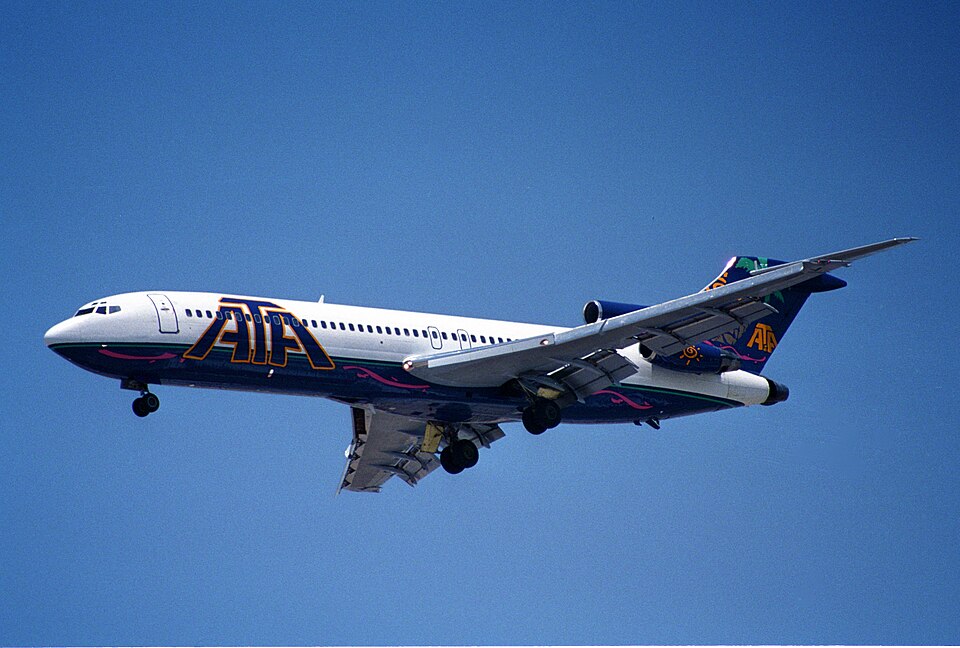
During an airshow, a Boeing 727-2Q6 and a Lancair 360 were involved in a runway incursion. The captain of the Boeing 727-2Q6 reported seeing the Lancair 360 on the runway while at approximately 80 to 100 knots during takeoff roll. He executed an abort and maneuvered the aircraft to the left, causing the right wing of the 727 to pass over the Lancair 360. No contact was made, and neither aircraft sustained damage.
Sequence of Events
The Boeing 727-2Q6 had been cleared to back taxi on runway 9 and was subsequently cleared for takeoff. The crew was instructed to expedite as a T-34 flight was on final approach, three miles out. As the 727 began its takeoff roll, the captain saw the Lancair 360 on the runway heading toward them. He aborted the takeoff and turned left, exiting the runway onto taxiway Bravo and then taxiing to the ramp.
The pilot of the Lancair 360 stated that he was taxiing to runway 9 following signals from an airshow flagman (ground marshaller). The flagman informed him that if he wished to depart, he could taxi quickly down the runway to get ahead of airshow traffic. The Lancair pilot noted that due to noise and commotion, he failed to recognize the Boeing 727 that was back taxiing. After spotting the 727, he hugged the left side of the runway to give it as much room as possible. He was monitoring the runway frequency and did not hear any relevant transmissions.
The air traffic manager for the Experimental Aircraft Association (EAA) airshow observed the Lancair 360 from the tower. The flag person reported that the Lancair approached on runway 31, turned 180 degrees, stopped, and shut down. The pilot stated he had a hot brake and wanted to cool it off. The flag person pointed out that the field would close at 1500, implying the pilot would be unable to depart until after the airshow if he waited. The flag person suggested that the pilot continue taxiing for departure, explaining that he wanted him to taxi in the grass in front of waiting warbirds. The flag person coordinated by radio with the EAA flag person at the departure point, confirming that no aircraft intended to taxi eastbound in the grass. The pilot agreed, restarted his engine, turned 180 degrees, and followed the flag person's signals to bear left onto the grass taxiway. However, the Lancair straightened out and taxied the last 30 feet of runway 31, turning westbound on the edge of runway 9.
Communications
The flag person broadcast an "alert, alert, alert, that there was an aircraft on runway 9" on the Flightline Operations network, knowing that the tower cab monitored that frequency. The Boeing 727 was already beginning its takeoff roll with its lights on. The 727 then went into reverse thrust and under heavy braking, moved to the left on the runway to clear the Lancair. The 727's wingtip passed over the Lancair, but no contact occurred.
Aftermath
No damage was sustained by either airplane. The incident concluded with both aircraft operating safely without collision.