Casualties unknown

2002-02-24: Cessna 208B (N454SF) — Tununak, AK

Tununak, AK, US

On February 24, 2002, a Cessna 208B (registration N454SF) was involved in an aviation accident near Tununak, AK. Investigators recorded the probable cause as: The pilot's decision to land on a runway with snow drifts that obstructed the nose wheel, leading to a loss of directional control and a tail strike during an attempt to stop the aircraft's backward movement. This summary draws on records from the U.S. National Transportation Safety Board (NTSB) historical archive; 8 related events involving the same aircraft type or operator are linked below.

Sourcesthe U.S. National Transportation Safety Board (NTSB) historical archivePrimary reportUpdated 1781061362Data APIEditorial standards
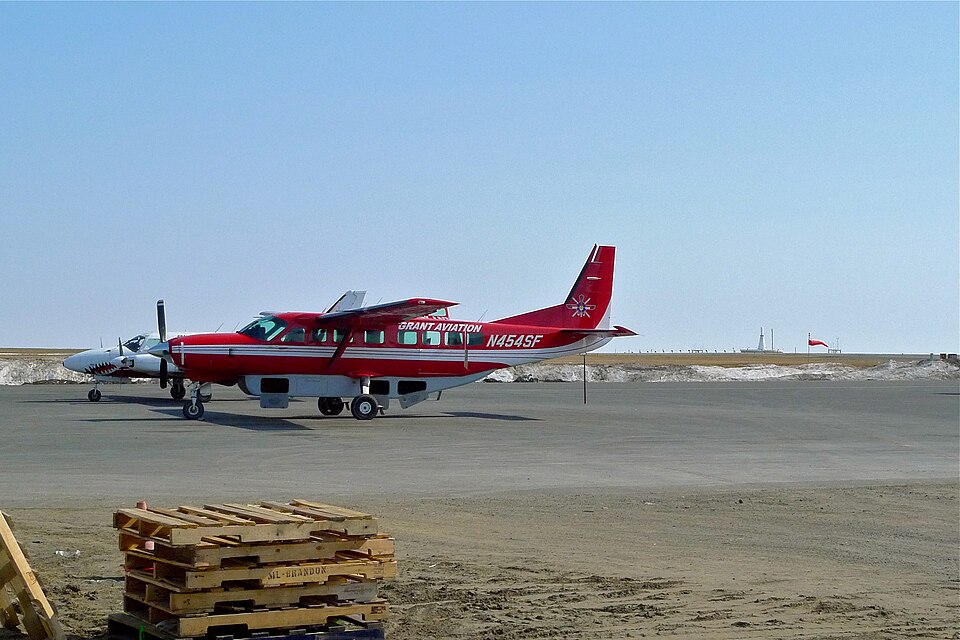
Aircraft registered N454SF
Aircraft registered N454SF. Photo: Joseph from Cabin On The Road, USA / CC BY-SA 2.0, via Wikimedia Commons

A pilot's attempt to stop on a snow-covered runway resulted in the aircraft rolling backward. Reapplying brakes caused the tail to strike the ground, damaging fuselage bulkheads.

What happened

During the landing roll, the pilot applied brakes to bring the aircraft to a complete stop. However, the nose wheel became positioned atop a snow drift, preventing forward traction. After releasing the brakes, the airplane began to roll backward due to gravity or momentum.

When the pilot reapplied the brakes to halt this backward movement, the aircraft rocked rearward and pivoted on its main landing gear. This motion caused the tail section to strike the ground, resulting in damage to two fuselage bulkheads.

The investigation

The physical evidence indicated that the nose wheel was obstructed by a snow drift during the initial braking phase. The subsequent backward movement and pivot on the main gear were direct consequences of the pilot's attempt to stop the reverse roll while the nose gear remained elevated or stuck in the snow.

Findings

  • The aircraft experienced a tail strike due to pivoting on the main landing gear during a backward roll.
  • Two fuselage bulkheads sustained damage from contact with the ground.
  • The incident occurred during the landing roll phase, specifically after the initial stop attempt failed due to surface conditions.

Probable cause

The pilot's decision to land on a runway with snow drifts that obstructed the nose wheel, leading to a loss of directional control and a tail strike during an attempt to stop the aircraft's backward movement.

Investigation report by the U.S. National Transportation Safety Board (NTSB) historical archive. Original record: https://carol.ntsb.gov/event/20020318X00360. This page is a structured re-presentation; facts and quotes are in the National Transportation Safety Board (NTSB), United States.