Casualties unknown

Flight Attendant Injured in Turbulence During Climb-Out Deviation (N644AW)

Payson, AZ, US

On June 5, 2003, an Airbus Industrie A320-321 (registration N644AW) operated by America West Airlines, Inc. was involved in an aviation accident near Payson, AZ. Investigators recorded the probable cause as: The flight's encounter with convectively induced turbulence associated with developing thunderstorms while the flight crew attempted to deviate around an area of adverse weather. This summary draws on records from the U.S. National Transportation Safety Board (NTSB) historical archive; 8 related events involving the same aircraft type or operator are linked below.

Sourcesthe U.S. National Transportation Safety Board (NTSB) historical archivePrimary reportUpdated 2026-06-10Data APIEditorial standards
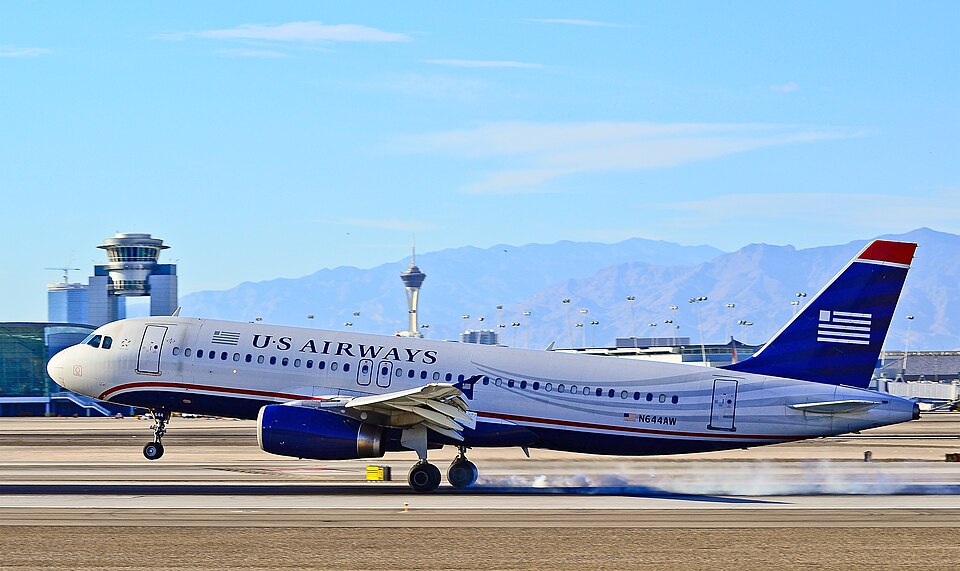
Aircraft registered N644AW
Aircraft registered N644AW. Photo: Tomás Del Coro / CC BY-SA 2.0, via Wikimedia Commons

A flight attendant was injured during moderate turbulence at about 25,000 feet after the flight deviated around cumulonimbus clouds. The crew had weather radar and ATC clearance but entered a secondary buildup.

Incident Details

During climb-out, at approximately 25,000 feet, a flight attendant sustained an injury when the aircraft encountered moderate turbulence. The flight attendant was standing in the aft galley, preparing to provide cabin service.

Weather Conditions

Before departure, the captain received a weather package indicating that cumulonimbus clouds and thunderstorm activity would build up to 33,000 feet along the intended route. During the climb, the flight crew visually observed cumulus buildups and confirmed their presence using the onboard weather radar.

Flight Path Deviation

The flight crew requested and obtained an air traffic control clearance to deviate to the right to avoid the building cumulonimbus clouds. This deviation placed the aircraft directly downwind of the buildups, potentially in the vicinity of turbulent eddies. The turbulence event occurred after the flight diverted around a primary buildup and entered a secondary buildup that had been partially masked by the primary one.

Aftermath

The flight crew diverted to the nearest airport, where the injured flight attendant was transported to a hospital. The aircraft departed for its intended destination approximately 30 minutes later.

Investigation report by the U.S. National Transportation Safety Board (NTSB) historical archive. Original record: https://carol.ntsb.gov/event/20030624X00945. This page is a structured re-presentation; facts and quotes are in the National Transportation Safety Board (NTSB), United States.