Casualties unknown

2005-06-05: Boeing 757-223 (N602AN) — New Chicago, IN

New Chicago, IN, US

On June 5, 2005, a Boeing 757-223 (registration N602AN) was involved in an aviation accident near New Chicago, IN. Investigators recorded the probable cause as: Convectively induced turbulence. This summary draws on records from the U.S. National Transportation Safety Board (NTSB) historical archive; 7 related events involving the same aircraft type or operator are linked below.

Sourcesthe U.S. National Transportation Safety Board (NTSB) historical archivePrimary reportUpdated 1781061362Data APIEditorial standards
Aircraft registered N602AN
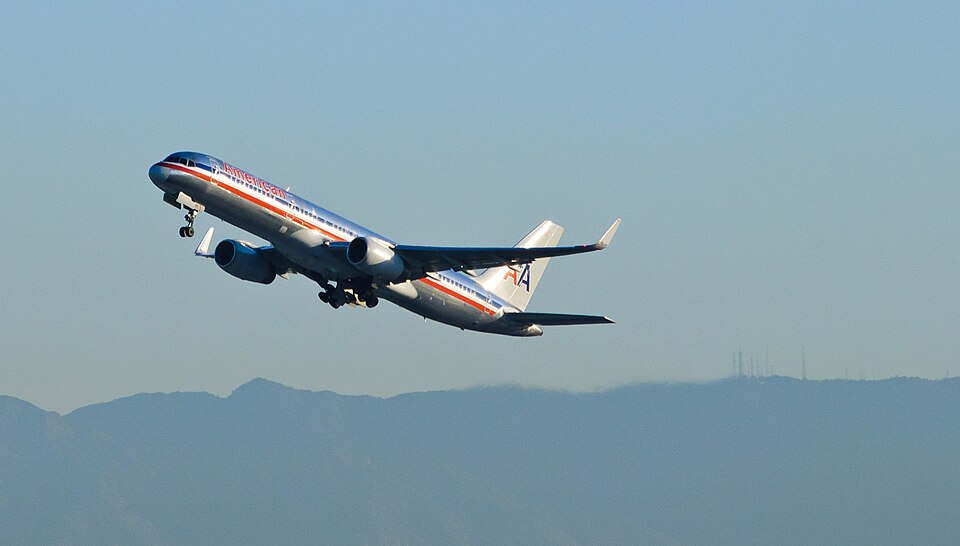
Aircraft registered N602AN. Photo: skinnylawyer from Los Angeles, California, USA / CC BY-SA 2.0, via Wikimedia Commons

An airplane encountered convectively induced turbulence during cruise descent, injuring two flight attendants. One suffered a fractured ankle, the other minor injuries to shoulder, hip, foot, and lower back.

Incident Overview

During cruise descent, an airplane encountered convectively induced turbulence (CIT). The event lasted approximately 4 seconds, with vertical accelerations ranging from a maximum of about 1.9g to a minimum of about 0.5g, as recorded by the Digital Flight Data Recorder (DFDR). The turbulence resulted in injuries to two flight attendants.

Flight Attendant Injuries

One flight attendant was located in the aft galley preparing for landing when the turbulence occurred. She reported hearing the captain say "prepare for landing" and then suddenly being lifted off the ground and slammed into the 4R door. This flight attendant sustained a fractured ankle.

The other injured flight attendant was near the aft lavatories, also preparing for landing. She stated that the airplane "hit some type of severe turbulence without warning" and that she was thrown to the floor. She suffered minor injuries to her shoulder, hip, foot, and lower back.

Data Analysis

Data from the aircraft's Digital Flight Data Recorder (DFDR) was extracted and analyzed. The recorded vertical accelerations were consistent with a convectively induced turbulence (CIT) event. The maximum vertical acceleration reached about 1.9g, while the minimum was about 0.5g during the approximately 4-second encounter.

Probable cause

Convectively induced turbulence

Investigation report by the U.S. National Transportation Safety Board (NTSB) historical archive. Original record: https://carol.ntsb.gov/event/20050616X00796. This page is a structured re-presentation; facts and quotes are in the National Transportation Safety Board (NTSB), United States.