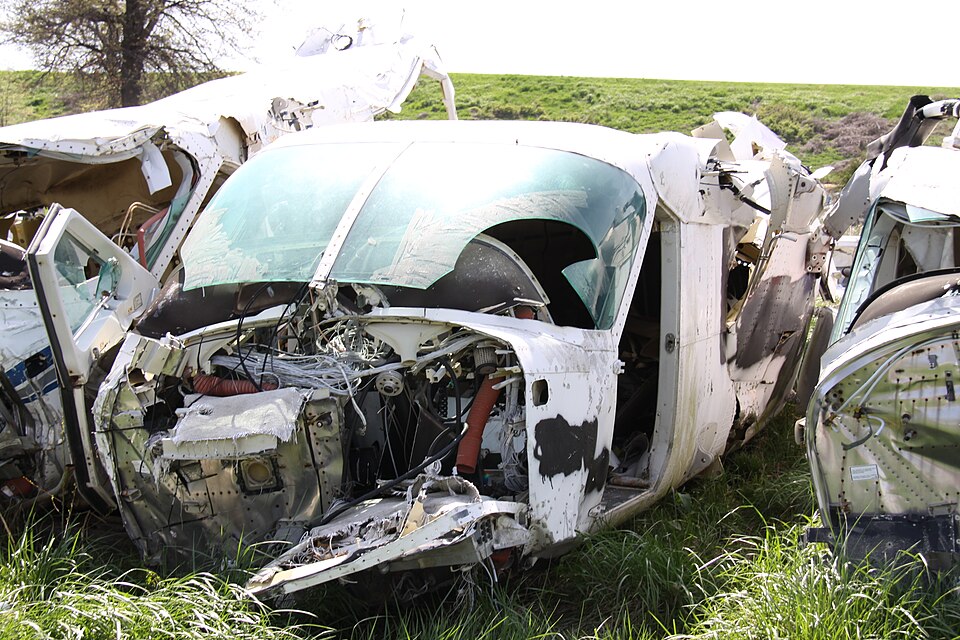
What Happened
The airplane was fueled with 65 gallons of Jet-A for an evening flight. The pilot, who had accumulated 6,600 flight hours, reported no abnormalities during engine start or takeoff. However, shortly after departure and after leveling off at 7,000 feet, the pilot notified air traffic control of an engine failure and total power loss. During the subsequent descent, the pilot attempted both an air restart and a battery engine restart, but neither was successful.
Post-Accident Inspection
An inspection of the engine, conducted on November 30, 2005, revealed a reddish-brown stain beneath the fuel pump/fuel control unit on the accessory gearbox. When the accessory gearbox was turned, rotation of the drive splines in the fuel pump (specifically the splines for the fuel control unit) was not observed. The fuel pump unit was removed, and the area between the fuel pump and accessory gearbox was stained with a reddish-brown color.
Examination of the fuel pump found that its drive splines were worn. Similarly, the internal splines on the fuel pump drive coupling were also worn. The wear on the spline drive and coupling prevented full engagement of the spline drives. Both components showed evidence of fretting, and a reddish-brown material was present on them.
Aircraft and Engine History
The airplane had accumulated approximately 130 hours since a maintenance inspection that included an inspection of the fuel pump. The engine had a total time of 9,852 hours, with 5,574 hours since its last overhaul.