Accident Details
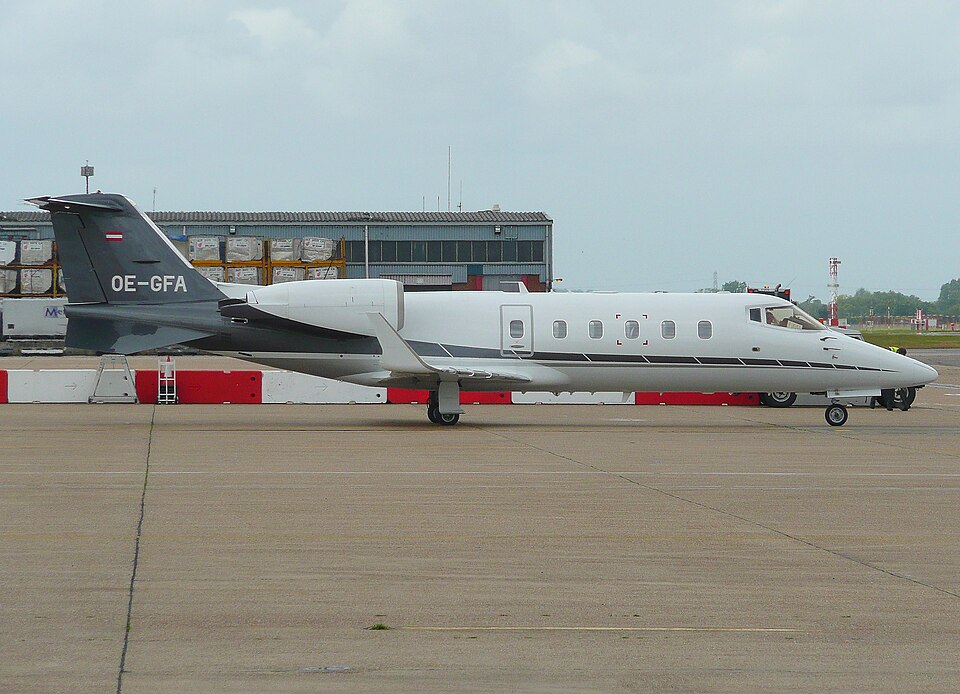
On 14 June 2006, a Learjet 60 aircraft, registration OE-GFA, operated by Jetalliance Flugbetriebs AG Austria, was scheduled to fly from Kyiv Boryspil International Airport (UKBB) to Aurel Vlaicu International Airport Bucharest–Băneasa (LRBS). The aircraft departed at 10:06:43 UTC and began descent from cruising altitude FL360 after 42 minutes.
At 11:02 UTC, the aircraft contacted Bucharest Approach for landing. After receiving weather information, the pilot requested Runway 25. The aircraft was vectored and cleared to descend to 3,000 ft. At 11:06 UTC, the approach controller informed the crew that the available landing distance on Runway 25 was 2,400 meters due to displaced threshold.
The crew was cleared for the NDB approach for Runway 25 at 11:11:50 UTC and asked to report the runway in sight. Initially, the pilot reported not seeing the runway, but after receiving distance information, the pilot reported the runway in sight. Landing gear was extended at 11:15 UTC, and landing clearance was issued.
At 11:16 UTC, the aircraft touched down 800 meters before the displaced threshold, striking with the right main landing gear an obstacle—a pile of sand—resulting from runway repair works. The right main gear collapsed, and the aircraft veered off the runway to the right. It slid on the right wing and came to a stop at 11:16:43 UTC with the fuselage nose into a tree just beyond the airport perimeter fence, approximately 100 meters to the right of the runway centerline.
Aircraft and Crew Information
The aircraft was a Learjet 60, serial number 60-214, manufactured on 24 January 2001, registered in Austria. It had accumulated 1,977 hours and 49 minutes and 1,334 landings as of the accident. The crew consisted of a captain (born 30 March 1958, holding an ATPL with 10,134 total hours) and a first officer (born 22 June 1977, holding a CPL with 1,624 total hours as of end 2005). There was one passenger on board.
Injuries and Damage
The crew and passenger did not suffer any injuries and left the aircraft without requesting medical assistance. The investigation commission visually observed the following damage: right main landing gear broken upon landing, right wing damaged, nose cone destroyed, left wing flap deformed, left main gear inner wheel broken, and left main gear fairing deformed. Additionally, a runway light and part of the perimeter fence were destroyed.
Meteorological and Airport Information
At the time of the accident, the wind direction was 260 degrees at 4 m/s, with scattered cumulonimbus clouds and a cloud base at 900 meters. According to AIRAC AIP Supplement 01/06, runway repair works were being conducted on the east part of the runway, resulting in a temporary 800-meter displacement of Threshold 25. The displaced threshold coordinates were 443018.6863N 0260642.6628E, with modified lighting and markings.
Flight Recorders
The aircraft was equipped with a Fairchild F1000 Flight Data Recorder (FDR) and a Universal Avionics 120 Cockpit Voice Recorder (CVR). The FDR was in good condition, and data from the entire flight from Kyiv to Bucharest were successfully downloaded and analyzed. The recording stopped at 11:16:56 UTC. The CVR contained two hours of recording, including the last 30 minutes in high quality.
Analysis
According to the published NDB approach procedure for Runway 25 with displaced threshold, aircraft were required to cross the NDB at 2,000 ft. FDR data showed that the aircraft crossed the NDB at 11:13:59 UTC at an altitude of 1,028 ft, significantly lower than the procedure altitude. Cockpit voice recordings revealed discussions between crew members regarding the approach.
The investigation noted that air traffic control had been instructed to inform aircraft of the displaced threshold using the phrase: "Attention, runway works on direction 25, threshold displaced by 800 m."