Background
At the time of the incident, the north local control (NLC) position at Chicago O'Hare International Airport (ORD) was closed, and responsibilities were combined with south local control (SLC), located at the LC5 position in the tower cab. The SLC was responsible for aircraft landing and departing runway 14R and departing runway 27L, using frequencies 120.75 and 126.9. Due to this configuration, the ORD Standard Operating Procedures Order required that either the Electronic Flight Strip Transfer System (EFSTS) position or Local Monitor (LMN) position be staffed to assist the SLC. The third local controller (LC3) was responsible for aircraft departing runway 22L on frequency 132.7.
Sequence of Events
At 0257:00, the SLC instructed United Airlines flight 938 (UAL938) to taxi into position to hold on runway 14R. The crew acknowledged. At 0257:28, the flight crew of GTI6972 (a cargo aircraft) made initial contact with ORD SLC, stating "hello tower, Giant 6972 heavy 9 D-M-E I-L-S one four right." The tower controller replied, "O'Hare tower, runway 14 right cleared to land. [Wind] one six zero at eight, traffic will depart ahead of your arrival." The flight crew read back the landing clearance.
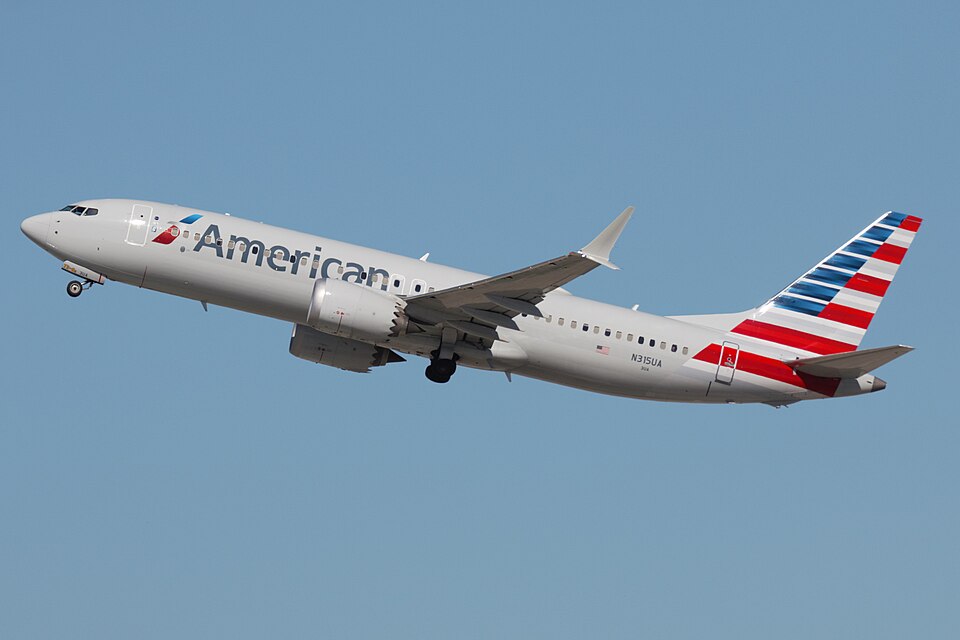
At 0257:50, the SLC cleared UAL938 for takeoff. At 0258:10, the SLC instructed United Airlines flight 1015 (UAL1015) to "Traffic lands, departs, crossing, runway 27 left position and hold." The crew replied, "need about two minutes, UAL1015 if you could delay us in position that's fine." The SLC said, "UAL1015, let me know when you're ready, hold in position runway 27L." The crew acknowledged.
According to the SLC's interview, he determined there was not enough spacing to permit Air India flight 124 (AI124) to depart from runway 14R prior to GTI6972's arrival. He walked to the LC3 controller and advised that he would not be departing the second airplane and would re-coordinate a release later.
At 0259:19, the SLC instructed UAL938 to contact departure control, which the crew acknowledged.
At 0300:20, the crew of UAL1015 advised, "tower, United 1015, we're ready 27L." In his interview, the SLC said, "As this was happening, I looked to see what was on the third local controller's board to effectively coordinate the remaining departures from runway 14R. GTI6972 was the last arrival that was on the D-BRITE display so it allowed for a great deal of flexibility. Because of this flexibility, rather than cut off the [runway] 22L departures, I looked at his board to see what the best time to release his flights would be. I then saw an American B777 moving up as the third departure aircraft [from runway 14R]. As I was determining the traffic flow, UAL1015 called 'ready'. I checked the [runway] 14R final out the window and there was nothing there. I scanned [runway] 27L from the departure end to the aircraft and there was nothing there. I checked the D-BRITE. I was checking the range on UAL938 to be sure he was far enough out on [runway] 14R to ensure I had the necessary wake turbulence separation for a [runway] 27L departure, and there was. Based on recall and hindsight, all this happened in about 3 or 4 seconds." At 0300:22, the SLC said, "United 1015, thank you, fly runway heading runway 27 left cleared for takeoff, wind one five zero at seven." The crew responded, "runway heading, cleared for takeoff United 1015."
Controller Actions
During the EFSTS' interview, he said he looked up and saw GTI6972 on landing roll on runway 14R at slow speed approaching taxiway T10. Although he was required to monitor the SLC frequencies, he did not and did not hear any communications between the SLC and any flight crews. He said he assumed GTI6972 was turning off at taxiway T10, because "it is very common". He looked left and saw out of the corner of his eye UAL1015 departing runway 27L. He looked back to GTI6972 and thought he might turn off on the next taxiway, M, to go to the NE cargo area then decided he was not. He then alerted the SLC.
At 0301:12, the SLC said, "stop, stop, stop."
Pilot Actions
According to the United 1015 Captain's written statement, "The takeoff was completely normal until approximately 110 knots, when I noticed [GTI6972] approaching our runway on what appeared to be [runway] 14R or taxiway T. I commented that it didn't look like he was going to stop. I would estimate [GTI6972] was traveling 15-20 knots. At that point, I did not feel that we would be able to abort and stop prior to those intersections (around 110-120 knots), so I decided to continue accelerating towards [GTI6972] and if needed, attempt to rotate over him. The other option was an abort and a right steer behind [GTI6972] to the north of runway 27L. Knowing there are substantial obstacles right of [runway] 27L, I felt that option would guarantee significant airframe damage and probably passenger injury. [GTI6972] continued encroaching on our runway, and it became clear that I would have to rotate early to clear it. By the time I rotated, [GTI6972] was fully on our runway. Vr at our weight was 143 knots, and I estimate I began the rotation 10 knots prior to Vr. The First Officer called V1 shortly after I started rotating. I flew a smooth rotation until we were airborne for fear of dragging the tail and delaying further rotation."
Aftermath
The Airport Movement Area Safety System (AMASS) did not activate. Data recorded by the AMASS indicates that UAL1015 flew over GTI6972.