No fatalities

Cessna 172SP Nose Gear Collapse During Night Solo Landing Practice (N462ER)

Daytona Beach, FL, US

On May 5, 2007, a Cessna 172SP (registration N462ER) operated by Embry Riddle Aeronautical University was involved in an aviation accident near Daytona Beach, FL. No fatalities were reported. Investigators recorded the probable cause as: The pilot's improper flare at night, which resulted in a hard landing. A factor in the accident was the pilot's lack of recent night experience. This summary draws on records from the U.S. National Transportation Safety Board (NTSB) historical archive; 4 related events involving the same aircraft type or operator are linked below.

Sourcesthe U.S. National Transportation Safety Board (NTSB) historical archivePrimary reportUpdated 2026-07-04Data APIEditorial standards
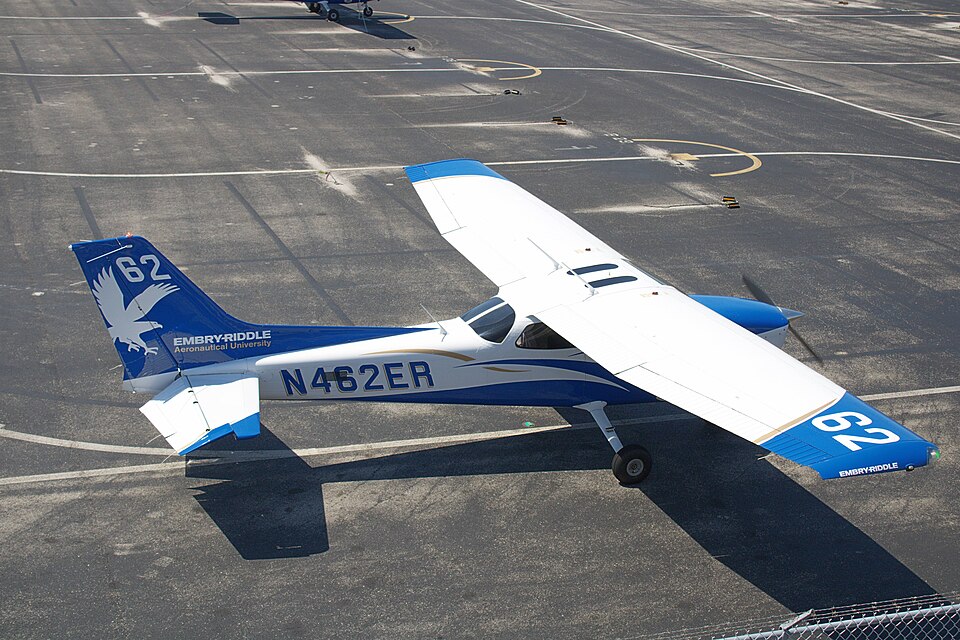
Aircraft registered N462ER
Aircraft registered N462ER. Photo: ZLEA / CC BY-SA 4.0, via Wikimedia Commons

A private pilot on a night solo flight at an international airport made a hard landing in a Cessna 172SP, causing the nose landing gear to collapse and substantial damage. The pilot had 160 total hours with 22 night hours.

Incident Overview

A Cessna 172SP sustained substantial damage after the nose landing gear collapsed during a landing at a large, well-lit international airport. The private pilot, who was flying solo at night for the first time at that airport, reported that the approach was "a little high, a little fast, and I flared higher than usual." The airplane landed hard, bounced, and the nose gear folded, resulting in structural damage.

Pilot Experience

The pilot held a private pilot certificate and was flying in preparation for an additional rating. According to her logbook, she had accumulated 160 total hours of flight experience, including 22 hours at night. Her most recent night landing with an instructor had occurred two nights before the accident. Prior to that instructional flight, her previous night landing was 64 days earlier. The accident flight marked her first solo night operation at this particular airport.

Damage and Sequence

The impact forces during the hard landing and subsequent bounce exceeded the nose landing gear's structural limits, causing it to collapse. The aircraft sustained substantial damage as a result. The pilot was not injured, and no other persons or aircraft were involved.

Investigation Findings

The investigation reviewed the pilot's flight experience and the circumstances of the landing. The pilot's description of the approach and flare, combined with her limited recent night landing practice, were noted as factual elements of the event. No probable cause was determined in the available source material.

Frequently asked questions

What happened in the 5 May 2007 Cessna 172SP accident near Daytona Beach, FL?

A private pilot on a night solo flight at an international airport made a hard landing in a Cessna 172SP, causing the nose landing gear to collapse and substantial damage. The pilot had 160 total hours with 22 night hours.

Were there any fatalities in the 5 May 2007 Cessna 172SP accident?

No fatalities were recorded in this accident.

What aircraft was involved and where did it happen?

The accident on 5 May 2007 involved a Cessna 172SP, registration N462ER, operated by Embry Riddle Aeronautical University, at Daytona Beach, FL.

What was the probable cause of the accident?

The pilot's improper flare at night, which resulted in a hard landing. A factor in the accident was the pilot's lack of recent night experience.

Investigation report by the U.S. National Transportation Safety Board (NTSB) historical archive. Original record: https://carol.ntsb.gov/event/20070615X00738. This page is a structured re-presentation; facts and quotes are in the National Transportation Safety Board (NTSB), United States.