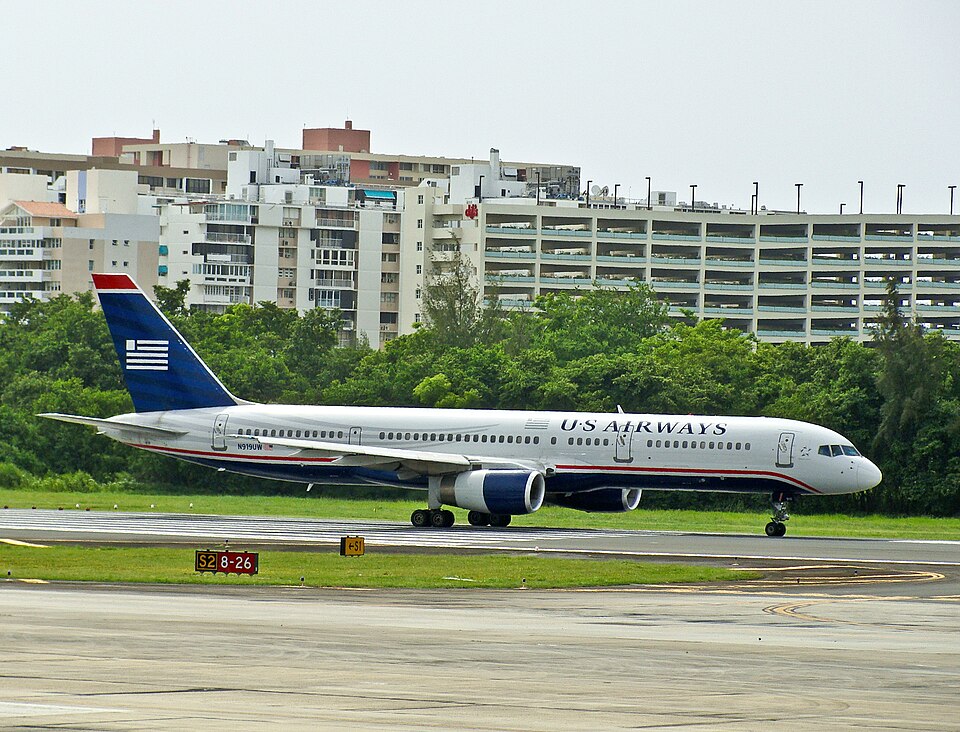
Incident Overview
On October 28, 2007, a US Airways Boeing 757-200, registration N919UW, suffered a fracture of the truck beam on the left hand main landing gear while preparing for departure from Charlotte/Douglas International Airport (CLT). The airplane was loaded with flight crew, cabin crew, passengers, and cargo at the time of failure. No other damage occurred to the aircraft, and no injuries were sustained by any occupants or ground personnel.
Maintenance History
The truck beam had accumulated 24,025 cycles since new and 2,707 cycles since its last overhaul, which took place in May 2005.
Fracture Characteristics
Examination determined that the fracture initiated by fatigue and stress corrosion cracking from pits present on the inner diameter (ID) surface of the truck beam, beneath the protective finishes. Crack propagation occurred through alternating modes of stress corrosion cracking and fatigue until final fracture via ultimate ductile separation.
Surface Condition Analysis
The condition of the surface finishes and base metal at the fracture initiation area indicated that pitting existed before the last application of cadmium plating and primer, rather than resulting from corrosion after the last overhaul. The observed pitting appeared to be remnants of incomplete corrosion removal during the prior overhaul.
Residual Stress and Thickness
Residual stress analysis of the ID surface in the fracture initiation region suggested that the blended area did not receive adequate peening to restore typical residual compressive stresses. The reduction in residual compressive stresses likely contributed to fracture initiation. Wall thickness at the fracture initiation site measured 0.29 inches, which was within drawing dimensional tolerances.
Material and Plating Verification
Chemical analysis and hardness testing confirmed that the truck beam was fabricated from the required material in the specified heat-treated condition. Evaluation of the protective finishes revealed that the cadmium plating on the ID surface did not meet minimum thickness requirements.