Casualties unknown

Engine Failure During Climb Leads to Single-Engine Landing (N676SW)

Greenville, TX, US

On November 17, 2007, a Boeing 737-300 (registration N676SW) was involved in an aviation accident near Greenville, TX. Investigators recorded the probable cause as: A total loss of engine power due to the No. 2 engine experiencing a release of its fan spinner through the fan cowl as a result of an unidentified object striking the spinner, separating it from the fan disk and causing the spinner to be ingested into the fan… This summary draws on records from the U.S. National Transportation Safety Board (NTSB) historical archive; 8 related events involving the same aircraft type or operator are linked below.

Sourcesthe U.S. National Transportation Safety Board (NTSB) historical archivePrimary reportUpdated 2026-06-10Data APIEditorial standards
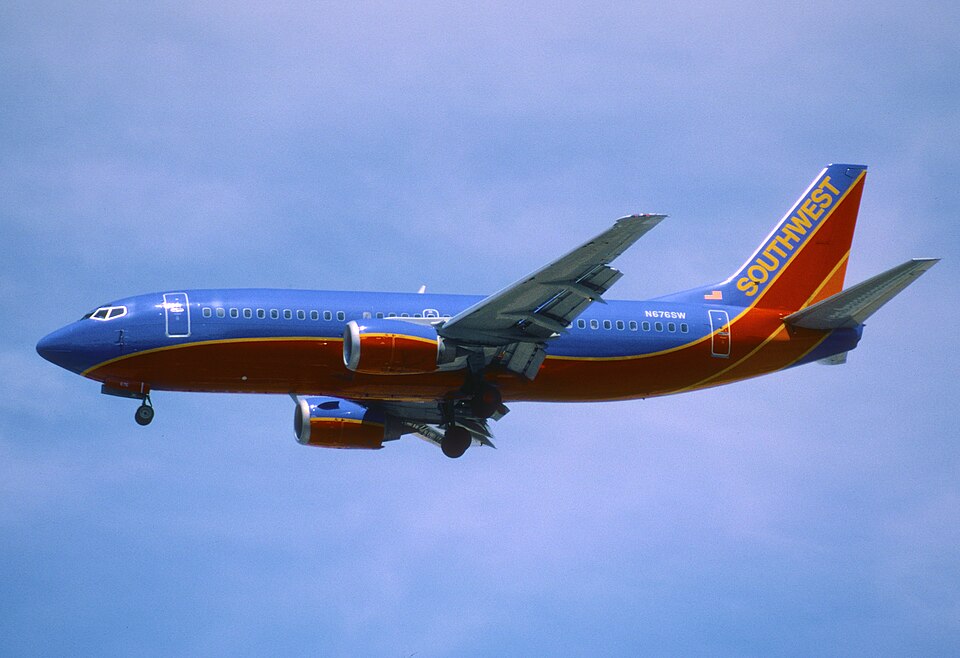
Aircraft registered N676SW
Aircraft registered N676SW. Photo: Aero Icarus from Zürich, Switzerland / CC BY-SA 2.0, via Wikimedia Commons

An airplane experienced a No. 2 engine failure while climbing through FL250 to FL330, with fan blade damage and spinner cone separation. The crew returned for a single-engine landing.

Incident Description

The airplane was climbing through flight level (FL) 250 to FL 330 when the No. 2 engine failed. The flight crew reported severe vibration, pulled both throttles back to idle, declared an emergency, executed an air turn back, and performed an uneventful single-engine landing.

Examination Findings

Examination of the engine revealed heavy airfoil damage to all fan blades, with several fractured near the platform. The forward and rear spinner cones were no longer attached to the fan disk. A large penetration hole was noted on the right-hand side of the fan cowl, just forward of the engine fan case. Inspection of the airplane showed impact marks along the right side of the fuselage and the right-hand horizontal stabilizer, but none of the fuselage impacts penetrated through to the cabin. The pieces of the forward and rear spinner cones that exited the engine were never recovered.

Metallurgical Analysis

Metallurgical examination of the fracture surfaces of the fan blades and fragments of the rear spinner aft flange revealed no preexisting fatigue-type mechanism; all fractures were consistent with overstress. Four sequential fan blade spacers were distorted consistent with a severe axial load rearward applied to the spacers by the rear spinner cone prior to the spinner cone release. However, no determination could be made as to the initial failure or what may have impacted the spinner cone.

Investigation report by the U.S. National Transportation Safety Board (NTSB) historical archive. Original record: https://carol.ntsb.gov/event/20071231X02010. This page is a structured re-presentation; facts and quotes are in the National Transportation Safety Board (NTSB), United States.