Introduction
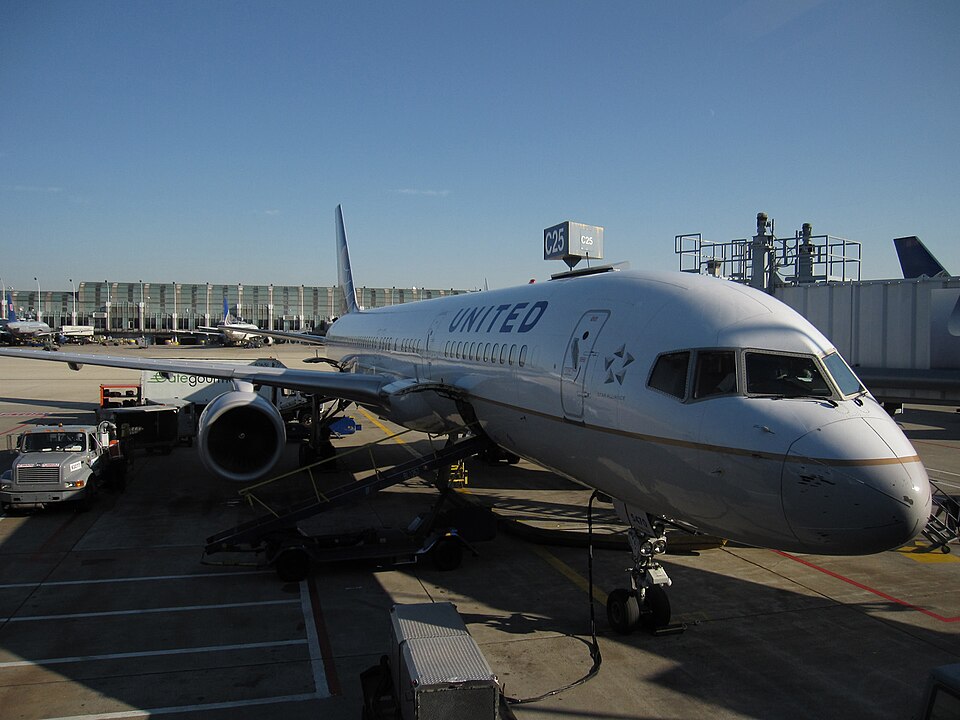
On June 10, 2009, about 1230 mountain standard time, a Boeing 757-222, registration N570UA, operated by United Airlines as Flight 146, experienced a tailpipe fire in the No. 2 (right) engine during engine start at Denver International Airport (DEN), Denver, Colorado. The engine was a Pratt & Whitney PW2037(M) turbofan. The aircraft was scheduled to fly to Sacramento International Airport, California, under 14 Code of Federal Regulations Part 121.
Sequence of Events
After pushback clearance, the flight crew started the left engine normally. Following pushback, the ground crew cleared the pilots to start the right engine while removing the tow bar. During the right engine start, cockpit data showed abnormally high starting fuel flow and exhaust gas temperature (EGT). The captain declared an abnormal start, placing the right engine fuel control switch to cutoff while motoring the engine. Concurrently, ground personnel observed smoke and flames from the rear of the engine and notified the pilots via intercom. The pilots also heard a transmission on the ramp control frequency about a 757 engine fire. No cockpit engine fire warning activated. Flight attendants reported passenger call lights near rows 19-22 and flames behind the right wing; they also called the cockpit. After maintenance and airport fire personnel confirmed the fire was out, the aircraft was towed back to the gate for normal deplaning.
Injuries and Damage
There were no injuries to the 2 pilots, 4 flight attendants, or 182 passengers. The fire was confined to the right engine tailpipe and adjacent wing and structure aft of the engine. The engine itself was undamaged, but the wing flaps aft of the engine, flap fairings near the engine, and the right-side fuselage wing fairing were scorched and blistered. No other property damage was reported.
Investigation Details
Post-incident examination of the right engine showed no evidence of an undercowl fire. Cockpit EICAS data for the right engine indicated: EPR 1.002, N1 0%, N2 46.3%, fuel flow 3927 pph, EGT 492°C, burner pressure (Pb) 132 psi. The left engine had lower values. The EICAS displayed fault codes related to Pb sensor faults per the 757 PW2000 Engine Series Fault Isolation Manual. The Pb line B-nuts were tight; blowing dry nitrogen produced only a minute amount of water. The Pb trap had no water or debris.
Both ignition systems functioned normally. APU duct pressure (28 psi) was slightly below the minimum 30 psi, but the left engine started successfully multiple times. The Electronic Engine Control (EEC) was removed and sent to Hamilton Sundstrand. Eight stored faults were all related to Pb sensor failures. The EEC passed a continuity test but failed an initial acceptance test due to a Channel A Pb sensor measurement of 2.66 psi (required 1.6-2.4 psi). After removing and testing the Pb sensors (which passed all thermal and pressure tests), the EEC with replacement sensors passed a second acceptance test. Reinstalling the original sensors, the EEC passed a third test. Several vibration tests were also passed. Disassembly of the original Pb sensors revealed metallic and nonmetallic debris, which Hamilton Sundstrand stated was foreign to the sensor but not likely to cause the high Pb indication.
Fuel scheduling is based on a fixed ratio of fuel flow over Pb for operating conditions. If Pb is unnaturally high, the EEC delivers proportionally more fuel. The incident engine was later tested at United Airlines maintenance and started successfully eight times.