History of Flight
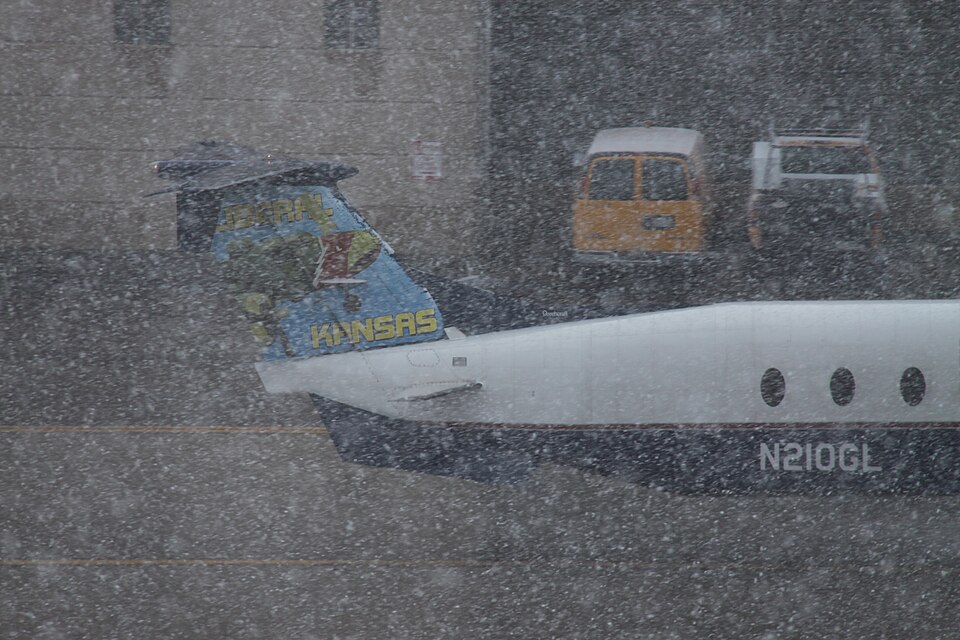
On February 17, 2012, at about 0830 mountain standard time, the pilot of a Beechcraft 1900D airplane, registration N210GL, discovered a hydraulic leak on the nose landing gear (NLG) during a post flight inspection. The airplane was registered to Great Lakes Aviation and operated by Great Lakes Airlines as a 14 Code of Federal Regulations Part 121 scheduled passenger flight. The airplane had just completed a flight from Laramie, Wyoming, to Denver, Colorado.
Damage to Airplane
The pilot’s inspection of the NLG revealed a crack in the NLG actuator end cap, part number (P/N) 25703-4. The end cap, serial number (S/N) 524, was removed from the actuator and shipped to the NTSB.
Aircraft Information
The NLG actuator was delivered new with the airplane and had accumulated 32,365.4 hours and 39,655 cycles since new. Great Lakes Airlines performed an ultrasonic inspection in accordance with the instructions in the Model 1900D Airliner Maintenance Manual 337 cycles prior to the incident. According to the operator, the NLG actuator had never been overhauled.
Tests and Research
The NLG end cap was examined in the National Transportation Safety Board (NTSB) Materials Laboratory. A visible crack extended circumferentially from the primary extend port on one side of the end cap, around the diameter of the end cap, to the secondary extend port on the other side. The intact portion of the end cap between the ports was cut toward the center line of the shuttle valve bore, and the two pieces were separated to examine the fracture faces. Examination revealed a relatively flat, smooth zone and ratchet marks originating at the intersection of a radius with an inner diameter of the end cap, consistent with fatigue. The fatigue zone extended outwards almost uniformly through the wall thickness of the end cap, with a preference to the shuttle valve bore, and had propagated entirely through the thickness near the aft side (as installed with the landing gear extended) of the end cap. The fracture face outside of the fatigue zone displayed a rough, grainy surface consistent with an overload event. Samples were removed and metallurgically mounted, polished, and etched to display the material microstructure. The etchant revealed a longitudinal grain structure oriented parallel to the shuttle valve bore. The surface finish and machined radius satisfied the drawing requirements.
The fatigue zone was examined with a scanning electron microscope to assess and count individual fatigue striations. Near the beginning of the crack, 29 individual striations were found in a measured crack length of 11.25 micrometers. Near the end, 19 striations were found in a measured length of 22.5 micrometers. It was calculated that there were approximately 15,305 striations along the length of the crack propagation at this location. Because the full crack length could not be determined due to the fatigue zone propagating into the shuttle valve bore, the striation count is approximate and a minimum value.
According to the Metals Handbook Desk Edition, 2nd Edition, 1998, wrought aluminum products such as the end cap generally exhibit differences in tensile properties and resistance to fatigue stresses in the three orthogonal grain directions (longitudinal, long-transverse, and short-transverse), with the longitudinal direction being superior. Typically, fatigue loading in the longitudinal grain direction can provide a 5 to 10 percent improvement in fatigue strength according to the Metals Handbook, 8th Edition, Volume 1, 1961. The principal tensile stresses in the end cap are in the longitudinal direction and result from hydraulic pressure.
Additional Information
The fatigue cracking evident on the NLG end cap is similar to cracking found on the end caps of three different Beechcraft 1900D airplanes operated by Great Lakes Airlines, documented in NTSB investigations CEN11IA341, ENG12IA013, and ENG12IA024.
As a result of some previous NLG end cap fractures and preliminary findings from the CEN11IA341 investigation, Hawker Beechcraft instituted changes to the recommended maintenance program for the NLG actuator. On August 1, 2010, the Model 1900D Airliner Maintenance Manual (AMM) was revised to add a recommended overhaul of the NLG assembly (including actuator) every 10,000 cycles or 5 years, whichever occurs first. This new requirement was to be complied with within 15 months after the August 1 revision. On May 1, 2011, a section was added to the AMM to include instructions for inspecting the NLG actuator end cap for cracks using an ultrasonic inspection method. Additionally, on May 1, 2011, the AMM was revised to add a recommended repetitive ultrasonic inspection of the NLG actuator every 1,200 cycles once the actuator had accumulated 8,000 cycles since new or newly overhauled. On November 1, 2011, a Temporary Revision to the AMM was released to change the NLG ultrasonic inspection time to address supplier issues. If the actuator could not be overhauled or replaced by November 1, 2011, the revision allowed the actuator to remain in operation as long as the ultrasonic inspection had been performed within the last 1,200 cycles and recommended repeat ultrasonic inspections every 600 cycles.
The end cap is produced according to the details of Airight, Inc. (now APPH, Inc.) drawing 25703 which is currently at revision P. Revision N to the drawing was approved in February 2010 and added a specified longitudinal grain direction along the longitudinal axis of the end cap. Prior to this revision there was no requirement for a grain direction. According to APPH, the change was initiated by the supplier of the raw material through the purchasing department and had nothing to do with the fatigue failures of the end caps. No engineering data or other information was supplied to support the change. APPH also informed the NTSB that their standard practice was to stamp the actuator serial number in the recessed area between the ports on the end cap for every overhauled actuator since at least 2004.
On February 13, 2013, the NTSB issued recommendations A-13-04, 05, and 06 to Hawker Beechcraft Corporation to address fatigue cracking of NLG end caps on Beechcraft 1900D airplanes.