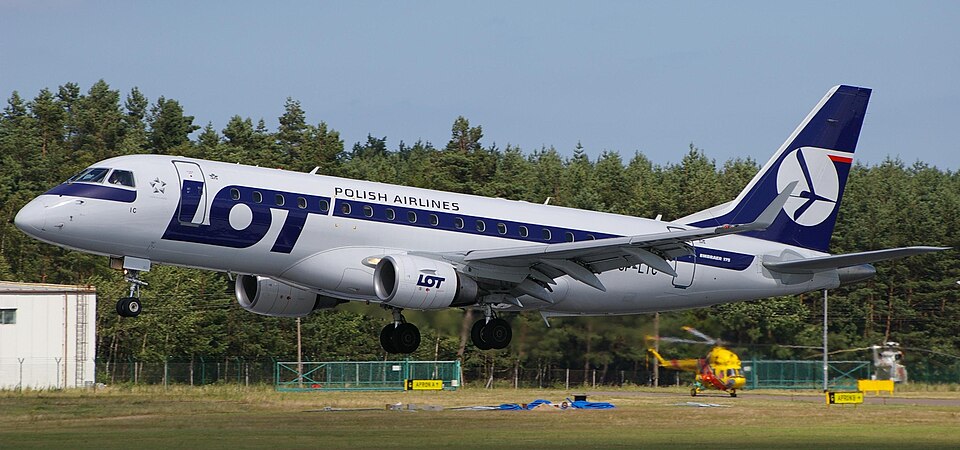
Incident Overview
On 27 March 2014, an Embraer 175, registration SP-LIC, operated by PLL LOT S.A., was conducting a takeoff from runway 29 at Warsaw Chopin Airport (EPWA). During the initial takeoff roll, after approximately 200 meters and at a speed of 30 knots, the N1 rotational speed of engine 1 dropped. The flight crew aborted the takeoff and returned the aircraft to the parking stand. The maximum speed reached during the takeoff roll was 36 knots. Examination revealed that engine 1 was unserviceable due to surging.
Cause
The investigation determined that the incident was caused by contact between rotor blades and stator vanes of the high-pressure compressor, resulting from fatigue of a stator element.
Post-Incident Actions
The operator, PLL LOT S.A., undertook several preventive actions. Engine 1 of SP-LIC was replaced and sent for repair and overhaul. A recommendation was issued for LOT pilots to use CLIMB2 power instead of CLIMB1. A special safety bulletin was issued for EMBRAER fleet crews following a similar engine malfunction on another aircraft (SP-LIO) on 17 April 2014. Engines across the EMBRAER fleet were swapped to ensure that each aircraft had at least one engine with the modification to address rotor-stator contact. Data transmission from the aircraft's ACARS server to GE servers was enabled for EMBRAER 170/175 aircraft with LOAD 25.4 software. Software update plans were supplemented to include activation of automatic data transmission via ACARS after loading LOAD 25.4. Verification of software status across the EMBRAER 170/175 fleet was carried out, with plans for periodic re-verification every three months until all aircraft had LOAD 25.4 and activated automatic data transmission. Modification of all LOT engines was scheduled to be completed by 1 April 2015. A Continuing Airworthiness Safety Action Group meeting was organized to discuss rotor-stator contact and plan actions for unmodified engines. Information bulletins were issued for EMBRAER fleet pilots regarding engine damage cases and planned engine swaps to minimize risk. Specific engines with high time were swapped for modified or lower-time units. Updates to LOAD 25.4 were recommended for specific aircraft, and modifications were recommended for several engines to prevent rotor-stator contact. A final information bulletin was to be issued after all engines were modified. The commission did not issue any safety recommendations.