Overview
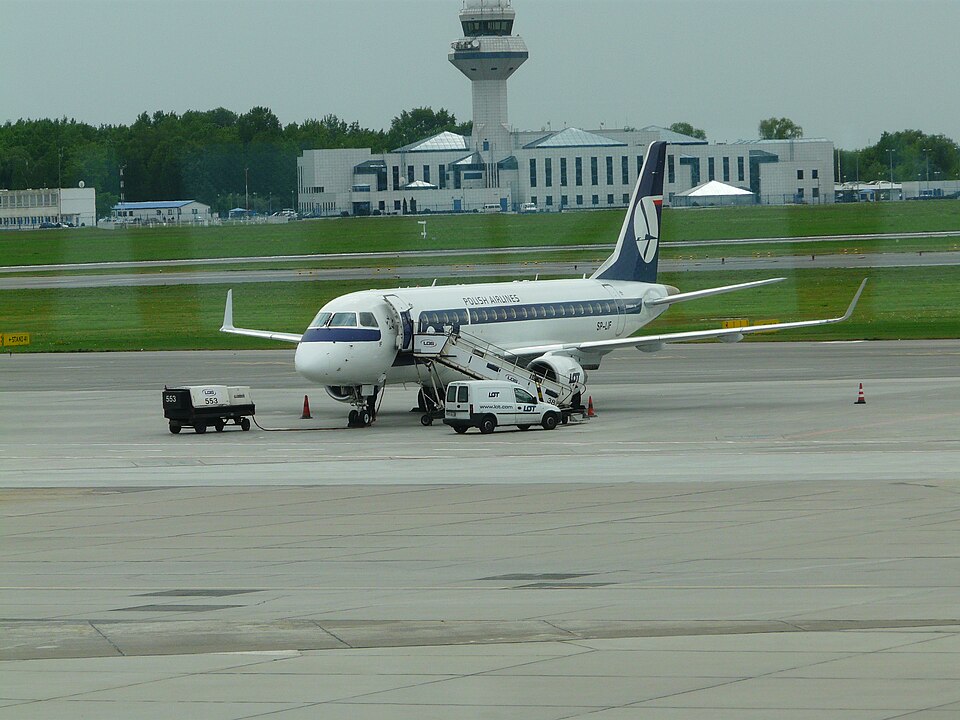
On 24 November 2014, an Embraer 175 aircraft, registration SP-LIF, operated by PLL LOT S.A., was involved in an incident at Warsaw Chopin Airport (EPWA). The incident was categorized as an incident, not an accident, and no injuries were reported.
Event Details
Following an engine trend analysis conducted on data recorded on 21 November 2014, the operator's maintenance division (TZAE LOTAMS) identified on 24 November 2014 an exceedance of exhaust gas temperature (EGT) and a slightly higher fuel flow (FF) on the right engine (serial number ESN 193449). Based on these findings and previous similar symptoms observed on other Embraer 175 aircraft (SP-LIC and SP-LIO), a boroscope inspection (BSI) was ordered. The BSI report confirmed the suspicion: the engine had sustained rotor-stator contact, resulting in damage to the high-pressure compressor stage 5 (STG5 HPC), which rendered the engine unserviceable. The engine was subsequently replaced, and a notification was sent to the engine manufacturer, General Electric.
Cause
The investigation determined that the incident was caused by contact between the rotor blades and stator blades of the high-pressure compressor (HPC), which occurred due to fatigue of the stator material.
Preventive Actions
The operator implemented a series of preventive measures in response to the incident, including:
- Issuing a recommendation for pilots to use CLIMB2 power instead of CLIMB1.
- Publishing a Special Safety Bulletin for Embraer fleet crews.
- Swapping engines within the Embraer fleet to ensure that each aircraft had at least one engine that had already received a modification to prevent rotor-stator contact.
- Replacing the damaged engine.
- Informing the engine manufacturer.
- Initiating redirection of engine data from the ACARS server to GE servers for aircraft equipped with software LOAD 25.4.
- Updating the software upgrade plan to activate automatic engine data transmission via ACARS.
- Verifying software status across the Embraer 170/175 fleet.
- Scheduling modification of all remaining engines by 1 April 2015.
- Holding a Continuing Airworthiness Safety Action Group meeting to discuss the phenomenon.
- Issuing information bulletins for flight crew.
- Exchanging four high-time engines with modified or lower-time units.
- Recommending software updates and engine modifications for specific aircraft.