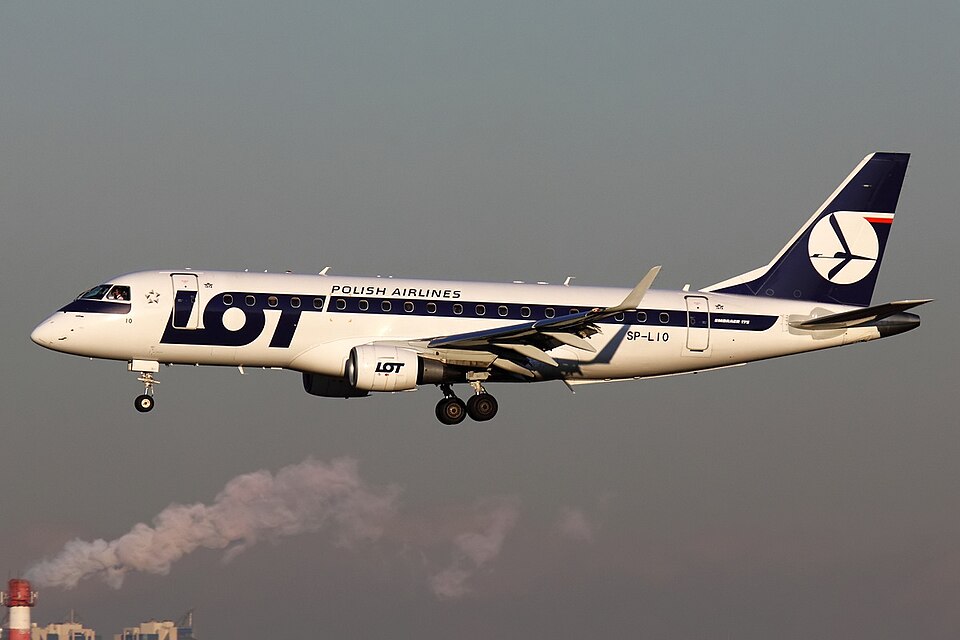
Incident Overview
On 17 April 2014, an Embraer 175 (registration SP-LIO) operated by PLL LOT S.A. experienced an in-flight anomaly during the climb phase. The aircraft departed from Warsaw Chopin Airport (EPWA) and was en route to Leningrad-Pulkovo Airport (ULLI). According to the operator's investigation, the crew noticed that the left engine's internal turbine temperature (ITT) remained near the maximum permissible limit, approximately 900°C. The captain selected CLIMB2 mode on the FMC instead of CLIMB1, which reduced ITT to about 880°C. Concurrently, he decided to descend from flight level 390 to flight level 370, further reducing engine power demand and lowering operating parameters.
Event Sequence
After reaching FL 370 and engaging CRUISE mode, the aircraft began accelerating to cruise speed. At approximately Mach 0.73, the crew heard a loud bang resembling an explosion. The source of the noise could not be determined. Consultation with the purser suggested the noise might have originated from the baggage compartment. The crew agreed to inspect the baggage compartments after landing and continued the flight. After switching to Russian air traffic control, the crew was asked to increase speed to Mach 0.78. During acceleration, a similar noise recurred. The crew reduced speed and informed ATC that they could not comply due to a suspected engine malfunction. The remainder of the flight and landing were uneventful.
Post-Flight Actions
After landing, the crew reported the event to the Maintenance Control Center (MCC) and logged it in the aircraft technical log (LDP 60). Assistance from a mechanic from another company proved ineffective. A technical team from LOTAMS traveled to Pulkovo and, after verification, decided to replace engine number 1.
Investigation Findings
The investigation determined that the incident was caused by contact between rotor blades and stator blades of the high-pressure compressor, which occurred due to fatigue of a stator element. The operator initiated several preventive actions, including issuing recommendations for pilots to use CLIMB2 power instead of CLIMB1, exchanging engines across the fleet to ensure each aircraft had at least one modified engine, and implementing software updates to enable automatic transmission of engine data via ACARS. Other measures included verification of software loads and scheduling modifications for all affected engines.
No safety recommendations were issued by the Polish State Commission on Aircraft Accident Investigation (PKBWL).