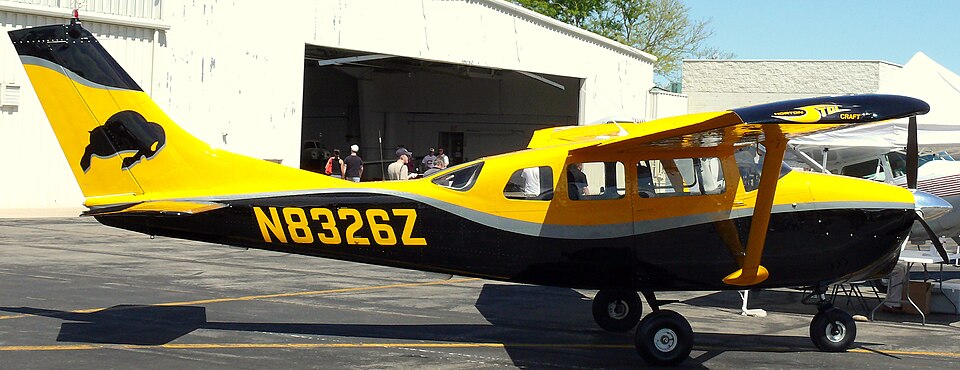
Accident Overview
On October 24, 2019, about 1600 mountain standard time, a Cessna 205A, registration N8326Z, was substantially damaged when it impacted terrain near Payson, Arizona. The pilot and two passengers were not injured. The flight was operated as a personal flight under Title 14 Code of Federal Regulations Part 91.
The flight originated earlier that morning from Rocky Mountain Metropolitan Airport (BJC) in Denver, Colorado. The pilot added 40 gallons of fuel at Payson Airport before departing at 1545. His intended destination was Red Creek airstrip, where he planned to camp overnight.
Airstrip Description
Red Creek airstrip is an unimproved strip within Tonto National Forest at an elevation of about 2,300 ft. It consists of a single dirt runway designated 6/24, approximately 1,200 ft long and 15 ft wide, with a 1.3° slope (15 ft rise) to the west. The airstrip is surrounded by rising terrain. According to the Arizona Pilots Association and the Recreational Aviation Foundation, landing on runway 24 and departing from runway 6 is recommended.
Pilot's Account
The pilot reported that the flight to Red Creek lasted about 10 minutes. Upon arrival, he overflew the airstrip and observed the windsock, which indicated a direct right crosswind for runway 24 with wind speeds estimated between 4 and 9 knots. He initiated a landing approach to runway 24 but performed a go-around after sensing the airplane was too high. On the second approach, he described it as stabilized. After touchdown, he applied the brakes but the airplane became airborne again. He applied full engine throttle and continued flying in ground effect until reaching the end of the runway. He then pulled back on the control yoke to initiate a climb, but the airplane could not outclimb the rising terrain. It impacted vegetation about 500 ft beyond the runway threshold and nosed over. The pilot did not retract the flaps, which remained at 40° throughout.
The pilot reported no preimpact mechanical malfunctions or failures with the airframe or engine. This was his first time landing at this airstrip. He stated the airplane was loaded below its maximum gross weight but noted that in hindsight he should have reduced weight by taking on less fuel and reducing baggage.
Airstrip Bulletin
An airstrip bulletin published by the Arizona Pilots Association and the Recreational Aviation Foundation stated that neither the authors nor the U.S. Forest Service encourage use of the Red Creek airstrip. It advised pilots to know their aircraft's short field performance and their capabilities. The bulletin noted that winds are unpredictable but southwest winds are prevalent, causing potential downdrafts on approach to runway 24. It stated that departure is typically via runway 6 and that quartering tailwinds have contributed to the destruction of several aircraft. The pilot acknowledged he was aware of the airport features but had not familiarized himself with the number of prior accidents there. He indicated that if he had, he likely would have chosen an alternate airport after encountering the wind conditions during the first landing attempt.
The airplane owner's manual does not provide specific instructions for a balked landing. It indicates a flap setting of 40° for short field landings and 20° for soft-field takeoffs, during which the airplane should be flown level in ground effect until a safe climb speed is established. It also states that if an obstruction ahead requires a steep climb angle, the airplane should be flown at the best angle of climb with flaps up and maximum power.