General Information
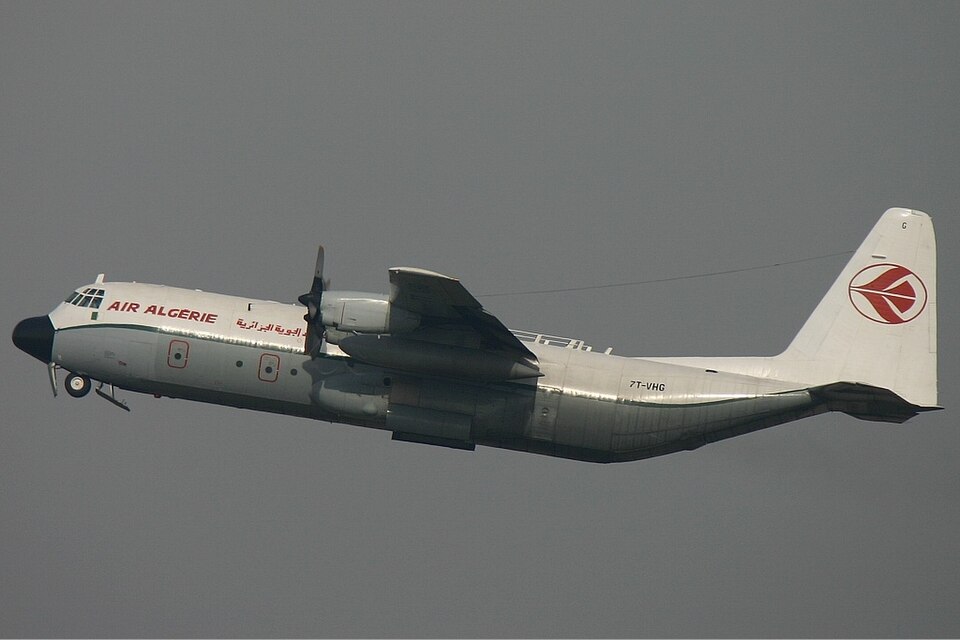
The accident occurred on 13 August 2006 at approximately 18:15 UTC (20:15 local time) near Piacenza, Italy. The aircraft involved was a Lockheed L-382G (L-100-30), registration 7T-VHG, a four-engine cargo transport variant of the military C-130 Hercules. On board were two pilots and one flight engineer.
Flight History
The flight, designated DAH2208, departed Algiers Houari Boumédiène Airport (Algeria) at 16:05 UTC for a cargo flight to Frankfurt am Main Airport (Germany), operating under IFR. After takeoff, the aircraft climbed to FL240 and proceeded towards the French coast, entering various FIRs. At 17:50 UTC, the crew contacted Milano ACC and received radar vectors via MONEB and ABESI waypoints.
During the flight, the crew discussed weather conditions, noting distant cloud formations and possible icing. Around 18:04 UTC, near MONEB, a large cloud formation was observed on the planned route, prompting the commander to suggest a heading of 020° to avoid it. At 18:05, the crew was instructed to contact Milano ACC on a new frequency and was cleared to proceed to ABESI with discretion to avoid weather.
At 18:14:03 UTC, the copilot reported an autopilot inefficiency. The cockpit environment became tense, with overspeed warnings activating. Radar data showed the aircraft losing altitude, increasing speed, and drifting right. The CVR recording ceased at 18:14:47 UTC.
Impact and Aftermath
Thirty-two seconds later, at 18:15:19 UTC, the aircraft impacted the ground in an agricultural field called Ca' degli Ossi, near Besurica, a residential area in the southwestern outskirts of Piacenza. The aircraft disintegrated upon impact. The wreckage was spread over the area. No further details on injuries or fatalities were provided in the source material.
Probable Cause
No probable cause was stated in the provided excerpt.