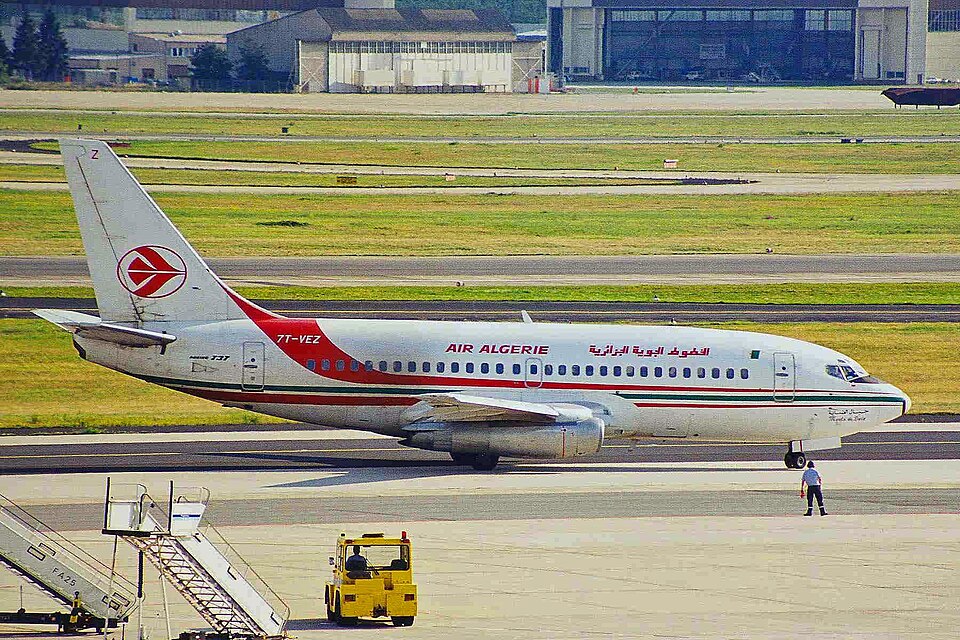
Incident Overview
The incident involved scheduled flight DAH 6289, operating from Tamanrasset with destinations in Ghardaïa and Algiers. The aircraft departed with a three-hour delay, carrying six crew members and 97 passengers. At the time of departure, no technical exemptions or deferred maintenance items were active. Prior to this leg, the aircraft had undergone routine maintenance in Algiers for a minor hydraulic pump issue in the circuit B landing gear bay.
Flight Timeline
The co-pilot was pilot flying during the takeoff sequence. The crew established takeoff speeds of V1 144 kt, VR 146 kt, and V2 150 kt. At 14:13:36 local time, the flight announced its takeoff. Approximately five seconds after rotation, when gear retraction was requested, a sharp thumping noise was recorded on the Cockpit Voice Recorder (CVR). The aircraft's heading veered left, prompting the Captain to announce he was taking over controls. The co-pilot subsequently informed the control tower of a "small problem."
Accident Sequence
Following the initial anomaly, the aircraft climbed to approximately 400 feet before speed progressively decreased from 160 kt to stall speed. The stick shaker activated roughly ten seconds before the end of the recording, indicating proximity to stall conditions. A "Don't Sink" aural warning sounded six seconds prior to the final moments. With the landing gear extended, the aircraft struck the ground on its right side. An immediate severe fire broke out as the plane slid, shedding parts, striking the airport perimeter fence, and crossing a road before coming to rest in flames.
Contributing Factors
Official findings identified the loss of an engine during a critical phase, the non-retraction of landing gear, and the Captain's assumption of control before identifying the problem as primary causes. Contributing factors included perfunctory flight preparation, the coincidence of the failure with the gear retraction request, and the rapidity of the event. Additionally, the crew maintained an inappropriate climb rate for a single-engine scenario, lacked effective teamwork to correct flight parameters, and operated near maximum takeoff weight at high altitude and temperature. The rocky terrain surrounding the aerodrome further limited emergency landing options.