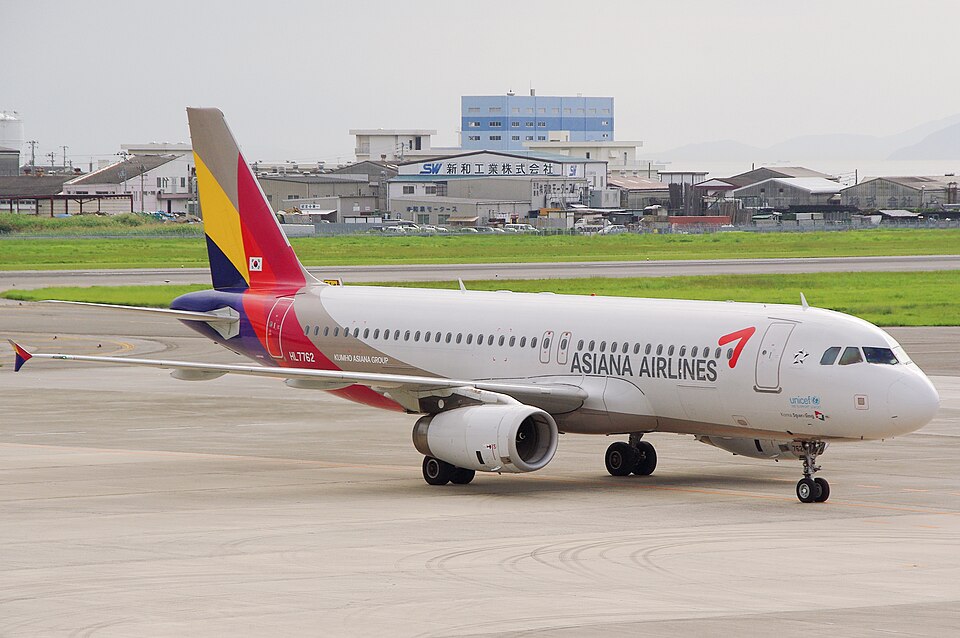
Accident Summary
On Tuesday, April 14, 2015, an Airbus A320-200, registered HL7762, operated by Asiana Airlines, Inc., as scheduled Flight 162, was approaching Hiroshima Airport. The aircraft descended below the prescribed approach path and collided with aeronautical radio navigation aids located in front of runway 28 at 20:05 JST. It then touched down before the runway threshold, moved forward on the runway, deviated to the south side, and came to a stop within the runway strip. The pilot-in-command (PIC) had commenced a go-around just before impact.
Injuries and Damage
There were 81 people on board: the PIC, six other crew members, a boarding mechanic, and 73 passengers. Among them, 28 people (26 passengers and two crew members) sustained minor injuries. The aircraft was substantially damaged, but no fire occurred.
Probable Causes
The Japan Transport Safety Board determined that the aircraft undershot during the landing approach on runway 28. The PIC began a go-around, but the aircraft collided with the aeronautical radio navigation aids just before climbing. The undershoot likely resulted from the PIC continuing the approach without executing a go-around despite being unable to identify visual references that should have been in view at or below the decision altitude (DA). Additionally, the first officer, acting as pilot-monitoring, did not immediately call for a go-around when the runway was not visible at DA. The PIC's non-compliance with regulations and Standard Operating Procedures (SOP) was probable, with a background factor of insufficient company training on rule compliance. Furthermore, Crew Resource Management (CRM) likely did not function appropriately, as the first officer did not assert a go-around call.
Safety Recommendations
The Japan Transport Safety Board recommended that the Ministry of Land, Infrastructure and Transport of the Republic of Korea supervise Asiana Airlines to reemphasize compliance by flight crew, review procedures, and ensure comprehensive training. The company should also implement education and training emphasizing visual references as primary, with flight instruments as supplementary tools, when approaching below DA.