Synopsis
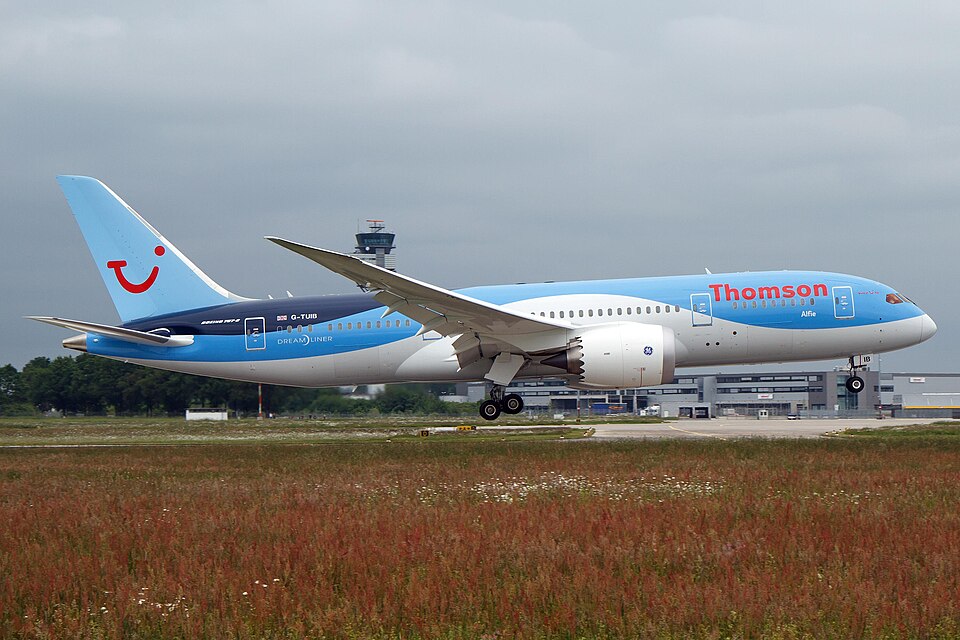
On 21 December 2023, Boeing 787-8 G-TUIB, operating a commercial passenger flight from Cancun, Mexico, to Manchester Airport (MAN), experienced significant weather disruption due to high winds. The aircraft held at MAN but later diverted to its nominated alternate, East Midlands Airport (EMA), which denied acceptance due to capacity constraints. The aircraft then diverted to Birmingham Airport (BHX). During the final approach to BHX, the crew encountered windshear and executed a missed approach. A fuel emergency was declared, and the aircraft landed below final reserve fuel after its second approach.
History of the Flight
G-TUIB was scheduled to arrive at MAN at 0735 hrs. The crew added 984 kg of discretionary fuel due to forecast strong winds. The operational flight plan indicated a final reserve fuel of 1,911 kg and listed EMA as the destination alternate. The aircraft entered a holding pattern at MIRSI at 0718 hrs, with seven aircraft ahead. The controller reported surface wind 280° at 28 kt gusting 41 kt. At 0728 hrs, the crew advised they could hold for about 10 minutes before diverting to EMA. EMA subsequently denied acceptance for the aircraft's size. Birmingham ATC accepted the diversion. At 0737 hrs, the crew requested diversion to BHX; the aircraft had been holding for about 20 minutes with 4,100 kg of fuel remaining.
During the diversion, the EICAS insufficient fuel message annunciated. The crew executed the checklist and discussed low fuel procedures. At 0750 hrs, BHX METAR reported wind 290° at 25 kt gusting 39 kt. The aircraft intercepted the ILS for Runway 33 with 2,900 kg of fuel. At about 240 ft agl, a windshear warning triggered a missed approach with 2,700 kg remaining. The crew declared a mayday fuel emergency. Birmingham Radar vectored the aircraft for a second ILS, stating a track of 25 nm. Another aircraft, HA-LZY, was vectored ahead, causing G-TUIB to fly an additional track distance; actual track flown was 53 nm, using 1,450 kg of fuel. The EICAS fuel qty low message annunciated during the downwind. G-TUIB landed with 1,250 kg of fuel, below the final reserve of 1,911 kg.
Recorded Information
The cockpit voice recorder and flight data recorder had been overwritten as the aircraft remained in service. The operator's flight data monitoring program provided data, which estimated that the aircraft used about 400 kg of fuel for the additional track distance flown.
Safety Action
Safety action concerning diversions and aircraft emergencies was implemented by both EMA and BHX following internal investigations. The actions addressed the process for determining and communicating airport capacity for diversions and prioritisation for aircraft that have declared an emergency.