Flight History
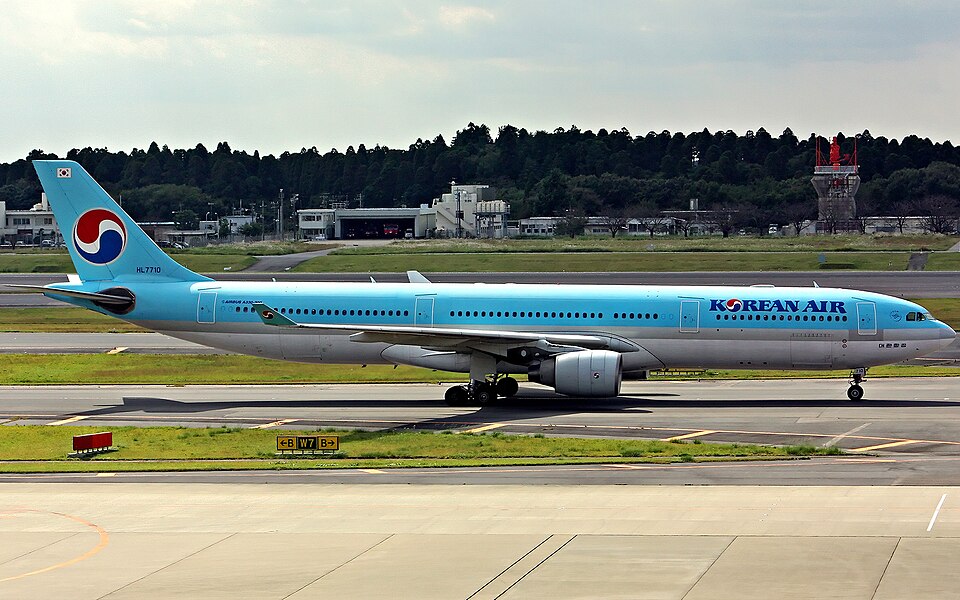
On February 13, 2013, at approximately 10:54 Korean Standard Time (KST), Korean Air flight HL7710, an Airbus A330-300 with registration HL7710, departed from Incheon International Airport bound for Tianjin Binhai International Airport. The aircraft initially contacted Dalian air traffic control (ATC) around 11:18 while cruising at 23,600 feet. During the initial contact, the flight reported deviating six miles right of its intended route at 27,500 feet. ATC instructed a descent to 21,650 feet at 11:24. At approximately 11:46, ATC cleared HL7710 to fly direct to NOKAK and then to CG. At 11:47:16, while near abeam of MAKNO, the aircraft encountered light to moderate turbulence at 23,600 feet. The captain promptly activated the fasten seatbelt sign twice. Following the first officer’s advice on speed increase, the captain reduced engine thrust. At 11:47:38, HL7710 requested and received clearance to descend. At 11:49:00, the aircraft reached 21,650 feet, where the atmosphere became stable. The flight landed at Tianjin Airport at 12:34:09.
Injuries to Persons
Two flight attendants sustained serious injuries during the turbulence encounter. No passengers were reported injured.
Damage to Aircraft
No damage to the aircraft was reported.
Meteorological Information
The flight plan had forecast light to moderate turbulence. In a preflight briefing, the captain noted that clear-air turbulence was predicted due to the flight crossing a jet stream, although no SIGMET (Significant Meteorological Advisory) had been issued. The weather radar was set to display with tilt between -0.5 and -1.0 degrees. En route conditions were stable with no clouds, but haze was present near Tianjin.
Flight Recorders
Quick Access Recorder (QAR) data were analyzed as part of the investigation.
Cockpit Crew Statements
The captain reported that the fasten seatbelt sign was turned off after takeoff when the atmosphere stabilized. The first officer noted no prior indications of severe turbulence.
Conclusion
The Aviation and Railway Accident Investigation Board (ARAIB) determined that the aircraft encountered turbulence due to fluid vortices in the vicinity of a strong jet stream. At the time, flight attendants were tidying the galley and fell, resulting in serious injuries.