Flight Details
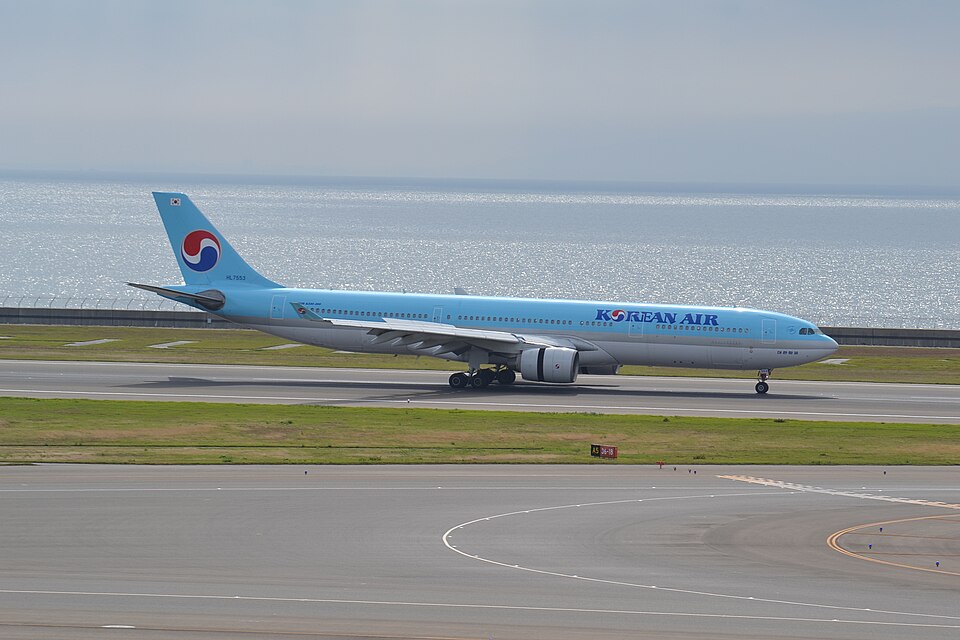
The aircraft involved was an Airbus A330-300 registered HL7553, operated by Korean Air. The flight was a scheduled passenger service from Incheon International Airport, Republic of Korea, to Ruzyne International Airport, Czech Republic. Onboard were three flight crew, eleven cabin crew, and 281 passengers.
Incident Description
On 26 May 2011, at approximately 14:23 Korean Standard Time (05:23 UTC), the aircraft was climbing through 11,900 feet when a sudden bang was heard. The aircraft experienced an uncommanded right roll. A No. 2 engine fire warning message appeared on the cockpit displays, accompanied by a continuous repetitive chime and a fire warning light. The flight crew executed applicable emergency procedures, shut down the No. 2 engine, and declared an emergency. The aircraft returned to Incheon International Airport without further incident. No personal injuries were reported.
Investigation
The Aviation and Railway Accident Investigation Board (ARAIB) conducted the investigation. The investigation included an engine teardown examination, flight data recorder (FDR) data analysis, quick access recorder (QAR) data review, and hardware examinations. The engine teardown revealed damage to the high-pressure turbine (HPT) and low-pressure turbine (LPT) modules. The 4th-stage LPT vane cluster (No. 27) was found liberated. The LPT case exhibited dimensional and metallurgical property changes. FDR data indicated a loss of engine power. The examination identified evidence of thermal distress in several turbine components. The investigation did not determine a probable cause in the provided report excerpt.