Synopsis
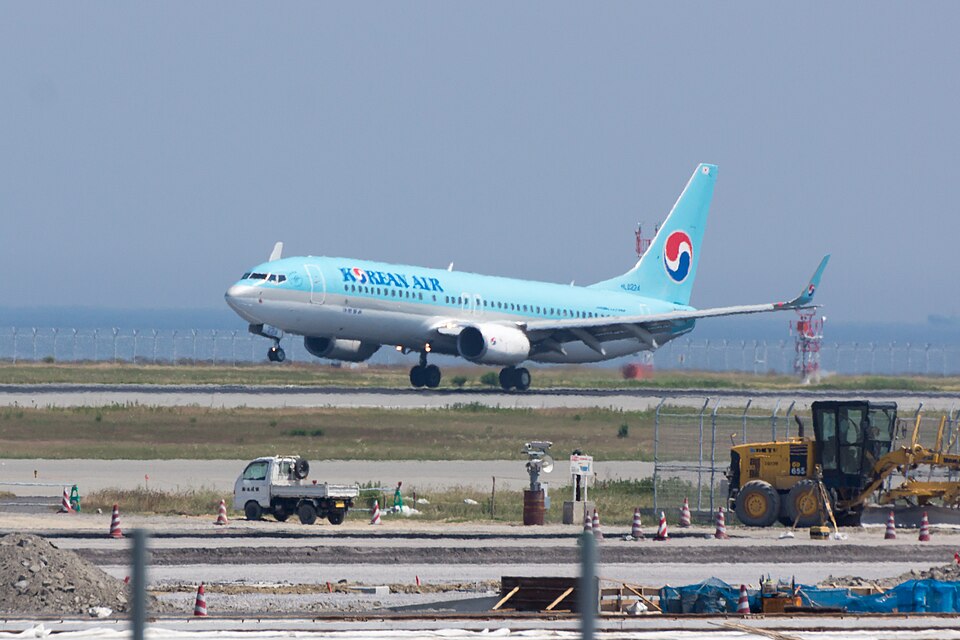
On 5 July 2015, at approximately 03:06 local time, Korean Air flight 2115, a Boeing 737-800 registered as HL8224, was conducting an instrument landing system (ILS) approach to runway 6R at Guam International Airport. The aircraft touched down on the right edge of the runway, about 2,000 feet beyond the threshold. Shortly after, it began to veer right and departed the paved surface. Both main landing gears left the runway, and the aircraft traveled through grass for about 3,000 feet before reentering the runway at approximately 4,400 feet past the threshold and coming to a stop.
Flight History
The flight originated from Gimhae International Airport in Busan, Republic of Korea, on 4 July 2015, at approximately 21:51 Korean Standard Time. The approach and landing occurred at night with heavy rain, influenced by a typhoon. The flight crew consisted of a captain and a first officer, both of whom were uninjured. Passengers also reported no injuries.
Damage
The aircraft sustained damage to its engine and a portion of the fuselage. Additionally, two runway edge lights and two taxiway lights were damaged during the excursion. The aircraft required repair before returning to service.
Investigation and Probable Cause
The Aviation and Railway Accident Investigation Board (ARAIB) of the Republic of Korea conducted the investigation, as delegated by the United States National Transportation Safety Board. The ARAIB determined that the probable cause of the serious incident was the captain’s inappropriate judgement while landing on runway 6R at Guam International Airport at night with heavy rain under the influence of a typhoon, which led to a runway excursion; and the captain’s decision to continue to land instead of executing a go-around although visual references were not established.