Paraglider Crash in Puente Alto Injures Pilot and Passenger
A SkyWalk Join't 3 paraglider crashed into the ground near Las Vizcachas, Chile, on September 1, 2024. The pilot and passenger sustained serious spinal…
On January 11, 1970, a Douglas DC-9 (registration N1308T) operated by Texas International Airlines was involved in an aviation accident near Harlingen, Texas. Investigators recorded the probable cause as: The Safety Board determined that the probable cause of the accident was "the continuation of the descent, during actual instrument conditions, through the Minimum Descent Altitude and into ground obstructions as a result of inadequate flightcrew monitoring of… This summary draws on records from the U.S. National Transportation Safety Board (NTSB) Aircraft Accident Reports; 3 related events involving the same aircraft type or operator are linked below.
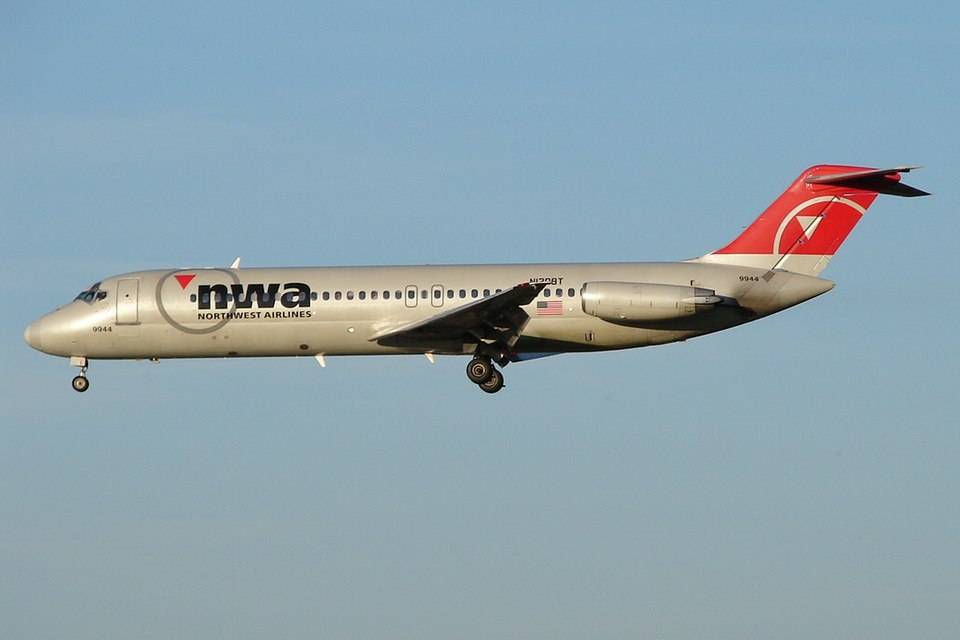
The Safety Board determined that the probable cause of the accident was "the continuation of the descent, during actual instrument conditions, through the Minimum Descent Altitude and into ground obstructions as a result of inadequate flightcrew monitoring of the aircraft altimeters. A contributing factor was a lack of awareness by the flightcrew of the actual meteorological conditions, caused by crew fatigue, and company workload priorities which prevented normal air-to-ground communications and deferred the dissemination of essential meteorological information."
— NTSB Determination
On January 11, 1970, at 0700, Texas International Airlines Flight 926, a Douglas DC-9, struck a tree and two power poles during a predawn instrument approach to Harlingen Industrial Airpark in Harlingen, Texas. The aircraft was 12,000 feet short of the runway threshold. The flightcrew executed a missed approach and flew to Intercontinental Airport in Houston, Texas, where they landed safely. None of the 41 persons aboard were injured, though the aircraft sustained substantial damage.
### The flight
Flight 926 was a regularly scheduled domestic passenger and cargo flight originating in McAllen, Texas, and terminating in Dallas, with en route stops in Harlingen and Houston. The aircraft, registration N1308T, carried four crewmembers and 37 passengers. The captain had 15,715 total flight hours, including 918 hours in the DC-9. The first officer had 7,363 total flight hours, with 454 hours in the DC-9.
The flightcrew had flown 4 hours and 35 minutes the previous day, arriving in McAllen around 1700. They spent the evening in Mexico and were returned to their motel around midnight. They were seen eating breakfast between 0415 and 0500. The crew arrived at the airport at about 0630, the scheduled departure time. The Board found that the flightcrew's rest prior to the flight was inadequate, and that their flight preparation was inadequate because they were rushing to make up for their late arrival.
### Sequence of events
During flight preparation, the captain received the 0500 Harlingen weather report, which indicated clear skies and 5 miles visibility with fog. An 0600 report showing visibility had dropped to 1 mile was not disseminated to McAllen because of a heavy workload at the company's Harlingen station. The weather at McAllen at the time of departure was a partially obscured sky and 1/4 mile visibility in fog.
Flight 926 took off at 0651, with the first officer flying. The aircraft climbed to 2,000 feet. The captain contacted Brownsville Approach Control and received a clearance for a VOR approach to Harlingen. En route, the captain attempted to contact the company radio at Harlingen but initially received no reply.
The flight crossed the Harlingen VOR at 1,600 feet and began its descent. At about 600 feet, the flaps were extended to 15 degrees. The first officer turned to intercept the 108-degree inbound radial and entered the fog. The captain stated that he began calling out altitudes at 100-foot intervals.
Just before the accident, the captain successfully contacted the Harlingen company radio and asked for the latest weather. The station agent transmitted the 0655 observation: a partially obscured sky and 1/2 mile visibility in fog. The captain replied that their last weather was clear skies and 5 miles visibility, and that they were on final approach.
The captain stated that when his altimeter read 725 to 750 feet, and the first officer's read approximately 675 feet, he told the first officer to hold that altitude. The first officer leveled off. Moments later, the crew felt a bump or thud. The captain ordered a missed approach, and the first officer applied power and pitched up. The Board believed the captain's order to hold altitude was given as a result of receiving the new weather information, not because of an altimeter discrepancy, and that the accident occurred a few seconds later before the crew could adequately evaluate the situation.
The aircraft struck a 30-to-35-foot-tall tree and two 29-foot power poles. Brownsville Approach Control cleared the flight to Houston at 23,000 feet. Passing 12,000 feet, the cabin pressurization warning light illuminated, and the crew requested and maintained 11,000 feet. Passengers alerted a stewardess to a gash in the left wing, which the first officer visually inspected. During the approach to Houston, hydraulic low pressure warning lights illuminated, and the crew manually extended the landing gear before landing safely at 0810.
### What the investigation found
The aircraft sustained substantial damage to the wings, the fuselage underside, and the No. 1 engine nacelle. Pieces of tree limbs, telephone poles, and copper wire were found embedded in the aircraft.
The investigation found no failure or malfunction of the aircraft, its powerplants, or its systems. A readout of the flight data recorder showed that the aircraft was flown within 130 feet of known, assigned, or published altitudes for the entire flight. The recorder indicated the aircraft's lowest point during the Harlingen approach was 56 feet mean sea level. The ground elevation was about 35 feet, and the aircraft struck the obstacles about 25 feet above ground level.
Because the captain stated the altimeters read between 675 and 750 feet at the time of the impact, investigators extensively tested the altimeter and static pressure systems. They found two possible sources of leakage: an improperly torqued nut in the forward cargo compartment, and static pressure system drain fitting caps in the nose gear wheel well. The Board concluded that neither would have had an appreciable effect on the cockpit altitude indicators, noting that the maximum error from the drain caps would be approximately 70 feet. The Board found that the evidence did not substantiate that both altimeters were in error by 600 to 700 feet.
The Board noted that the altimeter setting at McAllen was 30.01, while Harlingen was 29.91. If the crew had not updated their altimeters, the instruments would have read about 100 feet high.
The Board believed that the first officer descended below minimums because he believed the visibility was 5 miles and expected to see the runway and airport lights. The Board noted that during the 40 seconds before the accident, the altitude varied from 200 feet to 300 feet to 250 feet to 56 feet, indicating inadequate monitoring and control while the first officer's attention was likely devoted to heading control and looking outside.
The investigation also found that some altimeters in the operator's fleet featured crosshatching to warn of altitudes below 1,000 feet, while others did not. Neither altimeter on the accident aircraft had these low-altitude warning markings.
### Probable cause
The Safety Board determined that the probable cause of the accident was "the continuation of the descent, during actual instrument conditions, through the Minimum Descent Altitude and into ground obstructions as a result of inadequate flightcrew monitoring of the aircraft altimeters. A contributing factor was a lack of awareness by the flightcrew of the actual meteorological conditions, caused by crew fatigue, and company workload priorities which prevented normal air-to-ground communications and deferred the dissemination of essential meteorological information."
A SkyWalk Join't 3 paraglider crashed into the ground near Las Vizcachas, Chile, on September 1, 2024. The pilot and passenger sustained serious spinal…
A Cessna 172N struck electrical cables while on final approach to land at Aucó Aerodrome in Chile. The pilot was uninjured, but the aircraft sustained damage…
A Bombardier DHC-8-402 suffered a tail strike during landing at Puerto Williams on September 9, 2024. All 76 occupants were unharmed, but the aircraft…
A MYD JS-MD 3 glider veered off the runway and struck a wall at Vitacura Aerodrome on January 6, 2025. The pilot was uninjured, but the aircraft sustained…
A recreational paraglider flight in Puchuncaví, Chile, ended with the pilot sustaining serious injuries after a rapid descent and impact with a hillside on…
A Tecnam P2006T landed on its belly at an aerodrome in Poland after the crew failed to confirm landing gear deployment. The incident resulted in no injuries…