Ultralight Crash in Chonburi Kills Pilot Due to Wing Fabric Failure
An X-AIR HAWK ultralight crashed in Chonburi, Thailand, killing the pilot and injuring a passenger. The accident was caused by deteriorated wing fabric and…
On April 27, 1976, a Boeing 727-95 operated by American Airlines was involved in an aviation accident near St. Thomas, Virgin Islands. Investigators recorded the probable cause as: The National Transportation Safety Board determined that the probable cause of the accident was the captain's actions and his judgment in initiating a go-around maneuver with insufficient runway remaining after a long touchdown. This summary draws on records from the U.S. National Transportation Safety Board (NTSB) Aircraft Accident Reports; 11 related events involving the same aircraft type or operator are linked below.
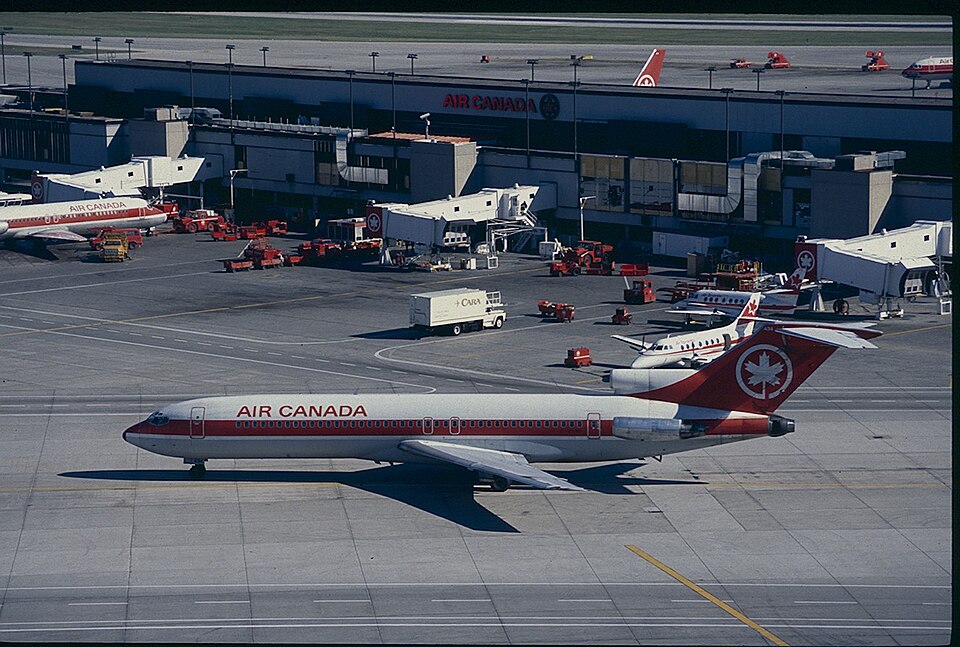
The National Transportation Safety Board determined that the probable cause of the accident was the captain's actions and his judgment in initiating a go-around maneuver with insufficient runway remaining after a long touchdown. The long touchdown is attributed to a deviation from prescribed landing techniques and an encounter with an adverse wind condition, common at the airport. The nonavailability of information about the aircraft's go-around performance capabilities was a factor in the captain's abortive attempt to go around after a long landing.
— NTSB Determination
On April 27, 1976, American Airlines Flight 625, a Boeing 727-95, overran the departure end of runway 9 after landing at Harry S Truman Airport in Charlotte Amalie, St. Thomas, Virgin Islands. The aircraft struck the instrument landing system localizer antenna, crashed through a chain link perimeter fence, and came to rest against a building 1,040 feet beyond the runway. Of the 88 persons aboard, 35 passengers and two flight attendants were killed. Thirty-eight other occupants received minor to serious injuries, and one person on the ground was injured seriously. The aircraft was destroyed by impact and post-crash fire.
### The flight
Flight 625 was a scheduled passenger service from Providence, Rhode Island, to St. Thomas, with an intermediate stop at John F. Kennedy International Airport in New York. It departed New York at 1200 with 81 passengers and seven crewmembers aboard.
The flightcrew was highly experienced. Captain Arthur J. Bujnowski had 22,225 total flight-hours, including about 10,000 hours in the Boeing 727, and had made 154 previous landings at St. Thomas. First Officer Edward R. Offchiss had about 8,000 flight-hours, with about 2,500 in the 727. Flight Engineer Donald C. Mestler had about 9,500 flight-hours, with about 8,000 in the 727.
During the descent from flight level 330, the flight engineer prepared a landing data card estimating a landing weight of 125,000 pounds. The card showed a 30-degree flap reference speed (Vref) of 120 knots indicated airspeed (KIAS) and a 40-degree flap Vref of 117 KIAS.
At 1504:12, the crew cancelled their instrument flight rules (IFR) flight plan to proceed under visual flight rules (VFR). However, the captain elected to use the instrument landing system (ILS) for runway 9 to assist with vertical guidance. The St. Thomas control tower reported surface winds from 120 degrees at 12 knots.
### Approach and landing
The aircraft intercepted the ILS glide slope at about 1,500 feet mean sea level with flaps set at 15 degrees and an airspeed of about 160 KIAS. The landing gear was extended, and at 1,000 feet above field elevation, the flaps were lowered to 30 degrees. The first officer called out altitudes in 100-foot increments from 500 to 100 feet, and in 10-foot increments from 50 to 10 feet.
Both pilots stated the aircraft was on the glide slope throughout the approach. The captain stated he maintained an airspeed of Vref plus 10 to 15 KIAS. As the aircraft crossed the runway threshold at an estimated 30 to 40 feet, the captain gradually retarded the throttles, pulling them against the idle stops when landing was assured.
The captain stated that he felt comfortable beginning the flare, but shortly thereafter, the aircraft encountered turbulence. He thought this occurred near the 1,000-foot aiming point, causing the right wing to drop. He applied control correction to level the wings, after which the first officer advised that the aircraft was high. The captain stated the turbulence seemed to buoy the aircraft, but after the advisory, he "got it on the ground."
The first officer estimated the aircraft landed 2,200 to 2,300 feet down the runway. Three controllers in the St. Thomas tower, as well as other witnesses, observed the aircraft float past the usual touchdown point. The controllers estimated touchdown occurred at or just before taxiway "C", which is 3,000 feet from the threshold.
Immediately before touchdown, the captain decided the aircraft could not be stopped on the remaining runway. Almost simultaneous with touchdown, he called for a go-around and advanced the throttles to a vertical position, aiming for a 1.4 engine pressure ratio (EPR). The cockpit voice recorder showed the captain initially ordered 15 degrees of flaps, but the first officer, knowing 25 degrees was correct for a go-around, placed the handle in the 25-degree detent.
The captain stated he watched the EPR gauges but did not see the power come up. He then pushed the throttles as far forward as possible but felt no acceleration. Concluding they were not "going anywhere," he closed the throttles and applied the wheel brakes.
The first officer and flight engineer stated the aircraft's initial touchdown attitude was flat and the nosewheel never touched the runway. During the attempted go-around, the aircraft was rotated to about 11 degrees nose-up, and the nose remained off the ground as the aircraft left the runway.
The aircraft continued across the 500-foot overrun, struck the ILS antenna and perimeter fence, and hit an embankment, tearing the outboard right wing from the structure. It crossed a perimeter road, destroyed several automobiles, and came to rest in a gasoline station and against a rum warehouse.
### What the investigation found
The Board found no evidence of a failure in the aircraft's systems, structure, or powerplants before it left the runway overrun. Post-accident examination showed the landing gear was down and locked, the trailing edge flaps were extended about 21 degrees, the spoilers were stowed, and the thrust reversers were partially deployed.
Flight data recorder (FDR) analysis indicated the aircraft crossed the threshold at 131 knots and an altitude of about 60 feet, touching down about 2,800 feet beyond the threshold. At touchdown, about 1,850 feet of runway and 500 feet of overrun remained. When the captain called for a go-around, about 1,200 feet of runway and 500 feet of overrun remained.
The Board investigated the engine response time. Tests showed that a Boeing 727's JT8D-1A engines require time to accelerate from idle to go-around thrust. Using American Airlines' prescribed two-step procedure—pausing at the vertical throttle position to stabilize at 1.4 EPR—extended this time to about 9 seconds. The Board concluded that the captain's observation of a maximum 1.4 EPR before he retarded the power after about 5 seconds was consistent with normal engine acceleration. Powerplant anomalies were not a factor.
Theoretical performance analysis by the Boeing Company showed that a go-around initiated at 110 KIAS would require at least 1,912 feet of runway to achieve liftoff, increasing to 2,387 feet if the pilot hesitated at the vertical throttle position. Conversely, the analysis indicated the aircraft could have been stopped from its touchdown point in 1,532 to 1,730 feet using full braking and spoiler deployment, with reverse thrust initiated 3 seconds after touchdown. The Board concluded that a successful go-around could not have been executed when the captain attempted it, but the aircraft could have been stopped on the runway and overrun.
The Board examined the captain's decision to use 30 degrees of flaps instead of 40 degrees. American Airlines intended to require 40-degree flaps for all St. Thomas landings in headwinds below 20 knots. However, a company operations bulletin ambiguously allowed 30-degree flaps with "strong or gusty winds." The captain chose 30 degrees because he expected gusty conditions, though none were reported. The Board noted that the 30-degree setting increased the required landing distance by 250 feet and reduced aerodynamic drag, making the aircraft more vulnerable to floating if wind shear or gusts were encountered.
The FDR showed airspeed aberrations near the 1,000-foot marker, likely caused by a wind gust. The Board concluded this gust added lift and caused a prolonged float.
When the captain aborted the go-around and applied full wheel brakes, he did not lower the nosewheel, extend the spoilers, or immediately use reverse thrust. The Board noted that failing to lower the nosewheel significantly reduced the aircraft's deceleration rate by preventing full stopping force on the tires. The Board suggested the captain's failure to use all deceleration means was likely a behavioral "emergency mechanism" response to imminent danger, which impulsive reaction cancelled deliberate reasoning.
Regarding survival aspects, the Board found the accident was partially survivable. The fuselage broke into three parts, and intense fire and smoke penetrated the cabin immediately. Airport fire vehicles responded within two to two-and-a-half minutes, but the lead vehicle could not penetrate the wreckage area due to debris and live power lines. Because the vehicle lacked airpacks, firefighters could not approach closely and had to fight the fire from 160 feet away.
### Probable cause
The National Transportation Safety Board determined that the probable cause of the accident was the captain's actions and his judgment in initiating a go-around maneuver with insufficient runway remaining after a long touchdown. The long touchdown is attributed to a deviation from prescribed landing techniques and an encounter with an adverse wind condition, common at the airport.
The nonavailability of information about the aircraft's go-around performance capabilities was a factor in the captain's abortive attempt to go around after a long landing.
An X-AIR HAWK ultralight crashed in Chonburi, Thailand, killing the pilot and injuring a passenger. The accident was caused by deteriorated wing fabric and…
A Challenger II Special ultralight aircraft (U-B23) landed off-runway at Pai Airport, Mae Hong Son, on September 17, 2024, due to a gust of wind. No injuries…
The Polish aviation safety authority is investigating a serious incident involving an AT-3R100 aircraft that occurred on September 2, 2024. The investigation…
A SZD-48-3 glider suffered damage when its left wing struck a ground obstacle during a low final approach at EPWK on June 20, 2025. The pilot was uninjured.
A 39-year-old skydiver died after a hard landing near Leszno on May 1, 2026. The PKBWL preliminary report indicates the fatal impact resulted from a late,…
A student pilot crashed an SZD-50-3 Puchacz glider into the airfield fence during a solo training flight on June 6, 2026. The pilot was uninjured, but the…