Flight History
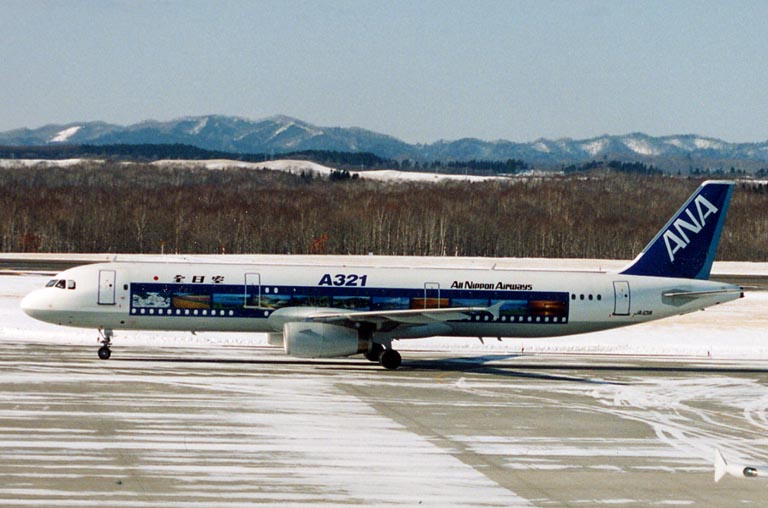
On September 29, 2005, All Nippon Airways Flight 198, an Airbus Industrie A321-131 registered as JA102A, departed from Oita Airport at 18:16 JST for Tokyo International Airport under instrument flight rules. The aircraft was crewed by a pilot-in-command and first officer, along with five other crewmembers and 166 passengers. No injuries were reported.
Incident Sequence
At approximately 18:49, while cruising at 37,000 ft with a cabin altitude of about 7,400 ft, the Electronic Centralized Aircraft Monitor (ECAM) displayed "AIR PACK1 OVHT" followed by "AIR PACK1 FAULT." The pilot-in-command shut off PACK1 via the cockpit control panel. After the fault light extinguished and the compressor outlet temperature dropped, the crew attempted to reset PACK1. However, the overheat warning reappeared, and PACK1 was again shut off.
As the aircraft neared its descent point, the first officer coordinated with Tokyo Area Control Center. At about 18:56, "AIR PACK2 OVHT" and "AIR PACK2 FAULT" messages appeared, rendering both packs inoperative. The pilot-in-command initiated an emergency descent to 13,000 ft, notifying Tokyo Control. The crew donned oxygen masks and performed the emergency descent checklist.
Crew Actions and Passenger Safety
At 18:58, the PACK2 switch was set to OFF. Although the cabin altitude rose at a moderate rate, it exceeded 8,000 ft at about 19:02 while passing 17,700 ft. The first officer manually deployed passenger oxygen masks. As the aircraft descended to 10,000 ft at 19:04, the crew removed their masks. The maximum cabin altitude reached 8,750 ft.
At 19:07, the ram air valve was opened through ECAM action. The pilot-in-command informed passengers via public address that oxygen masks could be removed. The aircraft landed at Tokyo International Airport at 19:33.
Investigation
The Aircraft and Railway Accidents Investigation Commission (ARAIC) investigated the incident, classifying it as a serious aircraft incident under Japanese regulations. The investigation included examination of the air-conditioning packs and components. The incident occurred approximately 90 km east-southeast of Chubu International Airport.