Accident Overview
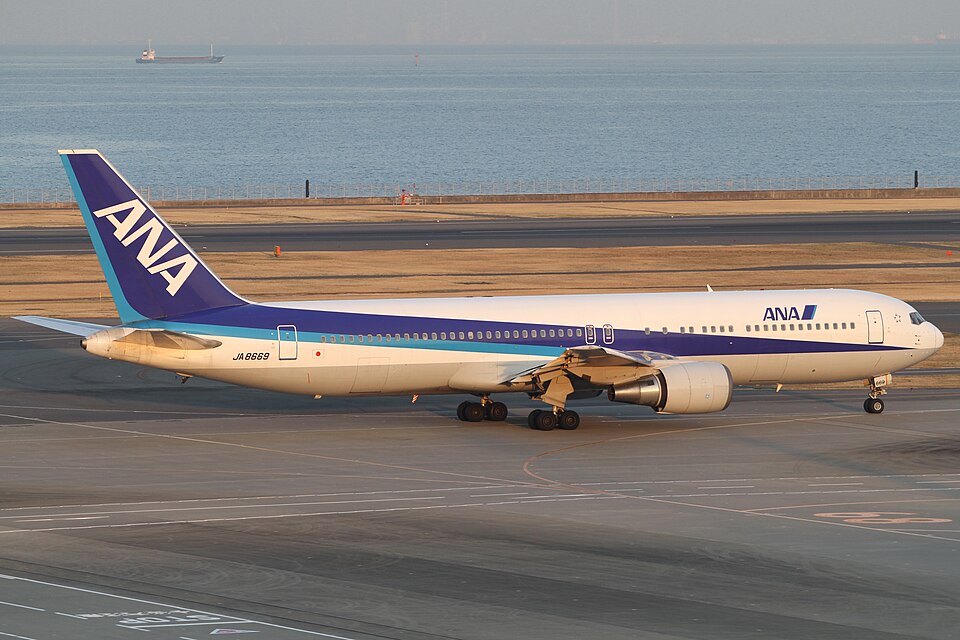
On January 22, 2006, All Nippon Airways Flight 589, a Boeing 767-300 registered as JA8669, was on a scheduled service from Tokyo International Airport to Matsuyama Airport. During the descent, at approximately 13:54 JST, the aircraft encountered a shake that caused two cabin attendants in the aft galley to fall to the floor. The aircraft continued its descent and landed at Matsuyama Airport at 14:00 JST.
Flight History
The flight departed Tokyo International Airport at 12:40 JST with 287 persons on board: a captain, seven other crewmembers, and 279 passengers (including four infants). The first officer, undergoing upgrade training for captain qualification, occupied the left seat as pilot flying (PF), while the captain sat in the right seat as pilot not flying (PNF). The flight plan included instrument flight rules, a cruising altitude of FL380, and an estimated elapsed time of 1 hour 31 minutes.
Digital Flight Data Recorder (DFDR) Records
According to the DFDR, the aircraft began shaking at 13:49:38 JST at an altitude of 7,848 feet. The shaking continued with similar intensity until 13:52:55, then weakened slightly. At 13:53:23, the shaking intensified again, with minimum vertical acceleration of 0.654G recorded at 13:53:33 and maximum vertical acceleration of 1.57G at 13:53:34. Simultaneously, the aircraft executed a left turn starting at 13:53:25, reaching a maximum bank angle of 28.1° at 13:53:39. The autopilot remained engaged until 13:57:46 at an altitude of 1,496 feet.
Crew Statements
The captain reported that shaking began at approximately 8,000 feet, describing it as a “light minus” pulsating shake with small pauses, and noted that the most intense shaking occurred around 3,000 to 2,600 feet. The first officer had predicted shaking from the jet stream and briefed the cabin crew accordingly. Before descent, the flight crew received information indicating calm air currents up to 20,000 feet in the Matsuyama area.
Injuries and Damage
One crewmember sustained serious injuries, and one suffered slight injuries. The aircraft was not damaged.