Incident Summary
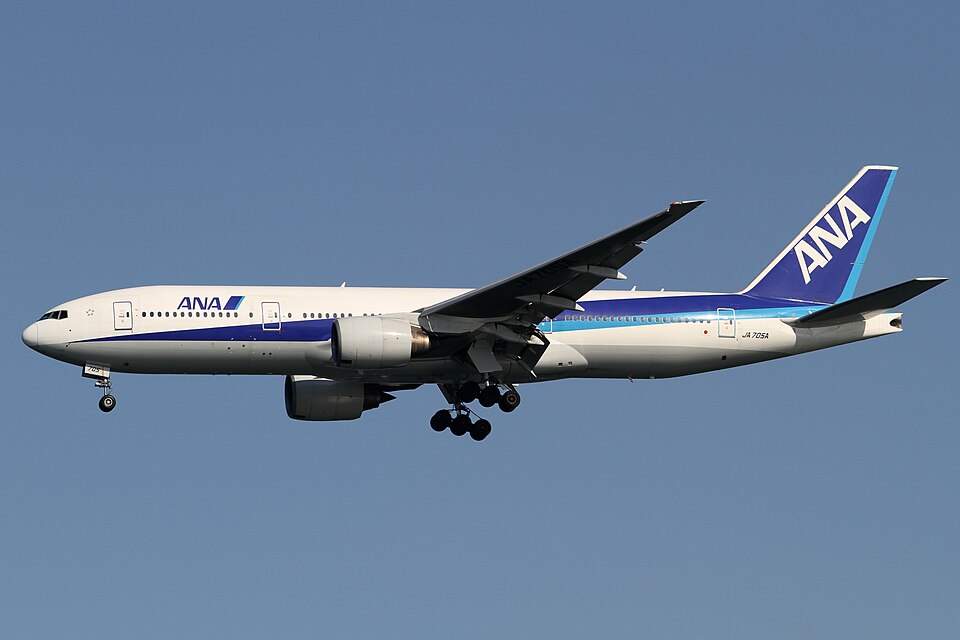
On March 7, 2004, All Nippon Airways flight 901, a Boeing 777-200 registered as JA705A, was en route from New Tokyo International Airport to Singapore Changi International Airport. At approximately 22:40 Japan Standard Time, while cruising over the South China Sea about 700 km east-northeast of Singapore, the first officer experienced sudden abdominal pain and vomiting. He became unable to perform his duties. The captain assumed all flight responsibilities and landed the aircraft at Changi at 23:54 JST using an autoland procedure. There were 186 persons on board, including 174 passengers and 12 crew members. No injuries were reported.
Flight History
The aircraft departed New Tokyo International Airport at 16:38 JST. The captain was the pilot flying, seated in the left seat, and the first officer was the pilot not flying, seated in the right seat. Approximately one hour and 30 minutes before landing, the first officer left his seat to use the toilet. After returning, he reported feeling unwell and nauseous. He subsequently vomited into a trash box in the cockpit two or three times within a minute. The captain suggested he slide his seat back and rest, but the pain persisted.
The captain called the chief purser to the cockpit and requested stomach medicine. The chief purser reported that a cabin attendant had experienced similar symptoms. The captain also learned that a doctor was on board but decided not to consult him, as the aircraft was near the descent point and he believed it would affect landing preparations.
First Officer's Condition
The first officer stated that he had felt well earlier in the day. After consuming a Western meal and a cola during the flight, he felt a slight stomach upset and used the toilet. Upon returning, he vomited and developed abdominal pain. He took stomach medicine but vomited again. As the pain intensified during descent, he had a cabin attendant assist him. He was unable to respond to air traffic control communications or perform any duties. The captain asked if he could work, but the first officer replied it was impossible.
Landing and Aftermath
The captain carried out all piloting tasks alone, including radio communications and approach setup. He elected to perform an autoland to ensure a safe margin. The aircraft landed at Changi International Airport at 23:54 JST and reached the gate by midnight. After parking, the chief purser arranged for a wheelchair and informed the company's local operations manager. The first officer was taken to an airport clinic, received treatment including a painkilling injection, and was subsequently transported to a hospital by ambulance.