Introduction
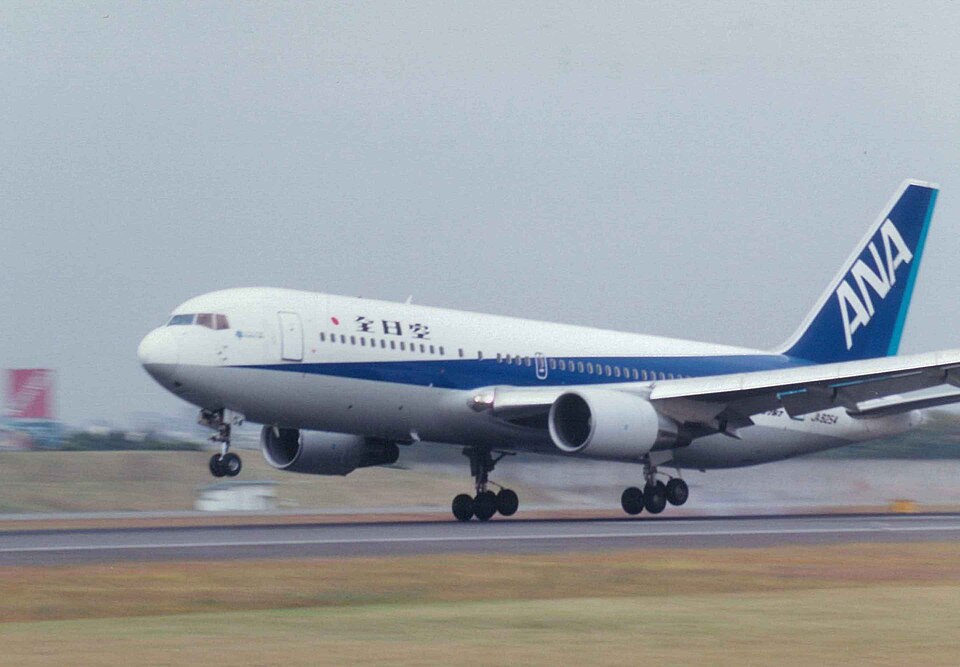
On June 26, 2002, a Boeing 767-200 operated by All Nippon Airways, registration JA8254, departed Shimoji-Shima Airport at approximately 11:32 for a takeoff and landing training flight. The flight plan filed with the Japan Civil Aviation Bureau specified visual flight rules, a traffic pattern route, and an endurance of 6 hours 32 minutes. Three persons were on board: a trainee pilot (A) in the left seat, an instructor captain in the right seat, and another trainee pilot (B) in the left observer seat.
Sequence of Events
Trainee Pilot-B initially conducted seven landings on runway 17 from the left seat, including two simulated one-engine-inoperative landings and a go-around with both engines operative. After switching with Trainee Pilot-A, the wind shifted from south to west, prompting the control tower to change operations to runway 35. Trainee Pilot-A then performed two landings with both engines operative on runway 35 before proceeding to simulated one-engine-inoperative landings. The first such landing simulated the left engine inoperative.
Final Approach and Excursion
During the subsequent landing with the right engine simulated inoperative, the touchdown occurred late, beyond the normal aim point. Trainee Pilot-A attempted a go-around using go-around thrust on the left engine only. The instructor then increased thrust on the right engine to go-around power, but at that moment the left engine thrust was still increasing while the right remained at minimum idle. This created a thrust imbalance while right rudder was applied, causing the aircraft to roll and yaw to the right (east). Despite corrective inputs from both pilots, the aircraft veered off the east side of runway 35 into a grass field and came to a stop approximately 1,990 meters from the initial touchdown point. The accident occurred at around 12:54.
Probable Cause
It is estimated that the accident was caused as follows: The aircraft was being operated on a training flight at Shimoji-Shima Airport, and was making a one-engine-out touch-and-go landing with the right engine simulated inoperative. The touchdown was late and beyond the normal aim point, and on the direction of the instructor, the trainee pilot attempted to go around on only the left engine. However, the trainee mishandled the aircraft, and then, seeing the instructor advance the right engine’s thrust lever, he applied right rudder pedal mechanically. This coincided with an increase in the rotation speed of the left engine, and the aircraft’s attitude suddenly changed towards the right. Because the trainee pilot could not fully correct this and the instructor was late in taking over control, the aircraft veered off the east side of the runway into a grass area and was damaged. Moreover, it is estimated that the following causal factors contributed to the accident: 1) The instructor did not take over when he directed the trainee to go around, or at an earlier stage, because he thought to allow the trainee pilot to handle the aircraft as much as possible, and because he did not sufficiently recognize that a go-around with one-engine simulated inoperative is a difficult maneuver for an inexperienced pilot. 2) Regarding the instructor’s intent to allow the trainee pilot to handle the aircraft as much as possible, the company’s instructional guidelines contained statements meaning that a judgment to go around should be made by the trainee pilot, and that during simulated one-engine-out touch-and-go training landings, the go-around after landing should continue with one engine simulated inoperative. 3) Regarding the instructor’s insufficient recognition of the difficulty of a go-around with one engine simulated inoperative for an inexperienced pilot, the instructor had not been trained to deal with the situation encountered in the accident, and the company’s regulations and manuals did not describe considerations on the difficulty of executing a go-around with one-engine simulated inoperative for an inexperienced pilot or on the effects of the wind on such maneuvers. 4) Regarding the delay in the instructor taking over control of the aircraft, the instructor was not following with his hands on the control wheel and was not in a position to take over immediately if necessary, and when the instructor had changed from being a simulator instructor to a flight instructor, he had not received sufficient training on cautionary matters regarding training in actual aircraft.